
Archive for the ‘services’ Category


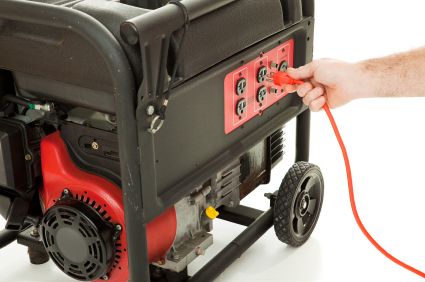
10 Portable Generator Safety Tips

Monday, November 5th, 2012

10 Portable Generator Safety Tips Electricians

With Hurricane Sandy causing power outages, fallen trees, and damaged properties, some homeowners are considering buying their own portable generators to keep their electricity running. Here are 10 portable generator safety tips:

1. Before purchasing a generator, make sure you have an idea of how much electricity you will need the generator to sustain. Go through your house, and looking at all your fixtures, lights, etc. and add up all the wattage requirements.

2. Carbon monoxide is a critical threat when operating a machine like a generator. It is extremely important to be aware of the risks involved, and know that a generator should never be run inside the house, not even in your garage. Carbon monoxide, also known as the “silent killer”, can become trapped inside your home easily and cause death in minutes. It is recommended to keep the generator at least 10-15 feet from your house, with the exhaust pointing away from your house.

3. If you want to operate your generator directly with your house’s wiring system (i.e. your central A/C), do NOT connect the generator directly to the home’s electrical grid. For this, you will need a transfer switch. These switches are connected to the house’s main circuit breaker. It is recommended to have an electrician install a transfer switch in your home, as it can pose potentially dangerous risks if installed incorrectly.

4. You need to also prevent electrocution when operating a generator. Never plug it directly into one of your home’s wall outlets.

5. Generators run on gas. Therefore, it is important to ensure you have enough oil in the generator and on supply in case it runs out. In most cases, when electricity goes out in your neighborhood, this also means local gas stations are out of power. If gas stations have no power, you can’t fill up.

6. You will need to regularly keep up maintenance. Clean the machine regularly. Don’t use water to clean it, as it can damage the operation of the generator.

7. Test the generator every so often to make sure it operates. Turn it on and let it run for about 10 minutes every month or to ensure proper operation.

8. Keep your excess gas/oil supply in approved containers and make sure they are stored away from your house and the generator itself.

9. If you plan to use the generator at least once a year and keep gas in the engine, you should add engine fuel stabilizer to the engine as well to keep the gasoline from gumming up and causing clogs. Stabilizer can extend the “shelf life” of gasoline for up to a year. After adding some stabilizer, be sure to let the engine run for a couple minutes to fully circulate it.

10. Alert your neighbors that you plan to use a generator, as they usually operate pretty loudly.

If you’d rather contact a certified electrician, try using TalkLocal. Simply a service request and, within minutes, top-quality electricians in your area will call YOU directly, ready to help.


How to Turn Off Sticky Keys in Windows XP

Monday, November 5th, 2012

How to Turn Off Sticky Keys in Windows XP Computer Repair

Computer shortcuts (such as CTRL + P to print or CTRL + S to save) are a quick and easy way to get tasks done on Windows XP. However, if you are unable to hold down multiple keys at a time, these shortcuts do you no good. Luckily, StickyKeys exists to enable shortcuts, even when you only have one free hand. The way StickyKeys works is one key is considered “stuck,” or pressed, when the user is not actually holding it down. This allows the user to push another key—possibly too far away to reach with just one hand—and form combinations in this way. Although it is a helpful tool, StickyKeys can also be a nuisance to those who are used to the traditional short cuts. Luckily, learning how to turn off StickyKeys in Windows XP is simple. Read the instructions below to find out how.

1. Click Start on the bottom of your screen.

2. Click Control Panel > Accessibility Options.

3. Under the StickyKeys heading, there should be a tab labeled Keyboard. Within that tab, uncheck the Use StickyKeys box if you want to turn StickyKeys off. Conversely, check the box to turn StickyKeys on.

If the Use Shortcut checkbox in the Settings for StickyKeys is selected, it means StickyKeys is enabled. Once enabled, you can toggle StickyKeys off and on by pressing the Shift key five times.

Need professional computer help? TalkLocal can quickly connect you to a computer repair professional in your area! Just go to the website and submit your service need, location, and availability to talk to help in minutes. With TalkLocal, there is no need to wait in line at a computer store for help. Instead, the professionals come to you, ready to tackle your specific problem.

Best Snow Blower for your Money

Friday, November 2nd, 2012

Best Snow Blower for your Money Snow Removal

With winter coming around soon, it’s good to be prepared in case there is a lot of snow in your area. Buying a snow blower can really help you out during the winter months.  Using a snowblower over traditional shoveling methods can save you time, energy and pain.  To find the best snow blower for your money, take these things into consideration when shopping:

1)     How much snow you get

2)     Need versus want

3)     Gas or electric?

4)     Power: one stage or two stage?

5)     Quality

Deciding to get a snow blower is a good decision if you get frequent snowfalls with heavy amounts.  If you live in an area that only gets slight dustings of snow, investing in such a large piece of machinery may not be the best decision.  While it may seem cool to own one, it’s an expensive investment for those who will rarely put them to use.

Another thing to consider is whether you want a gas snow blower or an electric one.  Gas is very easy to use, and you don’t have to worry about tripping over wires or keeping the machine plugged in. While the price of gas is rising, this is not too big of an issue because a gas powered snow blower does not require a large amount.  If you decide to go with the electric blower, be prepared for your electric bill to slightly increase.

Another decision to make is whether you want a single stage or two stage blower.  This depends on how much snow you plan on removing.  A one stage snow blower has one high speed propeller that moves and forces the snow out of the discharge chute.  This size is considered the light duty machine, as it can be picked up manually to throw more snow.  The dual stage machine is self propelled with large wheels and chains.  This is for people with more serious snow removal issues.

When looking to purchase a snow blower, you should first research online and check out reviews for various types.  It is recommended that you buy from reputable companies like Honda, Toro or Ariens because they offer guaranteed high quality products.   The slightly elevated price will pay off in the long run.

If you are looking for snow removal or need help choosing which type of snow blower you want you should seek professional help.  Use TalkLocal to be put in contact with reliable local snow removal businesses within minutes.  Simply input your problem and TalkLocal will do the rest.

How to Increase Water Pressure in your Home

Friday, November 2nd, 2012

How to Increase Water Pressure in your Home Plumbers

Low water pressure can make washing the dishes or taking a proper shower a lot harder to accomplish. Learning how to increase water pressure in your home can be easy if you follow these simple directions.

The first step is to find what is causing the low water pressure in your home. The low pressure can be attributed to a couple of different things, so isolating the problem is key. Low water pressure may be caused by valves that aren’t in their proper position. There are usually two valves that control water pressure – the home valves and the customer valves. The home valve is often in front of the house where the water line enters the home and looks almost like a wagon wheel. To check and see if this valve is in its proper position, turn the valve clockwise to temporarily shut off the water and then turn it counterclockwise as far as possible to open the valve completely, while also getting rid of anything that may have been deposited within the valve. The other valve, the customer valve, is located in your meter box. You will also want to check and see if this valve is on, while utilizing this same method if it is not.

If both of these valves are on and fully functional, the problem lies elsewhere. The pressure regulator is another area where water pressure can be controlled. The pressure regulator is a valve that works to automatically maintain a certain level of pressure. These valves are often located near the water main outside the house. Once you have found the valve, you must adjust the screw to alter the water pressure. Tightening the screw (by rotating it to the right) will increase the water pressure in your home. A couple, controlled rotations should be all you need to increase your water pressure. Make sure not to increase the pressure by too much or you risk damaging your pipelines. One quick way to test the pressure is by keeping a sprinkler on nearby, allowing you to see how your adjustments impact the water pressure.

Utilizing these methods should allow you to easily increase the water pressure in your home. If none of these methods work, find a plumber because it is possible that other issues might be at play, such as a leaky pipeline or deposits within pipes that have mineralized over time. If you do need help, consider using TalkLocal to find a plumber. TalkLocal is a free service that will connect you with top-quality, reputable plumbing companies in your neighborhood within minutes. Just enter in your specific problem, location and availability, and up to three companies will call YOU directly, saving you the time and stress of finding one yourself.

Tips for Watering Plants

Friday, November 2nd, 2012

Tips for Watering Plants Landscapers

There are a few things to keep in mind when watering your yard: water loss, water penetration, soil/water/air relationship, and time required for plant watering. These can all be confusing to keep in mind, so here are a few tips for watering plants that should take care of the afore-mentioned details:

– Water your plants in the early morning or late evening when is cooler and when the wind is calmer, as this will prevent water loss through evaporation.

– Lawn grasses and most plants require an inch of water per week to keep the top soil moist. Drying out completely would be harmful to the plants.

– Do not over water your plants as plants sitting in water logged beds can rot or develop fungus. Additionally, plants need plenty of oxygen to grow properly, and waterlogging the plants will result in an inefficient water/soil/air ratio.

– Younger plants with smaller roots will only intake water from the top layers of soil, whereas trees and older plants will have established larger and more expansive root systems. This means that you should try to ensure top layer moisture for your younger plants, while the older plants can possibly go longer without watering as they may be able to tap into lower soil levels that retain water for longer.

– Figure out the type of soil that your plants are growing on as this affects the water retention. For example, one inch of water will go down 12 inches in sandy soil whereas it will only penetrate four to five inches in clay soil. Once you know the type of soil, and know how deep water penetration is in it, you will be better able to judge how much and how frequently to water your plants.

– Use a rain gauge to measure the amount of water that the plants get from rain, natural moisture in the air, and your watering so you know how much water the plants are receiving.

These are only a few tips for watering your garden. However, there is a lot more to taking care of your plants! Let TalkLocal help you find professional landscaping services.

How Often to Replace Brake Pads and Rotors

Friday, November 2nd, 2012

How Often to Replace Brake Pads and Rotors Auto Repair

Brake pads and rotors are essential to the functioning of your car, as well as your safety.  Therefore, knowing  how often you should replace these parts of your car is a very important thing to remember.  Take into consideration the following if you’re wondering how often to replace brake pads and rotors.

Brake pads

Brake pads are found inside the brake caliper with their friction sides surfaces facing the rotors.  Their purpose is to convert the kinetic energy of the car’s movement into thermal energy by friction.  When a driver taps the brakes, the two pads are squeezed together, slowing the motion of the vehicle.  Without brake pads, you would not be able to stop your vehicle.

When to change brake pads

Brake pads should be changed depending on the warranted life of the particular pads on your car.  Normally, this would be around every 10,000 miles.  However, if you hear a scraping or grinding noise coming for your wheels, you should get them checked and/or changed, regardless of the mileage.

Rotors

Rotors are the round, flat pieces of steel attached to rods inside the wheels of a car.  When the driver presses the brakes, the brake pads compress around the rotor, ultimately slowing or stopping the vehicle.

When to change rotors

The only time rotors need to be replaced is when the driver ruins them by driving for too long with bad brake pads.  When your brake pads are bad, the screws in the bases will drive into your rotors.  This is where the grinding noise comes from.  New rotors are much more expensive than brake pads, so be sure to stay on top of the functioning of your brake pads to avoid a much pricier repair.

If you are unsure of when to change your brake pads or if you have a problem with your brakes, you should get the help of a trained professional.  Visit www.TalkLocal.com to be connected to a highly rated, local automobile technician in less than 90 seconds.

Best Energy Efficient Windows

Friday, November 2nd, 2012

Best Energy Efficient Windows Window Replacement

Purchasing the best energy efficient windows is a great way for homeowners to reduce the cost of heating and cooling their homes. Choosing the right windows can be tricky, but the key is finding the upgrades that save money without delivering a blow to your bottom line. When choosing energy efficient windows, homeowners should focus on four key aspects: frame, glass, design, and installation.

The Frame

There are a variety of window frame materials available, each with its own pros and cons. It is up to you to choose the material that works best for your budget.

Vinyl

Pros: less expensive without being “cheap,” can offer excellent energy efficient options through insulated glass and tight construction that reduces air leakage

Cons: limited color choices

Wood

Pros: best value for insulation, can stand the test of time if well-built

Cons: prone to rot (especially in humid or rainy climates), require more upkeep

Aluminum

Pros: practical in rainy and humid climates, meets coastal building codes (strong against hurricanes)

Cons: not the best choice to prevent heat transfer and loss

Wood-clad

Pros: offers the low-maintenance of vinyl or aluminum with the temperature-transfer resistance of wood

Cons: prone to rotting in wetter climates

The Glass

Experts suggest going with a double-paned window with Low-E glass, with a vacuum-sealed argon fill. The feature will cost about $40 extra per window, but it’s worth the price in energy savings. Low-E argon filled windows offer much more insulation than single-pane windows. This will make a big difference in your monthly energy bill. You should also check the window glass for its energy-efficient features.

The Design

The best energy efficient window designs include:

Double-hung windows These are found in many homes across the United States, particularly in pre-war buildings. The windows are double-hung and the bottom slides up to open the unit. This can be an efficient option, but is not the best choice for extreme climates because of the potential for air intrusion between sliders.

Casement windows These units are popular in climates where wind is an issue. These windows have a crank that swings the window outward to open and they seal tighter when wind blows in towards the house.

Picture windows  These are typically large units that do not open. They come in many shapes and sizes and can be energy efficient with the right glass choice and gas-filled interiors.

The Installation

A proper installation is important to keeping your windows energy efficient. Even the best windows will not perform effectively if installed incorrectly. Be wary of any contractor who relies too heavily on expanding foams or sealants to get windows to fit well. These materials aren’t waterproof and can cause problems later down the road. Pre-installation water proofing done well before installation is the best option to seal your windows from the elements.

If you need professional help to install new windows, use TalkLocal to find a local service provider in minutes!

How to Change Mac OS X Theme

Friday, November 2nd, 2012

How to Change Mac OS X Theme Computer Repair

Apple has a dedicated team of designers to conduct extensive research in order to maximize the user experience of Mac computers. For that reason, they have made customizing the design of OS X very difficult. Read more to learn about how to change the Mac OS X theme. 

There are minimal built-in options for customizing your Mac. You have the option of choosing whether you want the overall look of buttons, menus, and windows to be Blue or Graphite. You can also change the highlight color between a number of colors. Change your color options by going to System Preferences > General. The most common customization is changing the desktop background. You can go a step further and customize your screensaver by going to Desktop > Screensaver. You can change the size and position of your dock, as well as add and remove programs. The programs magnify when you scroll over them–you can control the amount of magnification and toggle the feature on and off; all these options can be controlled by going to Dock. If you want to choose what items appear in your sidebar and create colored labels for you folders, go to Finder > Preferences.

If you are interested in further customizing your Mac, you can search online for user-created workarounds, but be warned that you risk doing damage to your system if the customizations are not from reliable sources. Make sure you back up everything before attempting anything you find on the Internet. If you find that attempts at customization workarounds have caused problems with your system, you may want to contact at a computer repair professional to fix your computer. With the help of TalkLocal, you can receive phones calls within minutes from up to three high quality computer repair professionals in your area. Just go to the website and tell them your problem, location, and availability.

Smoke Coming from Vacuum Cleaner

Friday, November 2nd, 2012

Smoke Coming from Vacuum Cleaner Appliances Repair

Seeing smoke coming from your vacuum cleaner may be disturbing, but it looks worse than it actually is. This article will teach what do if it happens and how to prevent it in the future. Read on to first learn the cause of the smoke.

Why Your Vacuum Cleaner is Smoking

If you are seeing smoke coming from your vacuum cleaner, it is most likely coming from the vacuum’s belt. Objects, such are cables or cords, may be caught in the brush roller, causing it not to spin. The brush will keep trying to spin, but fail, thus producing smoke and a burning smell.

How to Stop Your Vacuum Cleaner from Smoking

To fix the problem of smoke coming from you vacuum cleaner, you should move any large objects away from the brush roller. You should also take the vacuum belt off of you vacuum and inspect it for damage or general wear and tear. If it is okay, put it back on. If it looks damaged or worn out, you should replace it. You can consult your vacuum’s instructions manual for how to replace your vacuum belt.

Preventative Measures

To prevent smoke from coming from your vacuum cleaner in the future, you should make sure you keep it well-maintained. Check the brush roller regularly and remove any hair, lint, etc. Make sure to empty the bag or tank regularly, before it gets completely full. Also, make sure to replace the filters at least once a year.

If this article did not help you stop smoke from coming from your vacuum cleaner, you may need to contact an appliance repair professional. With the help of TalkLocal, you can receive phone calls in minutes from up to three high quality appliance repair professionals in your area that are available when you are.

What Can You Do With Autumn Leaves?

Thursday, November 1st, 2012

What Can you do with Autumn leaves Landscapers

Nature puts on a dazzling display of colors and shapes for us to enjoy in the form of changing leaf colors each year. Once the leaves drop to the ground, the challenge is to figure out what to do with them. This is especially important as leaves covering paths and walkways create a slipping hazard, while a thick blanket of leaves on a lawn will eventually kill the grass by depriving it of light and air. So what can you do with autumn leaves? Here are a few ways to take care of fallen leaves, and use them for gardening purposes.

Rake, Sweep and Blow

Use a leaf rake on the lawn. Choose a rake that is broad enough to collect a large number of leaves with each swipe but light enough so that it does not tire you out too quickly. Longer handles allow you to stand straighter, which reduces back strain during your raking sessions. Use a broom to sweep leaves off hard surfaces, such as patios, walks and driveways. A motorized leaf blower will help you to move leaves from under shrubs and other tight spaces; but you will have to supply gas, electricity or battery power.

Make a Soil Conditioner

Make a soil conditioner with leaf mold. Rake up the leaves and pack them into a plastic trash can liner. Sprinkle the leaves with water as you go. Tie the bag closed. Punch holes into the sides to allow air and water inside. After a year or two, the leaves decompose into leaf mold that you can use as a nutritious soil conditioner or mulch to help improve your landscape.

Compost

Combine the leaves with other organic elements such as grass clippings, shredded cardboard, eggshells, rotted fruit or vegetables, and coffee grounds. Place in a container, such as a barrel, composting bin or plastic trash can. Alternatively, stack the items in a small area that sectioned off by wire fencing. Stir or turn the stack several times each week to circulate air and water. The rate of decomposition will vary according to the specific conditions of your stack, but most people should expect to have compost to spread within six to nine months.

You might also try the professionals

If you do not have the space to store leaves, then rake and bag them up for your municipality or a private service to collect. Also, ask your neighbors if they can use your leaves. If you are one of the many homeowners who cannot devote the time, space and effort towards removing your leaves, it makes sense for you to contact a professional landscaper through TalkLocal.