
Archive for the ‘services’ Category


Lost Serial Number for Laptop

Thursday, October 18th, 2012

Lost Serial Number for Laptop Computer Repair

Your laptop’s serial number is incredibly important to keep and know, since many companies will use that to verify your warranty whenever you need work done for you computer.  For the majority of laptops, there should be a sticker on the bottom of the laptop that lists your serial number.  However, it’s possible that the sticker got rubbed off or taken off at some point. Fortunately, there are alternative ways of figuring out the lost serial number for your laptop.

Belarc Advisor

The Belarc Advisor is a small program that you can download that will analyze all your hardware installed on the computer.  Your serial number will be shown as part of that analysis.

Command Line

The serial number is also embedded in your BIOS so you can use a terminal or a command prompt to find your serial number.  On a Windows based computer, you should open up the command prompt and type in “wmic bios get serialnumber”, which should work with Windows XP, Vista, and Windows 7 computers.  If you have a Linux based system, open the shell prompt as a root user and type in “hdparm -i /dev/hda”.

Built-in Diagnostic Tool

Based on your manufacturer, they may have built-in diagnostic tools that may be able to recover the serial number.  Talk with your manufacturer to see whether they already have tools for you to use.

If none of the above suggestions worked, then you may want to contact a local IT professional to look for your laptop’s serial number.  TalkLocal, a free online concierge service, can have you talking with a computer repair professional in just minutes!  Just submit your location, availability, and service need onto the TalkLocal websites. It’s easy, quick, and you’ll have your serial number recovered in no time!

How to Replace a Dial Thermostat with a Digital One

Thursday, October 18th, 2012

How to Replace a Dial Thermostat with a Digital One Heating and Cooling

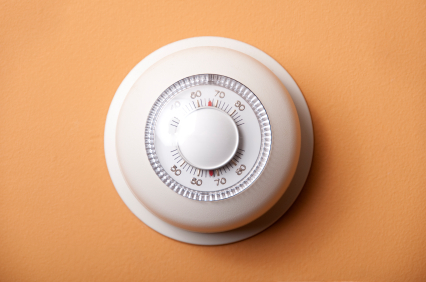
You may want to upgrade your thermostat for reasons of usability, appearance, or even costs on your heating and cooling bills. If you want to change from a traditional thermostat to a digital one, it’s a fairly simply process to complete yourself (if you have the right tools and confidence to operate a couple low-voltage wires). Read more to learn how to replace a dial thermostat with a digital one.

Most digital thermostat displays purchased from a local store will have simple instructions on how to remove and replace the thermostat yourself. You will most likely only need a Phillips or flat-blade screwdriver of the right size to remove and tighten all the screws.

Before beginning though, it is important to turn off the power before you attempt to perform such a task. Though the wires are low-voltage, this is for safety reasons. Generally, there will be two wires that attach to your current dial thermostat. While following directions, you should be able to connect these wires in the correct places and fully install your new thermostat in less than 15 minutes.

If you’d rather not risk doing damage to your wiring or thermostat system, you can contact a heating and cooling specialist to install it for you. Try using TalkLocal, a free service that will connect you with specialists in your area within minutes. All you need to do is describe your service need, list your location and availability, and TalkLocal will contact top-quality, reputable companies who will then call YOU directly, ready to help.

Colors of Paint to Use for Rooms with No Windows

Thursday, October 18th, 2012

Colors of Paint to Use for Rooms with No Windows Painters

Color options may feel limited when you are painting a room with no windows–you don’t want a shade that is gloomy, yet you don’t want a shade that is tacky and bright. The key to selecting colors of paint to use for rooms with no windows is replacing the effects of natural sunlight. Surprisingly, this can be done with both light and dark colors. Consider the following tips before settling for a plain white room.

Light colors

People usually use light colors to brighten a windowless room. Light colors make a room appear inviting and more spacious. You can paint the trims along the ceiling a few shades brighter to bring the eye upward. If you are daring, use vibrant shades like fushia or canary yellow to give the room more life. If you are looking for calmer choices, you can try pastel colors like lilac or mint for a subtle effect. Neutral colors are always a safe bet and can easily match an array of furnishings. Try colors like beige, taupe, sandstone, and gray.

Dark colors

Although most dark colors make a windowless room seem even more cramped, some dark colors are flattering for windowless rooms. Select colors that mimic the natural world; this color scheme will be reminiscent of the outdoors, which will open up the room. Try a dark forest green for a woodsy feel. Use a deep teal to capture the vastness of an ocean. A burgundy shade has the warmth of red roses, and can give a room a romantic touch.

Your color choice can change the entire mood of a room, so spend some time testing a few colors. Remember to view your color choices under indoor lighting rather than natural lighting because that is how the color will appear on the walls. Hire a professional painter through TalkLocal to ensure great craftsmanship. TalkLocal selects high quality service providers based on ratings and reviews, social reputation, and call analytics. Log on to TalkLocal’s website to fill out a short service request. A beautiful room is just a click away.

Connecting a Wire Fire Alarm to an Electrical Panel

Thursday, October 18th, 2012

Connecting a Wire Fire Alarm to an Electrical Panel Electricians

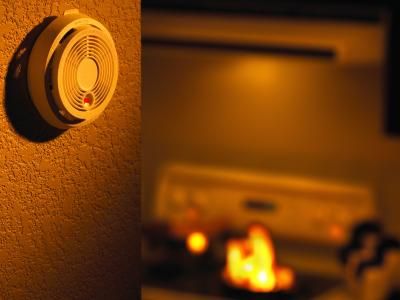
Tired of constantly having to replace your smoke alarm batteries?  Can’t get away from the annoying beep that happens when your batteries are low?  Hardwire your smoke alarm batteries into the electrical panel instead. Connecting a wire fire alarm to an electrical panel is fairly simple, even for those of you who are electrically-challenged.

Materials Needed

– Smoke detectors with interconnect capability (when smoke is detected, other smoke detectors go off)

– Screwdriver

– Wire Stripper

– Ladder

– Wire connectors

– Electrical tape

– Ceiling boxes

– NM cable connectors (if using metal boxes)

– MN 12-2 or 14-2 cable connectors

Instructions

1.      Install a new circuit to the electrical panel on the ceiling or the floor.  It should have about 6 inches of 12-2 or 14-2 NM running out of the work box.

2.      Make a cut in the outside sheath of the NM cable with the wire strippers so you have three independent wires.

3.      With the wire strippers, strip ¾ of insulation from the end of the wires

4.      Take the part of the smoke detector with wires coming out. There should be a black, white and yellow wire.

5.      Place a wire connector over the yellow wire if you are only connecting one smoke detector. (Yellow is used to connect multiple smoke detectors.)

6.      Screw the bare or green wire into the wall box.

7.      Connect the white harness wire to the white wire.

8.      Connect the black harness wire to the black wire.

9.      Wrap a stripe of electrical tape around the base of each connector for each pair of wire connectors.

10.    Put the harness through the smoke detector mounting bracket and put the bracket to the wall box.

11.     Put the wiring harness into the jack on the back of the smoke detector and mount the detector on the bracket.

12.     Connect the smoke detector to the electrical panel.

13.     Check the smoke detector. The “ready” light should be on. Push the “test” button to see if the smoke detector is working properly.

Remember, if your home has multiple floors, it is recommend to have interconnected smoke detectors on each floor. If these steps seem a little too complicated, or for some reason your smoke detecter isn’t working after completing these steps, you should consider hiring a professional. Use TalkLocal to connect you to a highly rated electrician in your area within minutes.

How to Kill Mushrooms in Yard

Wednesday, October 17th, 2012

How to Kill Mushrooms in Yard Landscapers

There are several ways to rid your yard of the annoying mushrooms that sprout over your beautifully manicured lawn and hard grown trees. Here are some methods on how to kill mushrooms in your yard:

Keep your lawn free of excess water (only water your plants as much as is needed by the plants) as excess water will cause fungus and mushrooms to sprout.

Pick up any litter, such as pet excrement and grass trimmings. Mushrooms grow on old mulch, animal waste, and rotting tree stumps, providing mushrooms with nutrients while the excess water helps the mushroom breakdown and digest these nutrients. So keeping your lawn free from all of these will reduce the number of mushrooms living there. It will also prevent spores from neighbors from growing into mushrooms! Additionally, irrigating and aerating the soil better will help with keeping the lawn drier.

Use nitrogen fertilizer to speed up the decomposition of organic matter and reduce the possibility of mushroom growth. Apply one pound of readily available nitrogen for every 1000 square feet. Do not use the slow release or water-insoluble formulations.

Pick the mushrooms up as soon as they appear (before they produce spores). Once this has happened, it is impossible to get rid of the spores as they are all extremely small and not worth spending time on finding and removing. Identify the mushrooms before they mature by making sure that they have no exposed gills. So long as they are not mature, you do not have to worry about spreading spores – even just kicking them at this stage can spare you mushroom spore contagion.

Lawn fungicides, such as Bayleton and Daconil are available to treat your lawns. Of the two, Bayleton is recommended at 1.5 to 3 pounds every 1000 square feet for prevention and 6 pounds for every 1000 square feet for getting rid of a lawn already infected with mushrooms.

If you prefer to use professional landscaping services, let TalkLocal find you professionals quickly and effectively. Just fill out your information on the website and talk to help within minutes!

Flowers and Hospitals

Wednesday, October 17th, 2012

Flowers and Hospitals Florists

Someone you care about is at the hospital, and you want to let them know you care. Why not try flowers? According to a recent Harvard study, flowers have been proven to help boost energy and lessen feelings of anxiety and depression. If you are unsure of which flower to choose or confused about standards or guidelines when it comes to flowers and hospitals, we can help.

If the person is sick, you should try to avoid fragrant flowers such as lilies or lilacs; this could make them feel worse. Instead, try something like sunflowers. Just as beautiful, but without a smell.

After you’ve decided on the type of flower, make sure everything is sorted out when placing your order. You should have your name, phone number, and the full address of the hospital when you’re placing your order. You should also include the patient’s full name and room number, as well as when the flowers should be delivered.

However, before doing any of that, you should double-check the policies about flowers and hospitals. Sometimes, in certain areas of the hospital, flowers are prohibited. For instance, some hospitals restrict gifts or flowers in the Intensive Care Unit..

To find a good florist in your area, use TalkLocal. This free online service will call up numerous florists for you so you can get the help you need at the time you want it

Do you Need to Clean Air Ducts

Wednesday, October 17th, 2012

Do you Need to Clean Air Ducts? Heating and Cooling

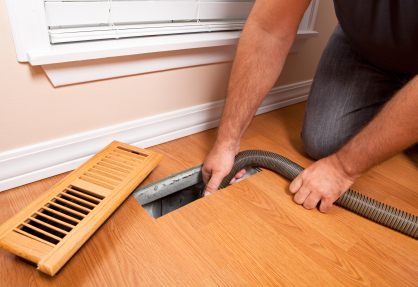
Residential air ducts work as a part of the HVAC system to circulate air throughout all of the rooms in the house. With all of the air flow, dust and particulate buildup is common inside most air ducts. Many people wonder if you need to clean air ducts regularly and about the best way to go about cleaning them. There is a bit of debate on the subject, with the EPA suggesting that air ducts only be cleaned as needed in response to mold, vermin, or excessive dust being visibly ejected into the air.  The EPA bases their recommendation based on scientific studies that found no evidence linking air duct cleaning to the prevention of health problems. In fact, their study showed that dirty air ducts do not even lead to increased particle levels in the air of most homes.  You can find their complete set of guidelines for air ducts cleaning here.

On the other side of the issue is the National Air Duct Cleaners Association (NADCA), who recommend that homeowners have their ducts cleaned regularly at least once every 3-5 years.  The NADCA claims that maintaining clean ducts can improve air quality, as well as increase the energy efficiency of your HVAC system.  You can find their recommendations as well as some FAQs about duct cleaning on their site.  Be sure to take everything available on their page with a grain of salt, as they will inevitably have a biased viewpoint.  For instance, although they claim that duct cleaning can decrease your home’s energy consumption, studies on the subject indicate that it is specifically the cleaning of the cooling coils, fans, and heat exchangers in your HVAC system that leads to increases in energy efficiency.  There is little evidence to suggest that cleaning the actual ducts will have any impact on energy use.

However, many people have found that duct cleaning helps with interior air quality, citing significant improvements in allergy symptoms.  If you have noticed recent health symptoms that you think may be related to poor air quality then you may want to consider having your air ducts cleaned.  Once you have made the decision you will want to be very careful finding the right professional for the job as many air duct cleaning services are notoriously sketchy and unreliable.  To make finding a quality local service company easy you should try using TalkLocal.  All you need to do is enter your name, contact info, and a description of your problem and you will be automatically connected to someone who can help in minutes.

How to Install Roof Shingles

Wednesday, October 17th, 2012

How to Install Roof Shingles Roofers

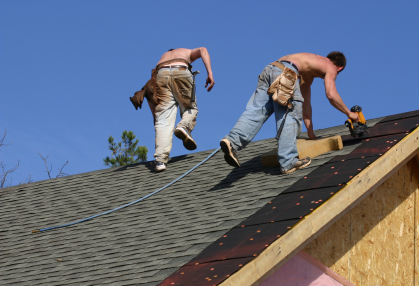
Learning how to install roof shingles on your own is a somewhat complicated process; it’s extremely important that you follow the proper process and take heed of certain precautions. An improperly installed shingle roof won’t be waterproof and may cause water damage. However, if you carefully follow the process outlined below, you should be able to properly install roof shingles without worrying about water damage.

Step 1: Put down underlayment

Before you install the first shingle, you should put down self-adhesive waterproof underlayment three feet to six feet up the eave, so that windblown rain or snow can’t force water up the roof edges. This will guard against any seepage that may damage your home during winter and inclement weather. Likewise, you’ll need to make sure that you already have the proper underlayment and roof edging for the rest of the roof. The type of underlayment and roof edging will be determined by the local building inspector, so call them to figure out what specific building codes apply to your home. When you install the underlayment, there should be at least a two-inch overlap between the sections. Afterwards, nail a drip edge along the side of the eaves and the rakes.

Step 2: Install the Starter Course

Find the center of the roof and then snap a vertical chalk line. Most of the time, people use this line to work left and right toward the rakes, but certain shingles may start along the rake edges, so check the shingle specifications. For the first row of shingles (the starter course), you’ll need to cut the tabs off and then apply them with self-sealing adhesive strips along the eave. There should be a slight overhang past the drip edge.

Step 3: Install the Shingles

You should use four roofing nails per shingles or more if you live in a high-wind area. The first regular row of shingles should be laid on top of and flush with the starter course. Make sure that there are five inches of the tabs exposed, where the bottom tab meets the top of the cut-out. Continue installing shingles until you are finished!

Installing a roof is a moderately involved, multi-day project, so if you don’t have any sort of roofing experience at all, it’s highly recommended that you find a local roofer or handyman to help you out.  TalkLocal is a great way to instantly connect to high-quality professionals in your area so you can get this done fast!

Do Moving Companies Move Cars?

Wednesday, October 17th, 2012

Do Moving Companies Move Cars? Moving and Storage

Many people nowadays own multiple cars, which may be very useful on a day-to-day basis, but is a complete pain when moving long distances. Many people wonder if moving companies move cars. To answer that, most moving companies do not move cars themselves, they prefer to subcontract another company to move vehicles instead. However, there do exist moving companies that move cars as well as your other personal items; these companies put the car on the bottom of the truck while the rest of your things go in a “shelf” up on top. The downside to these companies is that prices tend to be hefty as many also charge according to the total weight.

You may also find a separate company that transports your vehicles. If you do, make sure you follow these tips:

– Always ask what the total cost of shipping your car. Vehicle transport companies will generally need: the origin/destination, departure date, type of vehicle, and your preferred shipping options.

– Determine your shipping options, such as door-to-door or terminal-to-terminal, open or enclosed, and operable or inoperable.

– Take all your personal items out of the car because they increase the total weight.

– Find out the estimated time in transit. Most companies will not give you a specific date of arrival, but a time range. If they do give a specific date, and ask what the remedy is if they don’t deliver the car on time.

– Read your contract carefully. Have all dates, fees, and liabilities in a written contract. If you have any problems, the contract is what the company will refer to.

– Make sure your vehicle is insured against damage and theft, and also check the insurance contract for a damage deductible.

– Check online and with the Better Business Bureau to ask about a company’s service record.

– Before transporting your car, wash it thoroughly so there are no disagreements over damage later on.

– When you pick up your car, always thoroughly inspect every part of the car and check it against the Original Inspection Report to make sure everything is exactly the same. NEVER accept the vehicle when you haven’t inspected the entire car, or are unable to for whatever reason.

– Most moving companies require a deposit in advance; the final payment is usually in either cash or check.

Need a reliable and trustworthy moving company? Finding one to suit your needs exactly can be quite tough, and that’s why TalkLocal searches for a company for you! This free service will find you the perfect company that is available when you are.

How to Stay Anonymous on the Internet

Wednesday, October 17th, 2012

How to Stay Anonymous on the Internet Computer Repair

The Internet is serious business. Your personal information, if leaked, could be abused to practically no end. Any piece of information released to the public on the internet has the potency to be viral, meaning that you have no control over the flow of the information. Because of this, many people wonder how to stay anonymous on the internet.

The truth is that there is no way to remain “completely anonymous” on the Internet. Whenever you access a website, the website has a log of your “IP address” that is used to identify you and your actions.

The “ip” address is like a street address of your house that is used by online services in order to identify devices like a laptop, printer, or a router. The address can be used to backtrack the actions on a certain website back to the originating router and the machine, making it possible to find the identity of the person controlling the machine (computer) during a certain time frame.

You can use “proxy” servers in order to disguise your identity. Proxy server are servers that will fulfill the request for you when you tell it what to do; it’s like doing things wearing a glove. But even the IP addresses logged into proxy servers can be backtracked, meaning that there is no way to disguise your identity on the Internet fully, even if you use multiple proxies.

To be safe on the Internet, just follow these tips to avoid complications regarding your identity:

1. Do not share your name/address/email address/SSN unless there is a good reason and you are using a trustworthy site. Identity theft is an ongoing threat despite all the precautions.

2. When buying something online (online transactions), check the web address to ensure you are using a secure connection to enter your financial information. If the website address begins with “https://”, it means that the connection is secure. If the website address begins with “http://”, it means that it is not secure.

3. Avoid public wireless connections when you are transferring important files online or downloading files to your computer. A virus might catch onto the file.

Additional Help

If you feel like you need professional help on how to stay anonymous on the Internet, TalkLocal can help with finding the correct local experts in this case, saving you time and energy in what may be a stressful situation.