
Archive for the ‘services’ Category


Free Software to Transfer Music from iPhone to Computer

Monday, October 29th, 2012

Free Software to Transfer Music from iPhone to Computer Computer Repair

Everyone knows how to transfer music from your computer to your iphone but how many people know how to do it in reverse? Attempting to transfer your music from your phone to a PC or Mac is a little more complicated but still totally doable. If you are wondering if there is a free software to transfer music from your iPhone to computer, you are in luck. These programs will aid you through the process.

Manual Transfer

If you want to manually transfer all your music to your computer you should set out a decent amount of time to be able to do so.  Without software this process can take a lot longer.  You will need to plug your phone in and using a phone browser program find all your tunes.  You can then copy and paste them from your phone onto your desktop or into a folder.

Download a software

Transferring music from your phone to a computer is a much simpler process when you download an aide program. You can use Winamp for PC and iDump for Mac.  Software such as these will allow you to transfer them directly. You can simply install the program and designate a place you want all the files to go to. Plug your phone in and you can get started immediately. Name your songs as they are downloaded and watch as they fly through the cyberspace right onto your computer.

Continuing Problems

If you continue to have problems with downloading music from your phone to your computer, you should seek professional help. Use TalkLocal to be put in contact with reliable IT businesses.  You don’t have to do any work! Simply input your problem and availability and within minutes your should be connected to someone who can help you out.

Microwave will not Stop Running

Monday, October 29th, 2012

Microwave Will Not Stop Running Appliances Repair

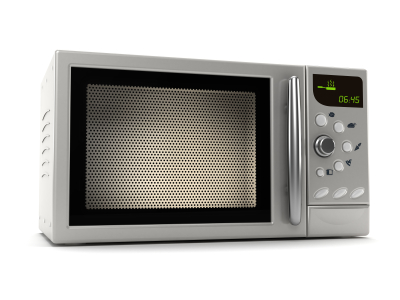
Having a microwave is such a convenience.  You can pop in a dinner or warm up some soup within a matter of minutes maybe even seconds!  The various array of things you can do with a microwave make this product extremely versatile.  You can defrost, warm up, bake, etc.  Sometimes devices like microwaves start to malfunction.  For instance, if your microwave will not stop running, then it can pose a problem for your food.

The most important thing to remember when your microwave is spazzing out is that you need to care for your personal safety first.  You should unplug the device from the power source.  Opening the door when the microwave is still on is extremely dangerous.  You should never do this.  Your face and hands could get burned very badly.  Shield your eyes and unplug the microwave as soon as you can.

The issue may be with the smart board.  This is the part of the microwave that signals the device to stop when the timer runs out or the door is opened.  If the smart board breaks or goes bad, the microwave will be unable to stop because it is short circuiting.  Once you unplug the microwave, you need to go get a new smart board and replace it. In most cases it may be completely ruined and you should just throw the entire thing away and get a replacement microwave.

If you continue to use the microwave even though it is malfunctioning you could cause serious damage. The device could blow up or start a fire, which could cause serious injury and destroy your kitchen.  You should be extremely cautious when approaching a microwave that will not stop running.

Continuing Problems

If you continue to have problems with your microwave you should seek professional help.  Use TalkLocal to be put in contact with reliable local appliance companies within minutes.  You don’t have to do any work! Simply input your problem and availability and TalkLocal will do the rest.  Almost immediately you will be connected to someone who can help you out.
Different Parts of a Roof

Monday, October 29th, 2012

Different Parts of a Roof Roofers

Understanding the different parts of a roof is not only interesting, but it can be extremely beneficial if you are having a leak or if you are wondering if your roof will really hold during a big storm.  In addition to the actual infrastructure of the roof, there are various names for areas of the roof.  The following is a list of common roof terminology and areas:

–  Dormer:  The structure protruding from the roof that surrounds a window.

–  Roof Truss:  The system of beams making the foundation of the roof.  In addition, rafters are part of the roof truss and run from the top to the bottom of the roof.

–  Hip:  Where two sloping roofs intersect and create an external angle.

–  Valley:  The internal angle where two sloping roofs intersect.

–  Fascia:  The covering of the end of the rafters that is usually used to attach gutters to.

–  Ridge:  The highest point running along the length of the roof.

–  Starter Strip:  Protects the roof from wind and fills in gaps.

–  Eave:  An eave is the lower overhanging of a roof.

–  Gable:  A gable is the triangle projection coming from the roof that is below the highest point on the roof but above the main house.

Check out this roof parts link to get acquainted with the anatomy of your roof and to have a great visual of the layout.  If any issues come up with your roof or you need help now, use TalkLocal to get in touch with a high quality roofer in your area.

How to Add New Electrical Outlets

Friday, October 26th, 2012

How to Add New Electrical Outlets Electricians

There are many reasons to learn how to add new electrical outlets to your home.  Whether it is to eliminate unsightly extension cords or provide power for a new fixed appliance, new electrical outlets can be essential for getting your home in perfect working condition.  For people with little experience with electrical wiring installation, this can be a daunting task.  If you want to get professional help, you can use TalkLocal to automatically connect you to a professional electrician for free.  For those “do-it-yourselfers” who are feeling a little more adventurous, here are the things you need to think about when approaching this project.

The first thing you need to do is read up on your local electrical codes.  The work you will be doing needs to be up to local code, which can vary from place to place.  Keeping your home wiring up to code is essential not only for avoiding fines but for preventing electrical fires caused by faulty wiring as well.

The next step is to determine where you will be drawing the power for your new outlet.  There are two main options here that will be determined by your home’s layout and your power needs.  The easier option is to piggyback your new outlet on to a nearby existing outlet.  Wiring to an existing outlet is only possible if there is already one nearby in the same room or ideally in the same wall facing towards an adjacent room.  The drawback to this is that it can cause a lot of strain on the individual circuit that will be supporting two outlets.  Avoid this option if either outlet has regular heavy power use or often causes a fuse to trip.  There is a great step-by-step guide on the piggybacking method available here.

Our other available choice is to run a new cable to your home’s main electrical panel.  This method will require additional wiring and expertise, so use it only when piggybacking is not an option.  This may be outside the scope of the ordinary homeowner’s abilities, but it is still doable if you carefully follow this guide.  Just be sure to be very careful when working with live electrical wires, no matter which option you end up going with.

How to Make the Front Door More Secure

Friday, October 26th, 2012

How to Make the Front Door More Secure Locksmiths

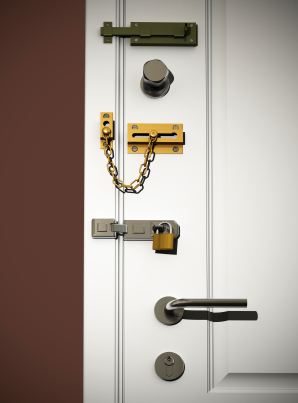
The front door is one of the most important entry points in your house, especially if you live in an apartment where it’s the only entry point.  Learn how to make the front door more secure with the tips we’ve provided below.

Add a strike box

Most times, flimsy strike plates (the metal plate that surrounds the hole where the deadbolt enters) are only secured by short screws that can be removed.  A strike box with a structure that has a metal pocket and secures directly into the wall stud beside the door, making it far more secure.

Get quality doors

Not all doors are made equal.  If you knock on the door and you hear a hollow sound, you’ll immediately need to replace those doors.  Hollow doors are a major security liability since they may easily be knocked down or destroyed.  Exterior doors should instead be made our of solid wood, fiberglass, or metal.

Install wide-angle peepholes

Peepholes will allow you to see how who is on the other side of the door without opening it.  Wide-angle peepholes with covers would be best as they prevent people from using tools such as reverse peephole users.

Add a heavy duty dead bolt

Dead bolts are low-cost and effective additions to your security system.  Make sure your door has a dead bolt which is either double-cylindered (which is keyed on both sides) or single-cylinder (keyed only on the outside).  Also make sure that the dead bolt has a grade 1 security rating as well.

Secure exposed hinges

The hinges should always be on the inside of the door, or else your door pins risk being taken out and your door being removed.  If your hinges are on the outside, you will need to rehang the door and replace the original pins with non-removable hinge pins.  Each hinge needs to be secured to the frame with 3-inch screws as well, regardless of whether the hinge is exposed or not.

These tips will help you ensure your front door is both sturdy and secure against all unwanted intruders and burglars.  Most of these tips can be done on your own, but if you’re looking to make more extensive renovations or are really concerned about security, it’s highly recommended that you talk with a locksmith about further improvements. TalkLocal can put you in contact with a local high-quality locksmith in just minutes.

Vacuum Cleaner not Picking up Dirt

Friday, October 26th, 2012

Vacuum Cleaner not Picking up Dirt Appliances Repair

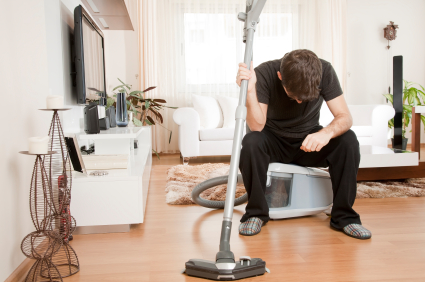
If you feel like you are vacuuming the same area over and over to no avail, there are few things that could be wrong with your vacuum. This article will help you figure out why your vacuum cleaner is not picking up dirt and how to fix it.

– Check if the bag is full. If the bag is full, you vacuum will not be able to suck up any more dirt. If the bag is not full, check if the filters are dirty. They may need to be cleaned or replaced.

– Check the hose of the vacuum. The hose should be detachable from the vacuum; take it off to check if there is a clog inside of it. If you cannot peer through it and see out the other end, squeeze it to try and get anything out that could be clogging it. If squeezing the hose does not work, try poking it with a long object such as a wire hanger to get whatever is stuck out of the hose.

– Check the attachment connection of the hose and the base of the vacuum. There could be something clogging this piece of the vacuum as well. You can also use a wire hanger to remove the object if you cannot get it out with your fingers.

– Check the vacuum belt to see if it’s slipping off. If the vacuum belt is slipping off, the vacuum will make high pitched sounds and the vacuum brush will not be moving. If the belt comes off easily, you will need to replace it.

– Check the actual brush of the vacuum. If it appears to be spinning, but it is not picking anything up, there may be some objects caught inside the brush itself. Check for anything tangled up inside the brush and remove anything you find.

If none of the above suggestions help fix your vacuum, you may want to contact an appliance repair professional. With the help of TalkLocal, you can receive phone calls in minutes from up to three high quality appliance repair professionals in your area that are available when you are.

Fixing Leaking Pipes under Sink

Friday, October 26th, 2012

Fixing Leaking Pipes Under Sink Plumbers

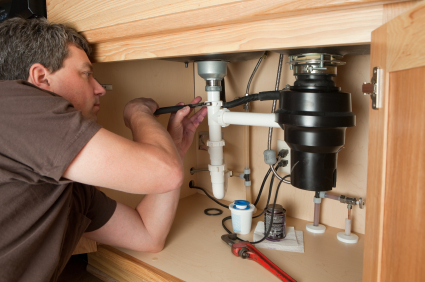
Tired of waiting for your spouse to fix the leaking pipes? Here are a few helpful tips to assist you with fixing leaking pipes under the sink without wrecking the place. Identifying the leak source and replacing old parts are key steps to a having fully functioning sink.

How to stop a leaking pipe under your sink: 

Whether you have brass pipes or PVC (plastic) pipes, these tips are for you. To begin, place a bucket under where the leak is taking place to catch the dripping water. Next, dry the pipes with a towel. Identify if the leak is coming from the incoming pipe or outgoing pipe. Plug the sink and run the faucet. If you see a leak at this time under the sink, the incoming water pipes are the issue. If you do not see a leak, unplug the sink and allow the water to drain. If a leak occurs, the problem is with the outgoing pipes.

The highest damp point usually indicates the start of the leak. Depending on the location, there may be various things to look for. For example, a pipe may have a crack, the shutoff may be bad, or the nuts could be loose. If the shutoff is the problem, check out this article. If a nut is loose, a basin wrench will do the trick to tighten them up. Sometimes the washers or nuts are worn out and need a replacement. If that is the case, you can find these parts for replacement at your local department store. Replacing the worn parts is a cheap and efficient fix if the leak is not too large.

If you don’t have the correct tools or would like someone else to fix the problem, use TalkLocal to find a plumber that will come at your convenience. The service is free and will quickly connect you to a high quality plumber near you.

How to Find a Trustworthy Auto Mechanic

Friday, October 26th, 2012

How to Find a Trustworthy Auto Mechanic Auto Repair

Whether you’ve just moved to a new area or have just purchased a new car, knowing how to find a trustworthy auto mechanic is important for keeping both your vehicle and your wallet in good shape.  Auto mechanics have a notorious reputation for shady dealings, especially when it comes to overcharging you for sub-standard repair work.  Since most people don’t have a clue what their repairs should really cost, having a mechanic you can trust is the only way to be sure that you are not being taken advantage of.  It can be hard to know who to trust, but here are some things to keep in mind and watch out for on your search.

There are basically three different types of mechanic auto shops out there:  dealerships, large national chain shops, and smaller independent repair shops.  Each has its own advantages and disadvantages.  For example, dealership mechanics tend to be extremely expensive, but will be specialized to work on your specific make/model.  High end cars and work that will be covered by your car’s warranty should probably be brought to the dealership in order to get the best quality service.  National chain shops, on the other hand, tend to offer the best prices and the lowest quality service.  These kinds of places are often staffed by entry-level mechanics with little experience.  Chain shops are a good choice for basic repairs like an oil change or new battery, which do not require much expertise.

The third category, smaller independent mechanics, will usually be your best choice for general repairs.  Independent mechanics tend to have prices somewhere in between chain shops and dealerships, but there is a lot of variability.  Because of the wide variation in price, skills, and services, looking at independent mechanics is when you need to put the extra effort in to making sure that the company you go with is trustworthy.  Fortunately there are some signs to look for as indications of the mechanic’s quality including: whether or not the repair shop is certified by an affiliated trade group like the American Automobile Association (AAA) or the Automotive Service Association (ASA), complaints about the company registered with the Better Business Bureau, and any warranty they offer on their work – the longer the better.  If you don’t feel like putting in all the effort researching the mechanics available in your area you can also try using TalkLocal to automatically connect you.  TalkLocal uses an algorithm that takes into consideration ratings, reviews, and past performance when matching you with a service professional, so you can sit back and let them do the work for you.

How to Set Up Spam Filter in Thunderbird

Friday, October 26th, 2012

How to Set Up Spam Filter in Thunderbird Computer Repair

Many people use Mozilla’s Thunderbird client to manage their email and news feed accounts. One of the special features included in Thunderbird is an advanced spam filter that analyzes your actions and adapts to create personalized filtration settings. In order to take full advantage of this filtration system, you will need to change some settings in Thunderbird so it can start learning, analyzing, and filtering on its own. Read more to learn how to set up the spam filter in Thunderbird.

To access these spam mail settings:

1. Open up Thunderbird.

2. Click Tools > Options from the drop-down menu.

3. Go to the security section in the options window.

4. Click on the “Junk” tab.

5. Check both the “When I mark messages as junk: Move them to the account’s junk folder” option and the “Enable junk filter logging” option. You may choose whether or not to mark junk messages as read at your discretion.

Once these settings have been enabled, Thunderbird’s filter will be activated. The filter works by watching what kinds of email messages you read, and what kinds of email messages you mark as spam. It then analyzes patterns in your tendencies to automatically classify spam mail as junk. You will need to train the filter by manually marking spam emails as junk; over time, the filter will get better at detecting spam messages and fewer will get through to you. Be sure to periodically look through the junk mail folder to check for any messages that may have been mistakenly classified as spam.

If you want to get more advanced with your message filtering, Thunderbird provides you with the ability to create your own custom message filter rules. You can use these rules to automatically sort, tag, forward, or delete your incoming mail based on whatever criteria you want to set. You can also use them to further modify and customize your spam filter. The how-to of creating custom message filters can get a little complicated, but check out this article, published by Mozilla, for an in-depth guide on how to set up your own rules. Once your rules are in place, all you have to do is sit back and let Thunderbird’s automatic filtering system do the work.  Congratulations on taking the first step towards a spam-free inbox.

If you happen to need additional computer assistance, TalkLocal can connect you to a local professional in minutes.

Moldy Smell in Washer

Thursday, October 25th, 2012

Moldy Smell in Washer Appliances Repair

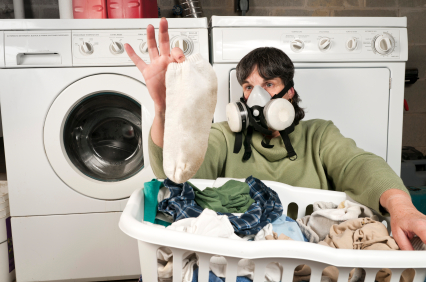
Moldy washers are pretty gross, especially when you consider that this machine is supposed to make your clothes cleaner! Use bleach or another mold cleaner to wipe the inside of your washing machine, taking care to especially clean the rubber seal that’s located between the door and the inside of the machine. There are ways to get rid of the moldy smell in your washer. Use a quarter cup of powdered dish detergent on the hottest water setting to completely get rid of the mold in your washing machine. Try opening the small door at the bottom of your washing machine and letting the water drain out. There might be a lot of water trapped inside, so get a bucket and be prepared to clean up the water. However, the best method to stay mold free is to prevent mold from forming in the first place. Here are the most common reasons mold forms inside a washing machine:

 Using too much detergent — A lot of people follow the instructions on the detergent bottle and pour in too much detergent. Detergent that creates a large amount of suds is more likely to cause mold to develop. Use 1/3 of what the bottle recommends, unless the clothes are heavily soiled.

–  Using fabric softener — Fabric softener is a source of food for mold and bacteria, and encourages mold growth on the inside of the tub. Use dryer sheets or dryer balls instead.

–  Using only cold water to wash your clothes — Hot water kills most bacteria and mold, while cold water provides a moist environment for fungi to grow. Try making your hot water load the last load of the day.

–  Not using the machine for a long time — This gives time for mold to develop without interruption by running water. If you’re going to be on vacation or won’t be using the washer for a while, make sure to fully dry the inside first. Leave the door of your washing machine to let the water dry faster.

–  Drain pump is blocked — If the filter of the drain pump is clogged, then water may drain more slowly or not at all. The excess water causes mold to develop inside the washer.

Mold is a relatively easy problem to deal with, but washers have a habit of breaking down often and the problem may not be as easy to fix. Use TalkLocal to find a qualified appliance repair professional to remove your washer woes for no additional charge!