
Archive for the ‘services’ Category


How Long can Oil Sit in an Engine

Thursday, October 11th, 2012

How Long can Oil Sit in an Engine Auto Repair

All cars need engine oil to keep their parts well lubricated. Without it, engine components grind against each other and residue builds up inside the motor. Good engine oil maintenance is a critical part of keeping your car healthy and functioning. Not all of us are car experts though and it can be very confusing to figure out exactly what you should be doing to take care of your car. A particular source of frustration for drivers nationwide is figuring out how long to wait between oil changes or asking yourself how long can oil sit in an engine for.  There are a lot of popular myths out there on this subject, but here are some simple guidelines to follow.

Oil change times are most commonly listed in terms of miles driven. That is to say that you should change your oil after driving X number of miles since your last change. This variable will depend on the car you drive and the type of oil that you use. Most modern drivers use synthetic oil, which can last thousands of miles more than traditional petroleum based oil.  You can check on the bottle to see how many miles the oil you use is rated for, but most synthetic oils will be fine driving up to 7,500 miles without a change. Keep in mind that many oil manufacturers tend to underestimate how long their oil will last in order to keep you coming back for refills more often. Because of this it is generally safe to drive one to two thousand miles more on your engine oil than the bottle advertises.

But what if you have a car that is not being driven very often? Answers vary wildly on this topic, but the best estimate for you will depend on the type of car and how frequently it is being used.  You should consult your car’s owner’s manual for specific details; in general, if you are going to let a car sit for more than six months without being driven, you should change the oil beforehand and drive the car for at least ten minutes a month.  This helps to warm up the oil, remove gunk build up, and clean out your system to prevent oil from breaking down too quickly. Maintaining a regimen like this can keep your oil functional for up to two years with minimal driving.

Once you are ready to change your oil, you will probably want to find an auto-technician to do the job for you. If you are feeling up to taking on the task yourself, there is a great step-by-step guide available here.  Otherwise, you should find someone who can service you car.  If you use TalkLocal, you will be automatically connected with a quality local professional in just a few minutes.  All you need to do is provide your contact info and a description of your problem and TalkLocal takes care of everything else!


How to Connect Three Monitors to Macbook Pro

Thursday, October 11th, 2012

How to Connect Three Monitors to Macbook Pro Computer Repair

Using multiple monitors at work can increase efficiency and make doing a lot of tasks a lot easier. Many people like their single screen, but if you are looking to increase monitor space, you can add more screens. A lot of people have graduated to using as many as three monitors. Learning how to connect three monitors to Macbook Pro can be a little more complicated, but not impossible.

If you want to attach two extra monitors, you can use both your VGA plug in as well as a USB VGA adapter cord. This way you don’t have to install any third party programs or add any extra connections. This is a simple way to achieve your goal if your computer can handle it.

In the case that you need to use a third party device such as Matrox TripleHead2Go, you will need to download and install it first. You may need to do this if your computer has DVI instead of display ports. You can connect multiple extra monitors, but your computer will not recognize them separately and, instead, treat them as one.  Using something like Matrox, which is a graphics expansion module, you can increase the amount of display power.

Sometimes your Macbook Pro does not have as large of a video card as it needs to run more than one extra display monitor. In order to rectify this problem, replace your current card with a larger one so that you can use as many monitors as you want.

Mac and Apple product are notorious for their incompatibility with many other electronics, so you should carefully research the types of external monitors you want to use to make sure they will work with your computer.

Continuing Problems

If none of the above related solutions help, you may want to seek professional help. Use TalkLocal to be connected to reliable local businesses within minutes. The process is easy. Simply input your problem and availability on the online service request and TalkLocal will do the rest! Within minutes, you will be put in contact with a qualified IT service company who can help you out.

Installing a Cat5 Connector Wall Jack

Thursday, October 11th, 2012

Installing a Cat5 Connector Wall Jack Electricians

If you want to extend the range of your home internet network, a wireless router is usually your best choice.  But when dealing with a room that a wireless signal is unable to penetrate, like a basement or garage, you might need to use an Ethernet cable running from your modem.  The best way to accomplish this is to install a cat5 wall jack panel in the room where you need internet access and connect it with a cable through the walls to your internet source.  For those with little to no wiring experience, installing a cat5 connector wall jack can be a tricky undertaking, but if you follow these steps you should be surfing the web in no time.

The first step is to actually run the Ethernet cable from the room with your internet modem to the room where you are installing the wall jack.  If you are not familiar with the process of snaking a wire through your walls you should read about it here.  Although simple in theory, this is often the most difficult step for the average do-it-yourselfer.  Those who are unable to accomplish it on their own or uncomfortable making the attempt should probably hire an electrician to take the job on for them.  Getting in contact with a quality local professional is easy if you use TalkLocal, so don’t hesitate to ask for help if you need it.

Now that the cable is in place we will move on to the actual wall jack panel.  Begin by cutting a hole in the wall the size and shape of the panel, wherever you want it to be located.  Then pull the Ethernet cable you ran through the back of the wire box (the part of the wall jack panel that sits inside your wall) and use a screwdriver to screw the box securely to the drywall.  To attach the jack to your cable, you will need to strip the cable end with wire strippers and insert the individually colored smaller wires into the corresponding colored jacks in the back of the wall plate.  Once they are in place you can press the wires into the connections using the punch down tool that should have come with your wall panel when you purchased it. With the cable connected to the jack all that remains is to fit the faceplate of the panel over the wire box and screw it into place.  Congratulations, you should now be able to easily connect to your home network without worrying about all the hassles of wireless connections.

When to Replace Windows in your House

Thursday, October 11th, 2012

When to Replace Windows in your House WIndow Replacement

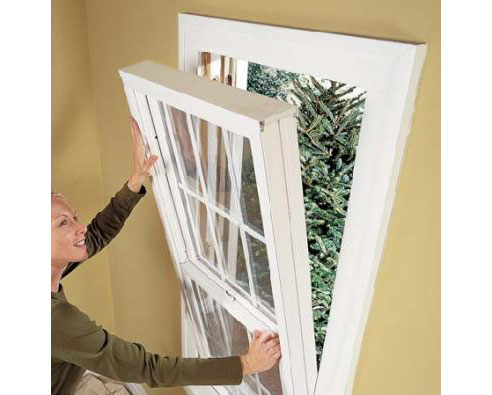
When doing home renovation and upkeep it can be hard to know when to replace windows in your house.  Many people don’t know how old their windows are or what kind of other options may be available.  There are actually a few important reasons for thinking about window replacement, as windows that do not provide proper insulation can cause significant increases in your heating and air-conditioning bills, as well as cause damage to the interior of your home.  Here are a few key signs to help you know when it is time to replace your windows.

 As your home goes through the normal wear and tear of everyday life, wind, rain, and the occasional baseball can put your windows through a serious beating.  Obvious signs that your windows need to be replaced are cracks or holes in the glass, as well as rotting, cracked, or missing trim.  Serious damage like this will let the outside weather in, potentially raising your utility bill and harming your furniture.

There are also some less obvious signs that your windows are not providing proper insulation that are not as noticeable. If your interior pane of glass is cold to touch, or if the area next to your window is colder than the rest of the house, heat is escaping and causing extra strain on your HVAC system.  If you notice these symptoms, try taking a lighted candle and slowly tracing the frame of the window, keeping an eye out for a flickering flame as a sign of a draft.

Once you have determined that your window is drafty or leaking, you can use TalkLocal to find a professional window repair/replacement service.  TalkLocal saves you time and money by automatically connecting you to the best quality professionals in your area.

Even if you don’t notice any of these symptoms, if your windows are more than twenty years old you may want to consider upgrading them.  Newer windows are capable of insulating your home much better and can increase the energy efficiency of your house.  Check out this site for some information about new energy-efficient windows and some other tips for cutting down on the heat loss from your home windows.

Removing Tree Root from Lawn

Wednesday, October 10th, 2012

Removing Tree Root from Lawn Tree Removal

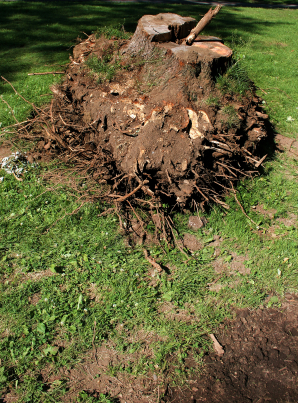
When a tree falls down or gets removed from your lawn, it can leave behind pesky roots.  These roots will destroy the look of your lawn if they are improperly removed. Some roots go deep into the ground or spread out far around the lawn.  You need to take the correct measures when removing tree root from lawn.

Tree roots need to be deep enough to reach the water in the ground but shallow enough to get air and oxygen to the surface. There are three different types of roots that allow trees to receive the right nutrients.  The first type of root is the heavy anchoring ones that come from the base of the trunk.  The second type is the longer transport root extends from the anchors to form a network to find nutrients.  The third type of root is the small roots that branch from the transport roots.  Each of these roots is needed to keep your tree healthy and alive.

The first thing you should do when trying to remove tree roots is change the conditions of your lawn. You can circle the tree with light compost and coarse wood chips to attempt to do this. This mixture will allow air to pass to the roots without overwhelming the tree’s internal system.  The compost should be kept loose and replaced every year.  This will move the roots further into the ground so that you can remove them without causing too much lawn damage.

In order to remove the roots you should make sure the lawn is properly watered so the roots and soil is not too brittle.  You can remove the most surface roots by cutting the roots out cleanly and pulling them out from one central location. You can fill each hole left by the root with more soil.  Use soft topsoil and not composted soil.  In order to take out deeper roots, you should use a stump grinder.  This machine grinds the stump and roots that reach up to one foot into the ground.  The remaining root will decompose and disappear into the lawn without the tree.

If you continue to have problems with roots you should try to install root barriers.  Once you have removed the remaining roots, use buried walls to keep tree roots from expanding too far.

Continuing Problems

If you have more questions about tree root removal you should try to talk to a professional so that you can get the best help possible.  The easiest and fastest way to get in contact with reliable local tree removal services is to use TalkLocal. Just put in your problem and availability and let them do all the work.  Within minutes you will be connected to someone who should be able to help you out.

Waterproof Paint for Bathroom Walls

Wednesday, October 10th, 2012

Waterproof Paint for Bathroom Walls Painters

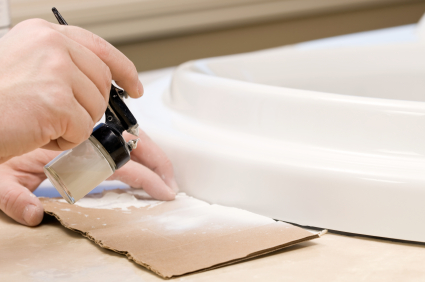
Bathrooms are moist places that likely to harbor mold and mildew over time. If you’re repainting these rooms, you probably want to consider the types of paint that will help to repel the moisture that builds up and causes this unsightly mold and mildew.

There are several types of paint, and here’s a short list and description of each one, leading up to the best waterproof paint for bathroom walls:

Flat paint has a matte coating and is not glossy, which makes it prone to absorbing moisture. Probably something you don’t want in your bathroom.

Eggshell paint has slightly more sheen to it and is washable. Similar to flat, it absorbs moisture, so this would not be the most effective choice.

Satin paint has more gloss than the previous two, and would be most appropriate for lower-use bathrooms such as “powder” or guest bathrooms.

semi-gloss and high-gloss are your best choices for bathroom paint. These types have gloss that repels water, reducing the buildup of mold and mildew spots.

There are also specific types of paint for bathrooms that claim to be mold and mildew resistant. You can find these at any typical paint retailer such as Sherwin Williams or a home improvement store like Home Depot.

If you are having trouble finding the best paint for your bathroom, or would like some professional help in completing the job, try using TalkLocal to locate painting contractors near you. TalkLocal is a free service that will connect you with top-quality, reputable painting professionals in your neighborhood, within minutes. Simple enter in your specific problem, location and availability and TalkLocal will contact multiple companies, who will then call YOU directly, ready to help.

How to Repair Cracked Leather Seats

Wednesday, October 10th, 2012

How to Repair Cracked Leather Seats Auto Repair

Leather seats can really improve the appearance of your car by adding a feeling of affluence and decorum.  Although they can become a pain when they heat up in the summer and freeze in the winter, many people continue to get leather seat upgrades when they buy new cars.  But what happens when these leather seats begin to crack?  They can quickly become an eyesore that ruins the overall appeal of your car. Read on to learn how to repair cracked leather seats.

You can easily fix the cracks that appear on leather seats if you have the right materials.

You will need:

– dish soap

– warm water

– bucket

– a couple cloths

– scouring pad

– denatured alcohol

– 240-grit sandpaper

– blow dryer

– leather prep

– Sport Seal

1. Combine a few drops of the dish soap with warm water in a large bucket.

2. Scrub the entire seat clean with a cloth.

3. Dry it off with a new cloth.  Repeat this process another time but with the scouring pad to get a deeper clean.  This will ensure that there is no dirt or any particles to ruin the seats when you are trying to fix them.

4. Now that the seats are clean you should apply a little bit of denatured alcohol to a paper towel or cloth and wipe every part of the seat down.  Do not let this dry naturally; instead, dry the seats manually with a cloth.

5. Dip the 240-grit sandpaper into the soapy water to soften it a bit.  Sand down the areas of the leather seats with the cracks and the dye will start to move underneath.  Move the lifted dye until the cracks are completely filled and the leather is smooth.

6. Wipe done the seats with a towel and blow dry the seats until they are completely dry.

7. Now that the cracks have been filled, you can protect the patch up you just did.  Apply a thin layer of leather prep to the entire seat.  Follow this with a thin coat of Sport Seal to each of the damaged areas.  Allow this to dry.  This should take care of all the cracks in the leather seats.

Still have cracked seats?

If you still have problems with your cracked leather seats, you should seek professional help.  Use TalkLocal to be put in contact with reliable local auto repair businesses.  You don’t have to do any work! Simply input your problem and availability and within minutes you should be connected to someone who can help you out.


Best Way to Cool Off Laptop

Wednesday, October 10th, 2012

Best Way to Cool Off Laptop Computer Repair

When you feel the underside of your laptop and immediately receive a first degree burn, the gut reaction of many is to throw your laptop in the freezer to cool it down. For the record, that’s something you definitely should not do. There may not be a singular proven fastest method of cooling down your laptop, but this article will present the best way to cool off laptop.

Use on Hard Surface

The name laptop is a bit misleading, as using them on soft surfaces such as your lap will block the ventilation. So don’t use your laptop on your bed, carpet, or on your lap. Instead move your laptop to a hard flat surface.

Dust

If you’ve had your laptop for a while and tend to use it in dusty areas, there’s a high probability that the dust has built up inside your fan and your heat sink. You can either open up the laptop to clean its components or use compressed air in short bursts to clear out the tiny gaps in your heat sink.

DIY Laptop stand

Buy a laptop stand with a fan included to cool down your laptop, or you could even make your own. Here’s a quick and easy idea for an emergency laptop stand: Put the sides of the laptop on top of two books, leaving a gap in the middle. Place an ice pack in the middle gap under the laptop, making sure that it isn’t actually touching the laptop.

Close Processes

Reduce your machine’s workload by closing unneeded processes and programs. Open up Task Manager and click on the processes tab, then click on CPU to arrange the processes from highest CPU consumption to lowest CPU consumption. If there are programs taking up a lot of CPU power that you don’t need right now, close them. However, be careful not to accidentally close a crucial system process!

Lower Quality Video

If you’re watching a high definition movie or playing a 3D game, your graphic card may not be able to keep with the amount of power needed. Try turning the quality settings down to reduce stress on the graphics card.

Give it a Break

Give your poor laptop a break once in a while! Do things that require a great deal of power on your desktop if possible, and don’t remember to shut your laptop down at the end of the day instead of just putting it on sleep.

Additional Help

If you’ve tried all of these options and your laptop is still overheating, there may be a driver or BIOS issue, or the temperature monitoring system in your laptop isn’t working properly. Use TalkLocal to find a skilled computer technician to resolve these advanced problems.

How to Use Shade Cloth in Garden

Wednesday, October 10th, 2012

How to Use Shade Cloth in Garden Landscapers

A shade cloth or shade sail is a device used outdoors to provide shade. The shade can be either for humans, animals, or gardens. These cloths were originally based on the technology from a ship’s sail that was created to protect its sailors from extended exposure to the sun. Over time, these shade cloths are becoming used less by humans as sunscreen and more for gardens to protect plants from the extreme heats of summer. Shade cloths also come in different density levels. In the case of a garden, you will want a shade cloth with a density level between 50-60%.  Read this article to learn how to use shade cloth in garden.

The process of using a shade cloth in a garden is relatively simple. You start out by digging a roughly one-foot deep hole in each corner of your garden.  If your garden is unusually long, you may want to dig an additional hole in the middle of your garden as well. Wooden stakes that are about four to five feet long will be inserted into these holes. These stakes should fill the hole completely and not move around at all. If they holes aren’t filled, simply pour some soil within the hole to completely cover it; stomp on these areas to pack down the soil tightly to keep the stakes in place.

The next step is to prepare the shade cloth material. Chances are, your shade cloth isn’t the exact size you need it to be, so you will need to cut it to accomodate your garden. Use a tape measure and scissors to cut the cloth about four to five inches longer than the length and width of your garden. Be sure not to leave too much or to little space, or else your shade cloth won’t work 100% correctly.

With the shade cloth cut properly, the next step is to place this cloth on top of the wooden stakes. To attach the shade cloth to the stakes, use a staple gun, nails, or even superglue to ensure the cloth doesn’t blow away. To have your shade cloth be as effective as possible, stretch the cloth across your garden as tightly as is possible and secure it to the stakes. Do this to both sides of the cloth. Once you are done, your shade cloth will be protect your garden from the sun’s heat.

If you have completed all these steps and still require assistance in assembling your shade cloth, consider using TalkLocal to find a capable landscaper for you. TalkLocal is a free service that will connect you with top-quality, landscaping companies in your neighborhood within minutes. Just enter in your specific problem, location and availability, and up to three companies will call YOU directly, saving you the time and stress of finding one yourself.

Types of Blown-in Insulation for Your Home

Wednesday, October 10th, 2012

Types of Blown-in Insulation for Your Home Heating and Cooling

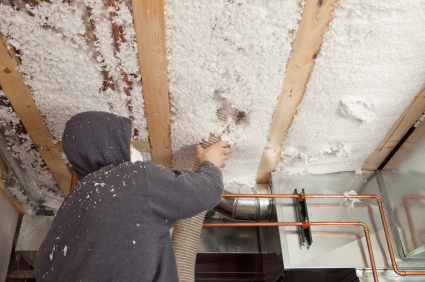
You’ve seen your neighbors getting home insulation and you decide it’s time to consider this for your home too. Home insulation can offer many benefits; not only does it have the potential to significantly reduce your energy bills, but your home will be a more comfortable place to live, it will add value to your property and you are helping the environment by reducing your carbon emissions. Having decided that you wish to proceed with home insulation, you are faced with the task of deciding which type of insulation to opt for. There is a range to choose from, but blown-in insulation is a popular choice. Alternatively known as loose fill insulation, this type of insulation comprises loose particles, which are blown into your attic or cavity wall space – the gap between the interior and exterior wall of your home. Installation of this type of insulation requires someone professionally trained, as the insulation needs to be evenly distributed and this necessitates the use of specialist equipment. Here we consider the three types of blown-in insulation used in properties.

Fiberglass insulation

This type of insulation is made from tiny particles of spun glass fibers – also called glass wool. There are two types available – that produced as a by-product of manufacturing rolls of fiberglass or that specifically produced for the purpose of blown insulation. There should be no difference in their energy saving potential, as long as they are fitted correctly in accordance with manufacturer’s guidelines. However, if you are looking for the most environmentally responsible option, then choose the blown fiberglass produced as a by-product; this will help to conserve resources and reduce the use of landfill. Fiberglass is non-combustible, so does not require the addition of any chemical fire retardants. Although fiberglass is generally an effective insulator, one disadvantage is that it can lose its ability to insulate as temperatures fall; at extremely low temperatures its insulation can reduce to as low as 50%. Despite the concerns about the safety of blown fiberglass – after all it is made up of tiny glass fibers that could be inhaled into the lungs – it is more of a danger to those installing the insulation, as once in your attic or cavity wall it should pose no threat.

Rock wool insulation

This mineral wool is made using the by-products of blast furnaces in industry, with up to 90% of this type of insulation sourced from recycled material. It is resistant to settling, so they maintain their insulation performance over the whole course of their lifespan. Rock wool’s high R-value – the measure of the resistance to heat flow – due to its density, also means that it is a more efficient insulator. Another benefit is its resistance to the entry of moisture, which can otherwise reduce insulating ability. As with fiberglass, it is naturally non-combustible. Rock wool also offers very good sound insulation, which can influence some people’s decision to use it in their cavity walls and even in their ceilings.

Cellulose insulation

Made from recycled newspapers or cardboard, cellulose is another good environmentally friendly choice for your insulation. It retains its insulating ability at all temperatures, but a big downside is that by its very nature it will burn. To sidestep this problem cellulose insulation is treated with chemicals during its manufacture to make it fire resistant; these chemicals also repel rodents and insects, which can otherwise be attracted to insulation.

Choosing a contractor to install insulation

Having made your choice, it’s time to choose a professional to install your blown-in insulation. If your neighbors, friends or family have recently had attic or cavity wall insulation installed, it often pays to ask about their experiences, as nothing counts more than a good recommendation. However, whoever you choose, make sure that it is someone experienced in installing blown-in insulation. Check that they are certified with the Insulation Contractors Association of America or another similar organization. A creditable insulation contractor won’t mind if you ask for references from other home owners who they have provided insulation for. Also check that the insulation contractor has professional cover, so you can have peace of mind that you do not need to worry about any potential damage that might occur during the work; they should be happy to show you their insurance certificate. Finally ask to see a sample label from the insulation that they use and ask for an explanation; this way you can check the R-number and be sure that they are using insulation from labelled bags – if not you can’t guarantee its quality.