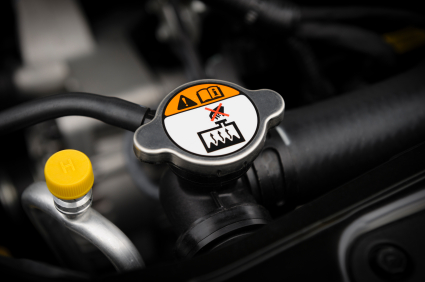
Car Radiator Fan Problems

Wednesday, December 19th, 2012

Car Radiator Fan Problems Auto Repair

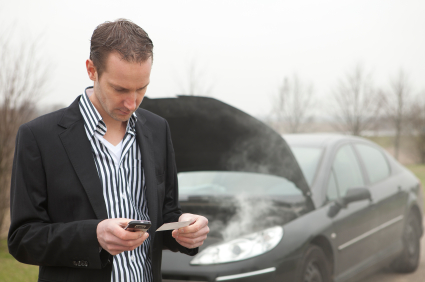
Car radiator fan problems can lead to other problems with your car because the radiator fan performs a couple of very vital functions.

What does a radiator fan do?

A radiator fan cools the radiator and stops the car from overheating. However, if your car is overheating, the radiator may or may not be the culprit. If your car is overheating, first check out your radiator fan.

Four parts of your radiator fan that are likely problem areas:

Fuses – Most of the time, a blown fuse is the problem. A symptom of a blown fuse is when something electrical is not working. Look around and make sure the fuses are all properly connected. If there is an issue, replace the fuse.

Temperature sensor – If your car is heating up and your fan is not kicking in, you may have an issue with the temperature sensor. If the sensor is not working, the fan will not be able to operate when the car gets too hot. To check the sensor, look under the car thermostat cover. Once there, disconnect the sensor wires and touch them together. If the fan starts, then you will need to replace the sensor because it is an indicator that you have a bad sensor.

Coolant – Look to the coolant level for additional clues. Make sure the coolant level is at the optimal level so your engine can run smoothly and efficiently.

Fan clutch –  The fan clutch holds the fan to the engine. In addition, it makes it turn. If the clutch is faulty – burnt out or simply fails – a replacement part is necessary.

Need professional help?

If you are not sure where to keep looking or are having other issues as well, there is still hope! Check out TalkLocal, a free service that connects you directly to local, high-quality professionals who can help you with your issue at a time that works best for your schedule.

Limo Safety Regulations

Wednesday, December 19th, 2012

Limo Safety Regulations Limo Rental

Ever wonder if the limo you are riding in has limo safety regulations that are up to date?  Good news – all limousines licensed for hire must pass an annual safety inspection.  In addition, limo drivers must pass many tests, both driving and written. Check out these limo safety regulations for more information.

Ensuring your safety:

Taking responsibility for your own safety is key to staying safe while having a great time.  Limos are known for being used for special occasions and fun times.  Ensuring your safety is important, and this is why limo safety regulations are enforced.

–       While it is generally expected for passengers to move around in the back of the limo, to maintain your safety, it is advised to limit the amount of time not spent in a seat.

–       To insure additional safety, limo drivers are trained to drive smoothly yet efficiently due to the nature of free motion in the back seats of limos.

–       Alcohol is usually  not allowed in limos transporting people under the age of 21.

–       If there is alcohol involved during the ride, extra caution is advised to avoid accidents when opening bottles or cans in a moving vehicle.

–       Also, if there is an accident with glass, be careful and ask the driver for assistance.  Picking it up yourself may lead to an accident, especially if it blends in with the carpet.

–       When exiting the limousine, take caution because your step may be a little more unstable than when you entered the vehicle.

–       Be sure to take your valuables out of the limo and not to leave anything valuable in the limousine if you are visiting multiple places.

–       If you need to get fresh air during your trip, be careful of overheads or other cars if you stick any body parts outside the limo.

Now that you are all set on the safety tips and safety regulations of limos, use TalkLocal to connect you to a limo service in your area within minutes.

Common Computer Problems Related to Power Outages

Tuesday, December 18th, 2012

Common Computer Problems Related to Power Outages Computer Repair

A variety of computer problems can occur due to a power outage, from data loss and operating system corruption to hardware failure of all kinds. It’s best to protect your computer with a UPS (Uninterruptible Power Supply) in the case of a surge. A UPS gives you time to save all your files and shut down your computer properly to prevent data loss. However, if it’s too late for that and damage has already been done to the computer, here are some common computer problems related to power outages.

Hardware issues

If your computer won’t turn on after an outage, there’s a good chance that the power supply is fried. Even if your fans turn on and you can hear sounds from the computer tower, your power supply may not be fully working. Replace the power supply with a part from your computer manufacturer, and see if that fixes the problem. Sometimes after replacing the power supply, none of the USB ports will work, including the monitor. Try removing all but one RAM chip, and restart your computer. Swap another RAM chip in if your computer still does not turn on. If you’ve cycled through all the RAM chips and the USB ports still do not work, then there’s a chance that your motherboard is also fried, which is a major problem.

Data loss

Computers will often be extremely slow or buggy after a power surge, similar to the way they act when infected by malware. This is because your operating system, in addition to your personal files, can be corrupted on your hard drive. If starting your computer up in safe mode fixes most of your problems, then try these steps:

1. Click on Start.

2. Search for Run.

3. In the Run dialog box, type “sfc /scanonce” and press enter.

4. Restart your computer.

If your computer is still slow/buggy, try using Microsoft’s check disk utility:

1. Click on Start.

2. Search for cmd.

3. In the command prompt window, type “chkdsk c: /f /r“.

4. Restart your computer.

There’s another option that you can try if your computer is still not working:

1. Boot up in normal mode.

2. Click on Start.

3. Search for Run.

4. In the Run dialog box, type “sfc /scannow” and press enter.

5. Restart your computer.

Since power outages can cause a myriad of complicated problems, it’s best to consult a professional. Changing certain parts of your computer can be complicated and might cause damage to the other parts of a computer if you’re unfamiliar with its interior structure. The operation system of the computer is also very sensitive, and recovering corrupt system files should also be left to an expert. Use TalkLocal for free to find a qualified computer technician to fix these common computer problems!

Signs that you have termites

Tuesday, December 18th, 2012

Signs that you have termites Pest Control

Termites are voracious wood eaters and often times can lead to extensive structural damage, so the earlier you catch them, the better. Fortunately, you can look for signs that you have termites and address the situation by getting help right away.

Seeing Termites in the Home

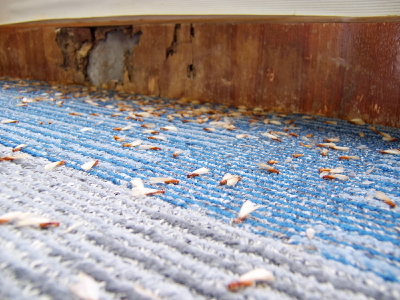
Since termites need moisture and damp areas to live, you should first look for any damp, moist areas near wood in your house such as leaky faucets or air conditioners, as they will be the most attractive to termites. If you find anything, make sure that they’re actually termites rather than ants. You can tell termites apart from ants by look at the body; termites have a broad midsection and curved antennae, while ants have thin midsections and right-angled antennae. You may also find them on the window sill or actually in flight around the house after a rainstorm.

Shelter Tubes

You should also look for cracks in the foundation of your home. Termites need moist and dark areas to live so they will build   pencil-thick shelter tubes out of mud to find new sources of wood and moisture. To check whether the tubes are currently active and used, you can snap one off and see whether or not it gets rebuilt.  

Wood Damage

This is the most conclusive sign of termites, even though it may be more difficult to find. Look for any weakened or cracked wood and break off a piece. Termites will have dug little holes all throughout the wood and may have tracked in dirt as well.  Make sure not to confuse it with dry rot (where you’ll see fungus inside the wood) or water damage (where you will see dirt).  

If you think you’ve found termites in your home, don’t panic. Termites are actually very slow at eating through wood, so you’re home won’t become unsafe anytime soon. However, you will need to call in a professional since actually getting rid of an infestation isn’t easy task. TalkLocal can help you by finding you a local high quality pest control expert to talk with in just minutes, so that you’ll be clearing up that termite problem in no time!

What Causes a Car to Overheat

Tuesday, December 18th, 2012

What Causes a Car to Overheat Auto Repair

There are many possibilities what causes a car to overheat. You can spend a lifetime looking for the solution —or you can check out this list of common causes, which will save you a lot of time.

Causes of an Overheating Car

Low or dirty oil – Make sure the oil in your car is full. If it is already full, you may need to replace the oil. If you have low oil levels or old oil that is constantly being recycled in your car, it will cause various problems in your car. One of these problems may be what you are experiencing – an overheating car.

Coolant – If you are replacing the coolant, make sure that you clear out all the air within the coolant lines. If there is air trapped in the lines, an air pocket can form and this will cause a heat spot that will lead to overheating. In addition, the coolant temperature switch may have gone bad; if so, just replace it.

Radiator – Sometimes the radiator core may be blocked or the filter is filled with dirt and debris. Make sure all the passageways are clear and that there is easy access to the radiator to ensure a cool car. Also, make sure the radiator cap is secure and has no cracks.

Water pump – Make sure the water pump is working correctly and that the water pump belt is in good condition.

Additional Help

If you are still having issues and want to get your car checked out before the situation worsens and damages become more expensive to fix, check out TalkLocal. With this free service, you will be directly connected to high quality professionals within minutes. They will be able to help you with your specific problem during the time that works best for your schedule. Check them out!
Beantown’s New Service to Help Locals

Tuesday, December 18th, 2012

Seva Call has had a busy start to the fall season, and it keeps getting better. Officially launching in Boston, Seva Call is ready to help Bostonians find the right professional. We are excited to bring a new service to help the locals of Boston!

Did you know that there are over 10,000 local businesses just in the Boston metro area? It must be a pain to find someone to help with services for your home. Lucky for the residents of Boston, you don’t have worry about spending so much time researching and calling businesses. Seva Call is going to do that for you and connect you to 3 companies that fit your needs. With over 40 industry categories, Seva Call can connect you in an average of 100 seconds. We’ve picked the best help for you based on ratings, location, and availability. All you have to do is answer your phone, it’s as simple as that.

Recently launching in Washington DC, Richmond, Baltimore, Philadelphia, Pittsburgh, and other surrounding cities, Seva Call seems to be taking over the Northeast Coast and Seva Man is excited about that!
“Who’s tryna’ have a tea party?!”, asks Seva Man. “Lets celebrate the launch of Seva Call in Boston – meet me at Fenway Park!”

Stay on the lookout for more city launches, as well as the launch of Seva Call’s free iPhone and Android apps!

If a Tree Falls on My Car Who Is Responsible

Tuesday, December 18th, 2012

If a Tree Falls on My Car Who Is Responsible Tree Removal

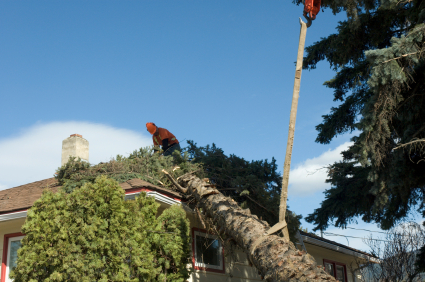
Chances are that strong wind movements knocked down the tree to your car as opposed to someone chainsawing the tree down. In situations like this, you may be wanting to know, “If a tree falls on my car who is responsible?” Unfortunate events that happen due to natural forces (wind from a hurricane, tornado, typhoon, etc) are considered as “acts of God” in legal terms, and are not compensated by anyone.

Legalities

Well, there is some gray area in which you can argue to get some compensation by holding someone responsible. However, that is the only way to receive compensation. An insurance will not handle damage by natural occurrence if you do not have the comprehensive coverage.

You can argue that the tree (if it wasn’t your tree that fell on top of your car)’s roots were rotten, and that the owner of the tree was setting up a hazard by not removing it. For this, you will have to verify that the tree roots were rotten or the tree was misplaced posed as a significant danger. In both cases, evidence is required.

Or if the tree is yours and you have a gardener do the work for your house, you can argue that the reason that the tree fell down was because the tree was weak at its base, which was essentially the gardener’s fault.

Or maybe it’s simply your fault because you failed to recognize that your own tree was in a bad condition, and that parking the car near the tree despite the knowing a bad storm was coming was a bad decision.

Depending on the amount and the type of damage, the car would need various types of work done. So it is generally not advised to drive an unrepaired car until a full assessment can be done. Call a nearby repair company and ask them to tow the car for you so that they can do an assessment at the location/fix it in their shop.

Additional Help

If a tree falls on my car, who is responsible? Probably you or no one, depending on the circumstances. If you feel like you need professional consultation — or a repairman for your car — TalkLocal can help with finding the correct local experts. Get connected to one in minutes!

How to Remove Cigarette Smell from your Car

Monday, December 17th, 2012

How to Remove Cigarette Smell from your Car Auto Repair

Cigarettes leave a very prominent smell behind.  Whether it be in your hair or clothes, on your belongings, or in your car, it is not very pleasant for yourself or for others.  It may seem impossible to get rid of this disturbing smell but there are a few ways to alleviate it. Here are some tricks for how to remove cigarette smell from your car.

Potential Solutions

1)   Febreeze

One way to get temporary relief is using a deodorizer.  Available at all local supermarkets, Febreeze can cover the smell of cigarettes quickly, but only for short periods of time.  The real problem with cigarette odors and chemicals is that they penetrate all the upholstery and get trapped.  You should take more serious action if you are looking for permanent help.

2)   Atmosclear

You can also buy an industrial strength air freshener.  Many car dealerships and auto parts stores use sprays like Atmosclear to get rid of smells.  This option has no signature smell, but it does permanently kill of unpleasant smells.  These kinds of ozone sprays do not stain and are not noxious.

3)   Dryer Sheets

Another option that will help to reduce the smell of cigarettes in your car is to use dryer sheets.  They can be placed underneath the seats in order to absorb some of the odor.  They will work for a few days but need to be replaced frequently to work well.

4)   Baking Soda

Baking soda is an amazing product with a multitude of uses.  You can leave a cup of the powder sitting in your car in the backseat, as well as front cup holders to drastically improve the smell inside your car.  The baking soda takes in the cigarette smell fast, so you will smell fresher air within hours.

5)   Shampoo

If none of the above work you can try to shampooing the interior of your car.  Using a special odor eliminating shampoo, scrub the carpets, seats, upholstery, and mats.  You should also clean all other surfaces with a damp cloth and vacuum out any remaining ash.

Continuing Problems

If you have problems with the cigarette smell in your car you should seek professional help.  Use TalkLocal to be put in contact with reliable local auto care businesses.  You don’t have to do any work! Simply input your problem and availability and within minutes you should be connected to someone who can help you out.

Are Pesticides Harmful to Pregnant Women?

Monday, December 17th, 2012

Are Pesticides Harmful to Pregnant Women? Pest Control

You love taking care of your garden, but you are expecting a baby. So you are wondering, are pesticides harmful to pregnant women?  Pesticides and other household chemicals can be toxic to everyone, but pregnant women are even more at risk.  There are pesticides harmful to pregnant women and their babies in many homes across the country.  If the proper precautions are not taken, particularly during the first trimester when the baby’s neural system is developing, overexposure to pesticides can increase the risk of certain birth defects and learning problems.  Read on for some basic rules of thumb for keeping your child safe from pesticides during pregnancy.

Before you start emptying out your garage and kitchen of every single chemical product, keep in mind that the greatest risk from pesticides is from being in contact with a large amount on a regular basis.  When birth problems from pesticides are observed it is almost always a situation in which the mother either worked on or lived very close to a big agricultural farm where large amounts of pesticides were being applied.  If you are in an area like that, or work at a job where you are regularly exposed to such chemicals, it is highly recommended that you remove yourself to a different location for at least the first trimester of pregnancy when the baby is most vulnerable.  Otherwise, pesticides in the home are still dangerous but unlikely to cause serious harm.  To be safe, pregnant women should avoid contact with pesticides whenever possible, having someone else apply them when they need to be used and avoiding the areas where they are applied.

Another potential cause for concern is pesticides that are commonly found in produce at the grocery store.  Produce should always be washed before eating it, but some poisons can penetrate the food and cannot be washed off.  There has not been a great deal of study on the effects of pesticides found in food on pregnant women, but it cannot hurt to try to avoid them.  Many doctors suggest purchasing organic produce as much as possible during pregnancy in order to avoid exposure through food.  This is not strictly necessary, but not a bad idea if you are worried about pesticide exposure.  In order to avoid this potential problem all together, hire a professional to take care of all your pest control needs during your pregnancy.  With TalkLocal, you will be connected to up to three highly qualified exterminators in your area within minutes.

Are Pesticides Harmful to Dogs

Friday, December 14th, 2012

Are Pesticides Harmful to Dogs Pest Control

The gardeners among us are all quite familiar with the use of pesticides and other dangerous chemicals in the never-ending war against insects, weeds and rodents.  For the 30 million Americans who live with dogs in the home, all of these poisons can easily lead to an accidental pet casualty if the proper precautions are not taken.  Are pesticides harmful to dogs?  There are pesticides harmful to dogs in almost every dog-owner’s home, so if you want to keep your furry friend safe, read on for some guideline to pet-safe poison use.

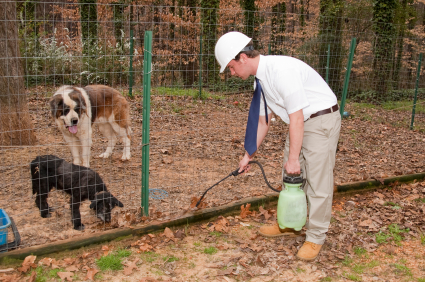
The two poisons that are most commonly involved in accidents with dogs are pesticides containing disulfoton and snail bait containing metaldehyde.  Disulfoton turns up in many different pesticides, and is particularly harmful to dogs if ingested.  To make matters worse, it also has a flavor that is enjoyed by dogs so they are quite attracted to it.  Metaldehyde is commonly found in snail/slug bait, and is also tasty to canines.  Either of these two poisons can be deadly if ingested by your dog, so check any product you use to see if it contains them.  You can still use these products, but be absolutely sure to keep your dog inside or separated from the area for at least 24 hours after application.  In fact, this is a good rule to follow no matter what poison or pesticide you are using.

In addition to keeping your dog away while the chemicals are in use, it is important to store any potentially harmful products in a place where no pets could ever get in to them (or children for that matter).  Proper disposal once you are done with the containers is important as well; keep your trash cans secured from curious paws.  If you suspect that your dog has been exposed to a dangerous substance, some symptoms to check for are: vomiting, diarrhea, seizures, hypersalivation, or respiratory failure.  Any of these signs are cause for serious concern and you should get in contact with your veterinarian immediately.  If you need help finding a vet, you can use TalkLocal to get automatically connected to a professional in your area.  All you need to do is enter your name, contact info, and a description of your problem and TalkLocal will have you on the phone with someone who can help in less than two minutes.