
Archive for the ‘Handyman’ Category


How to Soundproof Your Car

Monday, August 12th, 2013

How to Soundproof Your Car - Handyman

Have you ever thought about soundproofing your car in a cost-effective manner? This great change would definitely make you feel more comfortable during your car rides, enhance the quality of your audio sound, minimize vibrations and annoying outdoor noise, and even increase the resale value of your vehicle.

These days, you have the opportunity to check out a wide range of high-quality soundproofing products and so-called echo absorbers that could help you spend a wonderful time in your car in any given set of circumstances, without having to listen to those awful sounds coming from your trunk, panels, hood, and various other sources of phonic pollution. Read on to learn how to soundproof your car fast and easy by following a few simple steps.

First Step: Count on the right mix of damping materials

Why settle for just one damping material when you could always choose more and create a perfect mix of elements, ensuring a superior sound quality and an effective barrier against noise pollution? Invest in first-class products, including insulation, sprays, foams, and damping mats. Are you having a hard time trying to select the best materials? Contact a competent handyman and discuss your options.

Second Step: Apply damping mats on your car panels to reduce vibrations

Your car panels are lightweight; this enables them to vibrate and create an annoying sound. Want to find the quickest fix for this problem? Apply damping mats, which come with a layer of adhesive on their backside, on the panels of your vehicle.

Third Step: Use sprays and special foams for tighter, hard-to-reach areas

If you are truly interested in learning how to soundproof your car rapidly and effectively, you should know that the devil is in the details. Do not neglect tighter areas that might bring the outdoor noise inside your vehicle. In this case, it is recommended to rely on foams and premium sprays designed especially for doors and tiny engine compartments.

Fourth Step: Apply insulation

Insulation will help you soundproof your automobile in a time-efficient and cost-effective manner. Measure the surface that you plan to insulate, then cut the insulation and the damping mats you plan to apply based on your measurements. Make sure to remove the carpeting before starting to apply the soundproofing insulation. Use special adhesive to keep the insulation and the matting in place and let it dry according to the manufacturer’s specifications.

Want to Soundproof Your Car?

You might be willing to learn how to soundproof your car, but do you actually have what it takes to complete this relatively complex assignment on your own? When in doubt, keep in mind that you could make the most of professional services brought to you by a savvy handyman specialized in auto soundproofing.

Find the best specialists by consulting TalkLocal, your number one source of information. Profit from the best deals, curb noise pollution levels, and start enhancing the quality of your music today.
Some of the Best Uses for Wd40

Friday, August 9th, 2013

Some of the Best Uses for Wd40 - Handyman

WD-40 has been one of the greatest accessories for those who love their tools. If you would like to keep your tools free from rust, corrosion, oil, and grease, using WD-40 can be one of the best ways to do so successfully and quickly. Nothing is a bigger turn-off than tools that are rusted, greasy, or simply refusing to work. It can greatly delay your home improvement project, and cleaning can be quite a messy process that takes a lot of time and patience. Instead, just let your tools have a little bath in WD-40 before you begin or after you finish to keep tools looking and working great every time.

Cleaning Your Tools

If you open up your tools and find them corroded or covered in layers of oil and grease, the quickest and easiest way to get them clean and shiny, and ready for use, is to let them take a quick bath in WD-40.

Here’s How

1. Take a metal container of a size in which you can easily place your tools.

2. Fill it up with WD-40, and carefully immerse all of your tools in the solution.

3. After a few seconds, take them out and wipe with a dry cloth. You will see that they are now absolutely free of any grease or grime and can be used immediately.

To keep the tools looking great every time you open them up, it’s always a good idea to follow the same procedure after finishing your task, before packing your tools off until the next use. This will keep them clean and prevent the formation of rust, allowing your tools to last longer and maintain their performance and durability.

WD-40 Spray

The WD-40 spray is another great product that makes it even more convenient and effective.  Just spray your tools with some WD-40 and wipe them down with a dry cloth.  Once again, this will ensure complete safety from rust and corrosion, as well as render your tools absolutely clean and shiny.

You can use the WD-40 on a variety of tools. There are also a few other uses for wd40 that can come in extremely handy at times. For instance, you can use it to easily remove rust or watermarks from any metal surface, including your car or bike. In short, WD-40 is an extremely effective product that, when used well, can keep your tools newer for longer.

Get Expert Help Here

If you have any handyman jobs lying around that you haven’t been able to finish for a long time, simply because you just don’t have the time, you can hire a professional handyman who can perform your tasks more effectively and in minimal time. Just drop us a line and we at TalkLocal will make sure that you are connected to the absolute best handyman in town.

What is a Coping Saw?

Thursday, August 8th, 2013

What is a Coping Saw? - Handyman

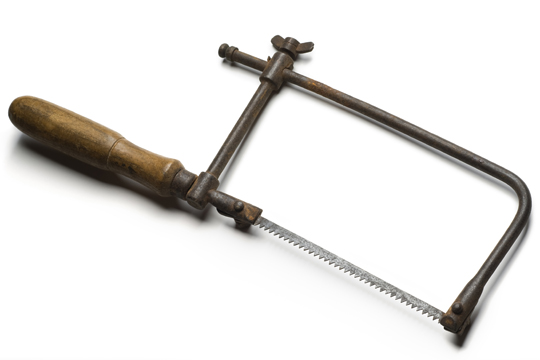
If you have been wondering what is a coping saw, it is essentially a handheld saw with a thin yet really hard metal blade which is stretched across a U-shaped frame. It’s specially designed to efficiently cut simple to intricate patterns inside wood. This makes it a great tool for creating aesthetically pleasing cutout designs in wood or cutting coped joints in crown molding when mitered joints don’t suffice. The U-shaped frame makes it easier to slip the frame into closed surfaces and cut out the smallest of designs.

Getting Started

To begin with, make sure you choose the coping saw ideal for the kind of use you have in mind. There are two primary factors to look out for, while most others stay the same. Make sure to pick a saw with a throat deep enough for your purpose. Secondly, choose the right blade. There are separate blades for cutting tile, wood, plastic, and metal. Multiple blades could be fit into the same frame, so you could get yourself an assortment for varied purposes.

Using the Coping Saw

Follow these tips once you understand just what is a coping saw.

Draw an Outline of the Desired Cutout

Once you’ve determined what is a coping saw suited to your purpose, it’s time to begin using it.

You’ll need to draw an outline of the pattern or design you wish to cut into the wood. You could go freehand, or of course use a stencil. Do, however, ensure that no desired cutout is too far from the exterior edges of the wood, meaning it must be less than the depth of the coping saw’s throat so that it can be maneuvered easily.

Drill a Hole Someplace Inside the Cutout

This will help you pass the blade through, so the drill bit being used must be a little bigger in diameter than the blade of the coping saw. Drill a hole anywhere inside the perimeter of the cutout. Do remember that you must drill a separate hole in each of the cutouts if there are multiple ones.

Pass the Blade Through the Hole

First, you’ll need to get the blade loosened from the saw’s handle by twisting it. Once detached, pass the blade carefully through the hole that you drilled. Once through, attach it to the frame again, and you are ready.

Cut the Desired Shape

All you need to do now is cut the desired shape out with swift, controlled, to-and-fro movements of the coping saw. Once done, you need to detach the blade again to take it out. You can smooth the cut edges with sandpaper, and you are good to go.

Need help with a saw?

Weather you are looking to do a crown molding or any handyman jobs around the house, check in with us at TalkLocal, and we will connect you with the best professionals is your area. Our service is free and can help you narrow down your options, choose the best one, and be connected with them directly.

Best Wood for Building a Tree House

Wednesday, August 7th, 2013

Best Wood for Building a Tree House - Handyman

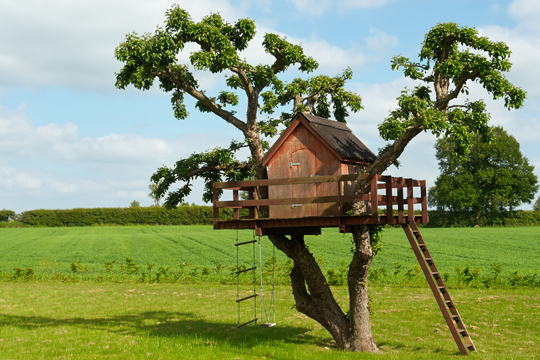
A tree house is a joy for children, especially during summertime, which allows them to play outdoors and get closer to nature. It’s a source of constant excitement that keeps children busy, but it can also be a source of delight for grown-ups. Even more so if you’re in charge of designing and building it. Your effort will pay off when you see those smiling faces climbing up and down to their secret playhouse in the sky. But before you get to enjoy the results of your work, you need to make a plan about the kind of tree house you want, starting with the main material, namely wood.

What Is the Best Wood for Building a Tree House?

That’s the first question you need to ask after deciding on the location, which is obviously a tree, but which one, and where should the tree house be positioned? How big do you want it to be? How many children is it supposed to accommodate? After answering these preliminary questions, you need to consider the material you are going to use. When choosing the type of wood you are going to use in your DIY project for building a tree house, you need to consider the following factors.

Wood Resistance

It’s important to choose a durable hardwood, such as cedar, pine, plywood, or redwood, to build a safe and resistant tree house that your children can enjoy for several seasons.

Moisture Content

Some species of wood are softer than others; they contain more moisture, which can lead to faster shrinking. That is why the best wood for building a tree house should be from a hardwood species with reduced moisture content.

Treated Wood

The best wood for building a tree house is treated wood because it is stronger, does not decay easily, and resists insect infestation, which makes it a safer choice for this kind of project.

Want Help with Your Tree House?

If you’d love to give your children a dream tree house but you’d rather entrust this project to someone more experienced, TalkLocal can put you in touch with a reliable handyman who can get the job done quickly. We can fulfill your request in minutes, for free.

How to Use a Jigsaw

Tuesday, August 6th, 2013

How to Use a Jigsaw - Handyman

A jigsaw is one of the most versatile tools that can be used to cut the most intricate and trickiest of designs in wood – or a variety of other materials such as plastic, metal, or ceramic tiles. It allows you to cut absolutely fascinating designs with little practice. This makes it one of the best tools for all do-it-yourselfers and professionals alike, whether you are cutting posts for a new fence or redoing your kitchen.

Choosing the Right Jigsaw

To start with, you are going to need the right jigsaw, and that will take quite a bit of thought, as not all jigsaws are created equal. You will need to choose between battery-operated jigsaws or those with a power cord. Another important feature to look out for is speed control. Variable-speed jigsaws are definitely better for cutting different kinds of materials.

Choosing the right blade is extremely important to getting the right performance from your jigsaw. They can cut from metal to plastic, as long as you have the right blade. You must choose the right teeth per inch, or TPI, and also choose the blade with the right width.

How to Use a Jigsaw

The first step is to prepare the material you are about to cut. Carefully draw an outline of the design you wish to cut. It’s always a good idea to cut out a paper or cardboard impression of the actual design and use it to mark the final material you are going to cut, for accuracy.

Secure the Material to Cut

When cutting intricate patterns, it’s important that you have both hands free for effectively guiding the saw. It is therefore important that you place the material on a workbench and secure it with clamps so that it stays firmly in place. Make sure you have plenty of lighting to see the lines you are cutting clearly.

Start Cutting

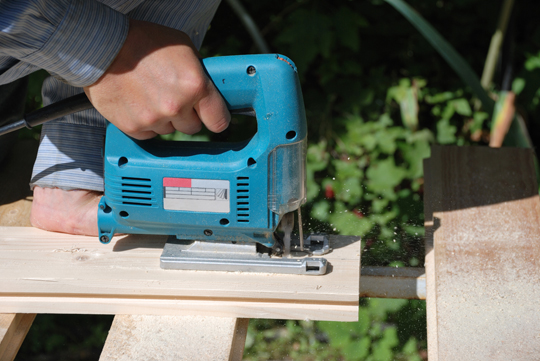
Carefully position the jigsaw blade close to the line where you will start cutting. Press the trigger of the jigsaw slowly and firmly, and once it is at the desired speed, push it through the material. Now slowly begin to guide the jigsaw along the line you drew for the cutout. If at any time it appears that the jigsaw is being strained or loading up, stop, clear off the area of debris, and start again. Once you have cut through the entire design, use a sander to finish the edges and make them smooth and ready for use.

Looking for Experts?

If you have any home improvement tasks that require sawing or woodworking, let us connect you to the best professionals in town. At TalkLocal, we do the legwork and find the best professionals suited to your kind of job and let you choose from a narrowed-down list, connecting you directly to the person chosen by you.

Types of Building Wood

Monday, August 5th, 2013

Types of Building Wood - Handyman

Wood is a very versatile material, with an incredible range of textures and densities, that is used in a wide range of applications, from construction to furniture. When using wood in any woodworking project, you need to choose first the type of wood that best suits your needs. Below is a basic overview of wood types.

Types of Building Wood

There are two main categories of wood: hardwood and softwood. These two terms do not necessarily refer to the hardness or softness of the wood. More exactly, the determining factor in distinguishing between these two types is not wood density, which is responsible for its durability. What separates hardwoods from softwoods is the fact that the former shed their leaves in winter, while the latter, broadly conifers or evergreens, keep their foliage throughout the year.

Wood Softness and Hardness

Softwoods, which have a lower density, are more flexible and can be bent more easily, while hardwoods are less elastic but more durable. Each kind of wood has a particular grain structure. Some woods, such as maple or cherry, have tight pores, which makes them smooth and neat. Other woods, like oak or walnut, have open pores, which absorb finish when it is applied. As a result, some parts of the wood may look darker and some lighter. With softwoods, the finish is more even because the surface is more uniform.

The strength and the appearance of a piece of furniture or construction work depend on the types of building wood. Every type of wood has its specific characteristics and properties. Here are some of the most used types of building wood.

Softwoods

– Pine

– Fir

– Cedar

They are a more cost-effective option in woodworking because evergreens grow faster than hardwoods.

Hardwoods

– Birch

– Cherry

– Oak

They have a greater color, texture, and grain variety than softwoods. That is why the furniture pieces made of them are more beautiful. The problem is that they tend to be costly.

Looking for Help with Your Woodworking Projects?

Visit TalkLocal to save time and get what you want quickly and easily. We will connect you with a qualified professional in your area in no time, for free!

Kitchen Countertop Materials

Sunday, August 4th, 2013

Kitchen Countertop Materials - Handyman

When looking for kitchen countertop materials, there are a number of options available, each with its own pros and cons. The final choice comes down to your design parameters and budget, but it is always helpful to understand the benefits of each option before you make a decision.

Stone Countertops

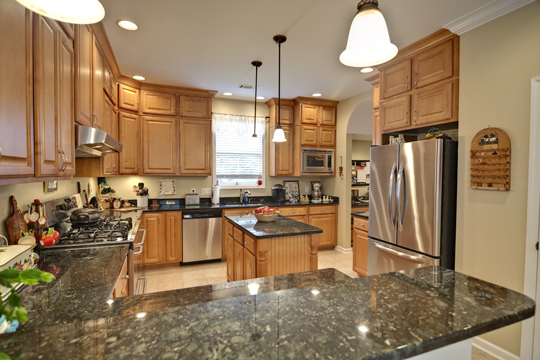
The most popular kitchen countertop materials in this category are marble and granite, but you can also get soapstone and limestone countertops. Stone countertops tend to be the most expensive of all countertop materials, but they are very durable and heat-resistant. However, stone materials tend to be porous and require periodic resealing. They also have a propensity to show stains and cracks, and if installed incorrectly, they can shatter under the stress.

Stainless Steel

Stainless steel is growing in popularity as a countertop material, primarily due to the fact that it is nonporous, making it highly resistant to bacterial buildup. This type of material is resistant to heat and stains, but it will show scratches and is susceptible to denting.

Engineered Stone

Engineered stone countertops are made primarily of quartz, can be custom designed to replicate any pattern or material, and come in a wide range of colors. This material is nonporous as well as scratch- and stain-resistant, but it is not heat-resistant, which makes it a poor choice for a range or stove surround.

Solid Surface

This material is fairly expensive, but it is a popular option, as it stands up well to scratches and can be customized to replicate any pattern or natural material in any color you choose. However, it is neither heat-resistant, nor stain-resistant.

Laminates

For affordability and customizability, this is one of the best kitchen countertop materials around. Laminates are heat-resistant as well as stain-resistant and are incredibly durable. However, they are susceptible to scratches and scorching from hot dishes and are not easy to repair.

Tile

Tile countertops are a great option due to their relatively low cost, their durability, and their resistance to heat, scratches, and stains. They are also entirely customizable, meaning that you can create any design pattern you want.  The only issue with them is that they can chip or crack, and the grout needs to be kept clean to discourage the growth of mildew.

Wood

Wood countertops add a touch of old-world warmth to any kitchen and are available in a number of materials and finishes. While they are highly resistant to scratches and are extremely durable, they are susceptible to staining and damage from heat, moisture, and chemicals.

Get A New Countertop

Unless you are adept at home repair and renovation, it is advisable to hire a handyman to install your new countertops. TalkLocal can help you find a handyman in your area who can help you with your countertop project. Contact us today via our website and get started on your home renovation project.

Crown Molding Installation Instructions

Monday, July 29th, 2013

Crown Molding Installation Instructions - Handyman

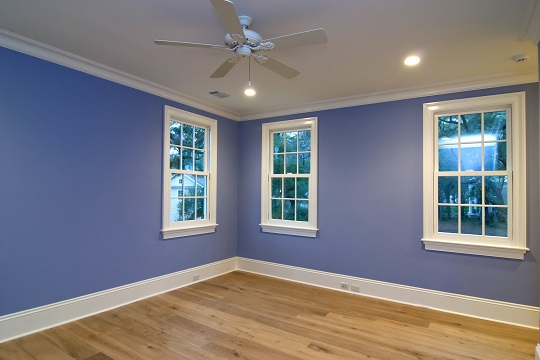
Installing crown molding may seem like a difficult and lengthy project only for the expert handyman. In this article, we will explore crown molding installation instructions, so you can determine what is involved with the process. The result could be a beautiful addition to an outdated room or a brand new look for a new home!

Crown Molding Installation Instructions

Measuring

1. You will first need to determine how many pieces of crown molding are needed for installation. You can do this by measuring the room you are installing it in. You may want to have a little help with this step, as it’s by far the most difficult part of the crown molding installation instructions. Many do-it-yourself home improvement stores are great as a resource for this type of help. There is also the internet, or perhaps a good friend that is familiar with this work to consult with for measuring.

Choose Your Design

2. Of course, there are many styles of crown molding you may want to be choose from. Most are beautiful and will add a tasteful touch to a room. Again, the home improvement stores and online forums may be a great source for choosing what patterns you like.

Painting and Measuring Your Crown Molding

3. Next you will want to paint your crown molding, before installing. Most crown molding is already primed and ready to paint with your choice of color. Choose a sturdy, semi-gloss paint for this. Allow the paint to dry thoroughly.

4. You will most likely have many corners to deal with in the cutting and measurement of the crown molding. Cut a 45 degree angle for these corners with a miter saw. You also may want to invest in an angle finder to determine the angle of the cut.

5. After you are finished cutting, use polyurethane glue and finishing nails to attach the crown molding. Make sure you sink the finishing nails below the surface of the crown molding.

Now You Know How!

It may take a little trial and error the first time around, but soon, you will be proud of what you have accomplished following these crown molding installation instructions. If you do decide that you need a a little guidance, the experts at TalkLocal are here to help! We’ll connect you wit up to three, reputable handymen in your area who can get the job done for you.

How To Install Blown-In Insulation

Monday, July 22nd, 2013

How To Install Blown-In Insulation - Handyman

Once the cold weather starts to move in this fall, you may start noticing your heating system is working a little harder than it should, and your home isn’t getting as warm as you’d hope it would. This usually shows itself in you wrapping up in blankets on the couch, and also in your heating bill. Considering adding more insulation to your home before you’re strapped with high heating bills.

Try Blown-In Insulation

When thinking about adding to existing structures, consider your options. You can start tearing away siding to open the walls or rip open your drywall. Or, you can go the route of blown-in insulation. Avoiding almost literally tearing the house down to insulate makes the most sense, and using blown-in insulation is a fairly easy process. You can rent an insulation blower and go the DIY route, or you can put the job in the hands of professionals. Here is the process that professionals will use, but they can serve as general guidelines for how to install blown-in insulation.

How To Install Blown-In Insulation

1. A technician will drill two rows of holes roughly every 16 inches, since most studs are placed at that distance. One row will be 12 inches from the ceiling, and the other will be three feet from the floor.

2. The technician will then blow mineral fiber or cellulose insulation into the walls using an insulation blower.

3. After all of the insulation is blown in and settled, the walls will be plugged either using plastic plugs or drywall compound and spackle. Your technician may or may not paint the walls after plugging the holes.

Keep in mind that blown-in insulation is not a perfect process, but it can be made better by using a professional service company. This type of insulation does not settle perfectly even, but professional technicians are familiar with feeling for obstructions such as wires and blocking. They are trained and experienced in creating workarounds for obstacles, which will help you get the most for your money when choosing blown-in insulation.

Find A Professional Who Can Insulate Your Home

For more information on blown-in insulation and choosing the right contractor for your home, visit TalkLocal. We will connect you with the professionals you need in just minutes, and our service is free!

How To Pressure Wash Your Driveway

Saturday, July 20th, 2013

How To Pressure Wash Your Driveway - Handyman

Pressure washing is a great way to remove spots, stains, and areas of discoloration from concrete around your home. One of the concrete surfaces of your home that can easily become dirty over time is the driveway. The driveway is subject to regular traffic from your car tires, people, and pets. It may also become stained from leaking automotive fluids, stains from vegetation that fall on the surface, and more. If your driveway is heavily stained and discolored today, you may be wondering how to pressure wash your driveway.

The Benefits of Pressure Washing

Pressure washing can easily and thoroughly remove stains, spots, and areas of discoloration from this surface. The alternative to pressure washing would be to scrub the surface with a hard brush by hand, and this can be exhausting, time-consuming, and labor-intensive. Pressure washing makes light work of this task.

How to Pressure Wash Your Driveway

You can pressure wash your driveway on your own by either purchasing a pressure washing machine or leasing one. Once you bring your pressure washer home, you can hook your machine up to your garden hose and focus the stream of the water onto your driveway. You will want to move the stream of water in a uniform fashion, starting at one corner of your driveway and slowly working your way across the entire surface.

Extra Care to Take When Pressure Washing

If mildew is present on your driveway, an anti-mildew agent or special soap may need to be applied to the surface while you are pressure washing it. You should take care to only focus the stream of water on the surfaces that you intend to clean. The stream of water that is created can be damaging to certain surfaces of your home, so you do want to use it with great care.

What You Can Pressure Wash

Pressure washing is a great way to clean your driveway. However, you can also use a pressure washer to clean a wood fence, a wood deck, your patio, your sidewalk, and your garage floor.

Need More Help?

Because it can take so much time to pressure wash these surfaces, and because you should use this machine with care to avoid damaging your property, many people prefer utilizing the services of a pressure washing service to clean their driveway. You can locate a reputable pressure washing company near you with TalkLocal. We’ll connect you directly with the right professionals in just minutes.