Archive for the ‘services’ Category


Types Of Off Road Tires

Monday, June 3rd, 2013

Types Of Off Road Tires - Towing

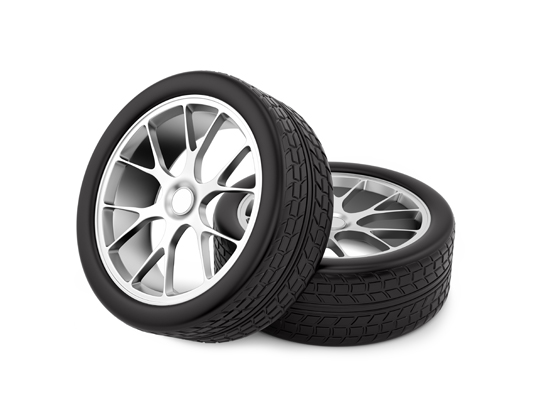
It may surprise you to know there are a shockingly large amount of different types of off road tires on the market. From tall and wide to short and thin, and everything in between, off-road vehicle owners have a large selection to choose from when considering tires.

There are two basic tire structures that offer different benefits, but keep in mind that tires come in all shapes and sizes, so you can likely find the perfect one for your needs. Check out the following types of off road tires with a brief description of each in order to decide which tire is best for your vehicle.

Tall

Tall off road tires serve the primary purpose of keeping the vehicle high off the ground. In terrains with shallow mud and lots of rocks, staying high off the ground is ideal. The tall, thin structure of the tires allows them to reach to the bottom of the mud to gain traction on the solid ground. The wide grip patterns allow for the mud to pass through easily while in motion in order to maintain grip. The height helps protect the undercarriage of the vehicle to prevent damage.

Wide

Wide tires work best in thick, heavy mud. Their width creates a larger surface area, allowing for the weight of the vehicle to spread. This distribution prevents the vehicle from sinking (unlike the tall tires) in order to get over heavy mud more easily.

All-Terrain Tires

Most vehicles do not operate solely in off-road scenarios. If you use your vehicle to drive on the roads, while enjoying some off-roading in between, all-terrain tires are ideal. The interlocked tread of these tires allows for solid grip both on the pavement and on snow and mud.

Stuck?

If you have found yourself stuck in the mud and in need of a tow due to the wrong types of off road tires, Seva Call can help. We will find you a towing expert who can lead you to a station that will fit you with the correct tires. Our service is completely free, and we will only connect you with qualified professionals.
Ways To Aerate Your Lawn

Monday, June 3rd, 2013

Ways To Aerate Your Lawn - Landscapers

Everyone wants a beautiful and healthy lawn full of thick grass that feels great underfoot. We buy the best fertilizers, water every week, and import the finest grass seeds from all over the world. But all this may come to nothing if the lawn is compacted from lawn equipment or excessive foot traffic. Compacted lawns inhibit water and oxygen from penetrating soil, which retards growth, causing bald patches or puddles in your beautiful yard. That’s why it’s valuable to be aware of the most effective ways to aerate your lawn.

First Thing’s First

The first step is to prepare your lawn for aeration by watering it two to three days before you begin. Depending on your climate, about one inch of water is best. How do you know how much is an inch? Try measuring it by placing a small container on your lawn — a tuna can is great for this. When it fills up an inch, voila! After your waiting period, you are ready to aerate. The various ways to aerate your lawn vary based on your equipment.

Motorized aerators are great for professional groundskeepers and are offered in gas or electric models. They get the job done quickly — at roughly the speed of a lawn mower — punching multiple steel spikes into the ground from a rotating cylinder. They are also expensive, heavy and take up more storage space than the average family garage can offer.

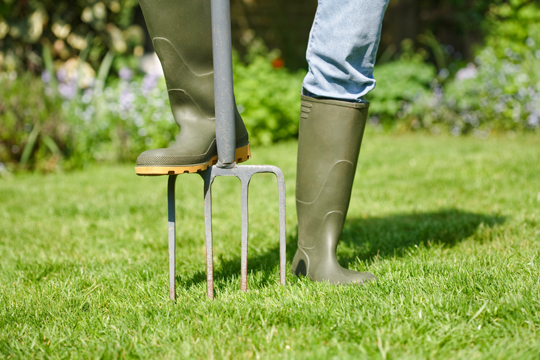
Manual aerators have several tines attached to a steel bar. They aerate by coring small sections of lawn. Pay close attention to the design and look for one that won’t clog or clump. Clogs will prove frustrating and time consuming. Manual aerating can be labor intensive, especially for large lawns. If this is an issue, look to a manual aerator with spiked attachments that can be worn on shoes. Aeration is then as easy as slowly and awkwardly marching across every inch of your lawn. It’ll be worth it when the grass comes in, though. Manual aerators vary greatly in price, materials, and design, so tread carefully.

Find Professionals To Aerate Your Lawn

In the end, knowing the ways to aerate your lawn is less important than getting out there and doing it. You may be amazed to see how much of a difference a little aeration can make in your yard this spring. Plenty of local landscapers can pull off this important task, too. At Seva Call, you can specify that you want to work with only landscapers that offer aeration. That way, you won’t waste your time talking to companies that can’t help you. Try our service today, for free!

What To Do When Your Dog Eats Rock Salt

Monday, June 3rd, 2013

What To Do When Your Dog Eats Rock Salt - Veterinarians

In an attempt to keep ourselves from falling on ice, we may actually be harming our pets. Rock salt is the most common form of de-icer used on walkways and driveways.

While it can help melt ice quickly, pets can walk across the material and subsequently lick their paws to prevent irritation. Once ingested, rock salt can have some harmful effects. Here is what to do when your dog eats rock salt:

Call Your Vet — Immediately

The following information is a general guideline and should not be taken as expert advice. If you have a regular vet for your pet, most will answer questions over the phone without the need for an expensive office visit. It is important to consult with your vet if you are worried about the health of your dog.

Monitor Your Pet

If you know how much salt was ingested and it was only a small amount, your dog may only have a few adverse effects. Excessive drooling is a sign of nausea, and your pet may also have burns in his or her mouth. If you notice more severe symptoms, it could be time to act. You can try Famotidine which helps reduce the stomach acid. Get the highest rated Famotidine for Dogs shipped overnight from Amazon starting at $7.10.

Make sure your dog has water, as the rock salt can dehydrate him or her.

When Your Dog Ingests A Medium-Sized Amount Of Rock Salt:

In medium-sized amounts, your dog may vomit repeatedly. This is due to the irritation of the stomach lining. In large dogs, an adult dose of Pepto-Bismol may be given to help soothe the stomach, but, again, double-check with your vet first. Let the dog fast for around 24 hours until the vomiting ceases, then start him or her on a salt-free broth.

Large Amount:

In large amounts, rock salt can be deadly. It can affect the pancreas, liver, and kidneys, or it can severely dehydrate the animal. If your dog drank from a puddle of melted snow that contained rock salt, it is likely he or she ingested a large amount. Seek vet care immediately. If your dog is showing stomach pain, you can try some of these medications that help with stomach relief for dogs. You can find some options and have it shipped overnight starting at $7.49.

TalkLocal Makes Finding A Vet Fast And Free

To get in touch with a vet in your area who can tell you what to do when your dog eats rock salt, TalkLocal provides a free locator service. We’ll connect you with a local vet within minutes. Every second counts when your pet’s health is on the line.

Ideas For Remodeling A Basement: Flooring

Monday, June 3rd, 2013

Ideas For Remodeling A Basement: Flooring - Carpet Cleaners

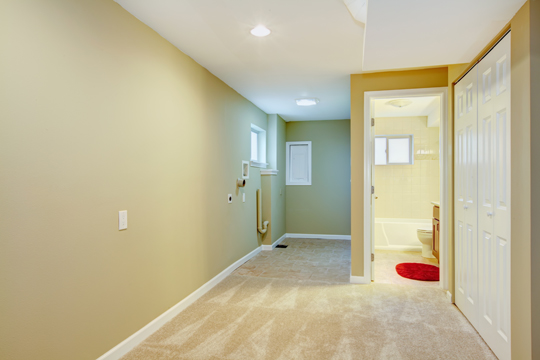
Oftentimes, before you finish your basement, you have a plain, concrete floor. Although this flooring has many benefits (such as being spill-proof and easy to clean), you may want to change things up for your basement’s final look. These flooring ideas for remodeling a basement offer the look you want in a way that is easy and affordable while you are remodeling.

Ideas for remodeling a basement floor when concrete isn’t your motif of choice include:

Carpeting: If you want your basement carpeted, you’re not alone. This is becoming one of the most popular choices when homeowners remodel their basements. However, not all carpeting is created equally, especially in a room that is likely to gather moisture. This can damage carpeting. The best type of carpet for your basement is largely considered to be low-pile and looped style carpets. Consider a partial nylon blend and stay away from the shag if you’re adding carpet to your basement.

Vinyl: Although it is not the most popular, many designers agree that vinyl is the best choice for remodeling a basement floor. Vinyl is moisture-proof, which is vital for your basement, and it comes in large sheets that virtually eliminate the annoyance of seams in the flooring. It installs easily over concrete floors; however, if there are any blemishes in your flooring, the vinyl won’t hide them. You may consider a thicker cut if you’re in that situation. There are also dozens and dozens of styles and patterns to choose from with your vinyl flooring, allowing you to truly make the look your own and hatch many ideas for remodeling a basement.

Faux Wood: If you’re in love with the look of wood flooring, you might be hoping to add that to your basement. Unfortunately, the cost of adding a true wood floor to your basement alongside the risks of moisture is too much for many. Consider the faux wood look. This is basically a system of tile flooring that looks just like wood flooring and snaps into place on top of the concrete. It looks great and suits a basement, as it usually has a thin layer of vinyl beneath to remain moisture proof. It’s also much more affordable.

 Can’t Decide?

All of these options and more can help you finish your basement the way you want. If you have more questions or concerns, TalkLocal can help connect you to any local professional imaginable. From carpet cleaners to professionals that can install faux wood flooring, just tell us what you need and we’ll do the rest.

How To Tow A Boat With A Car

Sunday, June 2nd, 2013

How To Tow A Boat With A Car - Towing

With the seasons changing and sunnier weather coming for most of us, a lot of people are getting out their swim suits and fishing gear to soak up some sun on one of nature’s most versatile recreational options: the water.

Whether you live near an ocean, lake, pond, or a good drive from all of the above, everyone can enjoy the summer sun with a boat in tow. Knowing how to tow a boat with a car can increase your list of options for summer fun.

Some need-to-know-facts about how to tow a boat with a car:

Weight: Make sure your car is not too small or too light to handle the weight of the boat. Ideally, your vehicle will be heavier than the boat you’re towing. This means that pulling the boat won’t max out the car, turning will be smooth, and your car won’t be pushed around by the boat. If your car isn’t heavier than the boat, you should still be okay, as long as it isn’t a great deal lighter.

Torque: You want to make sure your vehicle can handle the boat despite the weight. Those trucks that boast their horsepower aren’t necessarily the top contenders for boat towing. Torque is what is important. Torque is the maximum of rational power an engine can exert. If your car has enough torque to exert the power necessary to pull the boat, you’re fine. Some smaller vehicles are more capable of that.

Attachment: You need to make sure the trailer you’re using for the boat is safely attached to whatever vehicle you’re using to tow it. No, tying the trailer to your bumper is not acceptable. Vehicles that are considered to be suitable for towing will usually have a hitch or some other form of attachment available.

Where Can I Find Towing Professionals?

For more information about whether your vehicle is acceptable, you may need to consult a professional. TalkLocal can connect you to professionals in your area instantly — and for free. That way, you can get yourself situated on the water in your boat with a glass of lemonade ready for a whole lot of relaxing.

What Can Be Disposed In A Dumpster

Sunday, June 2nd, 2013

What Can Be Disposed In A Dumpster - Garbage Removal

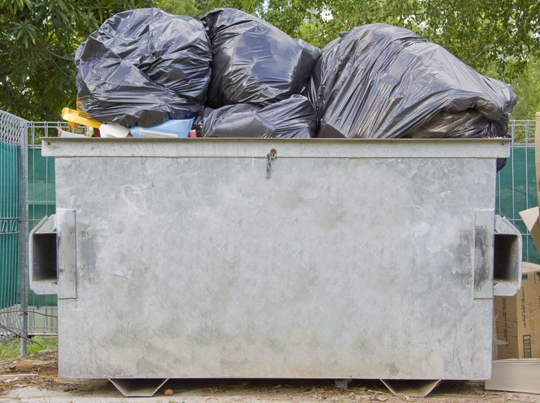
Disposing of large piles of waste is not fun. Going through trash bags, organizing, and piling the waste can take a lot of time. If you have to take special measures to dispose of the waste after all of that, you could have a serious project on your hands.

Thankfully, a lot of your typical household waste can be disposed of in a dumpster. If you are wondering what can be disposed in a dumpster, check out this quick guide.

What can be disposed in a dumpster?

General Household Waste

Anything you throw out in your kitchen or bathroom trash. This includes spoiled food, drink and food packages, remnants of a mess, old cotton swabs and so on. If you find yourself with a full bag of garbage, or even a few, you can tie them off and toss them in your local dumpster worry-free.

Various Household Items

Glass jars, shampoo bottles, packaging from mail, old light bulbs, old pillows and blankets, clothing — all of this can be legally tossed in a dumpster. That said, there are other ways to dispose of these items that might be a better choice.

If you can donate old pillows, blankets and clothing, you should. Recycling anything that can be recycled is also preferential. Typically, items in a dumpster are collected and thrown in a landfill. Although this is unavoidable for some items, it really helps for other things to be donated.

Woodwork

If you have small tables, chairs, stools, picture frames, shelves, and other items made of wood, and you can’t recycle them for whatever reason, they can be tossed in the dumpster, too. If you can, try to break them down to conserve space.

These, and many other items, can be disposed in publicly provided dumpsters (for those that live in an apartment complex or other shared living spaces) or in privately rented dumpsters. Honestly, the list of what cannot be disposed in a dumpster is much shorter than the list of what can be disposed in a dumpster.

You will need to avoid throwing electronics, batteries, and anything really heavy or dangerous in a dumpster. Most other items are dumpster-friendly, but may also be recyclable.

Contact Garbage Removal Companies

If you have more questions, TalkLocal can help connect you with the local professionals who have answers. Finding local garbage removal professionals should not be hard. With TalkLocal, it’s never been easier.

Postural Integration Therapy

Sunday, June 2nd, 2013

Postural Integration Therapy - Massage Therapy

With so many types of massages and physical therapy available, figuring out how to help your back pain and body aches can be almost as painful as the aches and pains themselves. Sometimes the solution is as simple as fixing your posture. That said, just sitting up straighter doesn’t always solve things, and sometimes it even hurts more.

Postural integration therapy (PIT) is a form of massage therapy meant to help you “straighten out” your postural habits to live a healthier, pain-free life.

What happens in postural integration therapy?

– Your therapist will work with the fascial planes of your body. No, that doesn’t mean your face. “Fascia” is a type of tissue that wraps around your muscles and is malleable, like plastic. It holds your muscles together in bundles.

– Fascia molds to hold your muscles in a position built from your daily life experiences. That means if you are constantly hunched over, even though that’s really bad for your body, your fascia grows used to it. So, when you try to sit up straight, you’re actually straining your muscles against the “plastic” that has held them in one position for so long.

– It’s kind of like if you take a 12-inch ruler made of plastic and bend it every day. Eventually, it will just stay in that bent position, even though you know it is supposed to be straight. When you try to straighten it, you can’t do that very easily, because the plastic is now used to the new position and fights against the change.

– In postural integration therapy, your therapist works in steps to fight this unhealthy position your muscles have gotten used to holding. This is not a one-time thing; you come back for multiple visits, getting better little by little.

– Unlike some types of massage therapy, postural integration therapy is not intended to feel relaxing. You are doing work to your muscles to get them back to a healthy state. It’s kind of like how going for a run or working out doesn’t necessarily feel good because you’re pushing your body and exerting yourself. Afterwards, though, you do tend to feel better and healthier.

Find PIT In Your Area

Not all massage therapists are trained in PIT. You need to make sure you find a professional that knows what he or she is doing and can actually help you. TalkLocal can connect you to the professionals in your area who can help you get your posture back and make your muscles love their healthy, natural position.

Ideas For Remodeling A Basement: Plumbing

Sunday, June 2nd, 2013

Ideas For Remodeling A Basement: Plumbing - Plumbers

Remodeling a basement is a chance to let your taste speak for itself. You can turn that room into anything you want it to be. Maybe you want to relax, or maybe you want a work station. Maybe you are even adding on to the family and need a new bedroom or playroom. No matter what your ideas for remodeling a basement are, to achieve the ultimate convenience, you’ll need a bathroom.

When toying with ideas for remodeling a basement bathroom, consider these tips:

Water can be messy. Make sure there aren’t already leaks or issues with piping before you get started. Double-checking that now can save you a world of trouble later. Check the outside walls for moisture, check the downspouts to make sure they aren’t clogged, and examine for any signs of possible flooding. Basements and bathrooms are both already the most common sites for mold growth. Insuring there is little to no extra water will help avoid increasing that risk.

Piping can be tough. Generally, it is easier to add a bathroom where there already is a bathroom. If it’s at all possible for your basement bathroom to go beneath an existing bathroom, your piping and water work will be significantly easier. However, in some cases, this is just not possible. If not, make sure that you know how much of which supplies you need so you don’t have to leave the pipes unconnected.

Lighting in bathrooms is a big deal. If there’s one room of the house you’d prefer to be well-lit, it’s probably the bathroom. Since basements don’t typically have windows, you want to consider what kind of lighting scheme you need in your basement bathroom to illuminate the room in case there are days when you need to follow your entire hygiene routine there.

You Will Most Likely Need Some Help

Once you have decided exactly what you want in your basement bathroom, you’ll need to plan out the specifics of water, sewage, etc. This process should also involve contacting all of the necessary professionals to help on the project. Instead of spending hours doing so, just log on to TalkLocal and get it taken care of in minutes.

Our exciting new service instantly connects you with local professionals who are able to help. It’s easy and free.

Are LED Light Bulbs Bad For Your Eyes?

Sunday, June 2nd, 2013

Are LED Light Bulbs Bad For Your Eyes? - Auto Repair

Light Emitting Diodes, commonly called LED light bulbs, are a newer product on the shelves that offer a lot of exciting upgrades from traditional light bulbs. They are brighter than older bulbs, typically run on less than half the power, and tend to have a bluer color, making objects more visible. It’s no wonder why many car manufacturers use them in the headlights of their vehicles.

However, because they are new, they produce a lot of questions. One of these questions is very important, as it directly relates to your health and safety: Are LED light bulbs bad for your eyes? Let’s look at some information about LED bulbs to answer this question.

Are LED Lights Bad For Your Eyes?

– LED bulbs are much brighter than other bulbs. The light from an LED bulb is more concentrated than in incandescent or halogen bulbs, thus causing brightness to intensify. Brighter lights do tend to be more painful when they make contact with your eyes.

– LED lights most commonly come in a shade of blue. The eye naturally struggles to focus on blue lights, typically putting a halo around the light instead. Since blue is difficult for your retinas to handle, it produces more of a glare and causes slight fatigue and eyestrain.

– Different brands of LED bulbs produce different light flow. If one brand is too bright, another brand may not be.

– The question “are LED light bulbs bad for your eyes,” came up when the bulbs first hit the market and consumers reported eye troubles. That said, the number of consumers that reported issues was not high enough to justify a recall, and many researchers have said this is a string of unrelated, but similar, individual reactions to a change.

– Although these bulbs are brighter, they typically do not reach the brightness necessary to cause serious damage.

See What An Auto Mechanic Thinks

If you do think LED bulbs are too bright for your eyes, you could try changing the shade or cover for the bulb to something a bit more opaque or even darker. This would still provide the benefits of the brighter, power-saving light bulb without the high intensity. If you need more assistance, we can help you find a professional to answer all of your questions. At TalkLocal, we take the work out of the search for you.

How To Install A Garden Fountain

Saturday, June 1st, 2013

How To Install A Garden Fountain - Landscapers

The bubbling sounds of a garden fountain, along with its classic look and natural beauty, really make your lawn, garden, or patio stand out from the backyards of your neighbors. Even just a small garden fountain can dramatically change your home’s look. Learning how to install a garden fountain isn’t really difficult, and as long as you’ve got a friend to help, you’ll end up with a great looking addition to your garden in no time.

How To Install A Garden Fountain

1. Pick the fountain’s location. Make sure it is somewhere that can support the fountain and isn’t likely to flood if it rains.

2. Level the location. Make it about three inches lower than the rest of the land around it, and make this spot about three inches wider than the actual base of the fountain on all sides. Make sure you use a rake to remove any dirt or rocks.

3. Use stone dust and small rocks — about five times more dust than rocks — to create a mixture to cover the dirt in this spot. Use a ground tamp to secure it.

4. Measure the area with a level. If it isn’t level, add dirt, then cover that with stone dust. Tamp it and measure again. Repeat until level.

5. Have a friend help you place the fountain’s base in the middle of the dirt. It will be heavy! Measure it to make sure it’s level and add dirt if you need to.

6. Put the pump in the fountain base. Run the cord out of the drain hole.

7. Put the drain plug in the drain hole.

8. Seal the drain plug. Silicone sealant works best.

9. Make sure the solar power supply is out of the way, but can easily receive sunlight. Bury the cord. Burying it about six inches below is best.

10. Have your friend hold the fountain top while you thread the water tube up through the bottom. Stop when it reaches the top part of the fountain hole. Set the fountain into place, fill it with water, and start the pump.

Too Much To Remember?

There you go! Now you have a beautiful fountain in the midst of your garden to enjoy while you sit outside, taking in nature. If you have more questions or would prefer to have your fountain professionally installed, TalkLocal can connect you with companies or professionals that can help.