
Archive for the ‘services’ Category


How to Stop Dog from Vomiting

Thursday, November 8th, 2012

How to Stop Dog from Vomiting Veterinarians

To say that vomiting is an unpleasant experience is to be kind. And for man’s best friend this can be an excruciating experience. Dogs are not supposed to throw up, so when they do, you should be a little worried. Before you figure out how to stop your dog from vomiting, you need to determine the reason for your pet’s sickness and then take action as soon as you possibly can. Some possible reasons are listed below:

– Sudden change in diet

– Growing too fast

– Ate something toxic

– Extreme allergy

– Part of a cheap gnawing toy stuck in digestive track

If your dog is vomiting you should put it on a fast. An adult dog needs to not eat for around 12 to 24 hours and a puppy should not eat for about eight to 10 hours. This gives their stomach a rest and helps to regulate their digestive system. You can give them a small amount of water, but nothing else. After the fast you can start them on a strict diet plan. You need to implement a small bland diet of 2/3 white rice and 1/3 boiled chicken. If the dog can keep it down, then give them another meal of the same composition in four hours. If your pet seems to be getting better, continue with this diet over a few days and gradually put the dog back onto its regular food plan.

If your dog is vomiting frequently you should consider it an emergency and take them to a animal hospital or to its vet. Vomiting can be extremely dehydrating for your pet. Your vet may want to prescribe an antibiotic like Flagyl which kills bacterias and parasties that could cause your dog to vomit. You could also try to give him a homemade medical solution containing two teaspoons of hydrogen peroxide followed by a teaspoon of salt to solve his vomiting problem.

Continuing Problems

If your dog continues to get sick, you should seek professional help.  Use TalkLocal to be put in contact with reliable local veterinarian services.  You don’t have to do any work! Simply input your problem and availability and TalkLocal will do the rest. Within minutes, you should be connected on the phone with someone who can help you out.


Inground Pool Lighting Options

Wednesday, November 7th, 2012

Inground Pool Lighting Options Electricians

Inground pool lights help make your inground pool safer for everyone who uses it, in addition to setting the atmosphere for use at night. Therefore, you need to pick a type of inground pool light that suits your needs best. Read on to explore your inground pool lighting options.

LED — The main attraction of LED lights is that they’re very energy efficient and can save you a great deal of money. LED stands for “light emitting diodes” and are composed of many small individual lights. They come in a variety of colors, which you should take advantage of to make your pool unique.

Halogen — Halogen lights are reliable and energy efficient, as well as environmentally friendly and child friendly. Because they release no harmful gasses, pool owners can rest assured that they’re being green when lighting up their pool.

Fiber Optic — Fiber optic lights are great if you want to keep the electrical source far away from the water, as fiber optic cables merely transmit light and not electricity. This also gets rid of the problem of hot pool lights that might hurt young children. However, fiber optic inground pool lights are not as bright as LED lights, so if brightness is a major issue, then fiber optic pool lights may not be for you.

Solar — Solar pool lights win the energy efficiency contest hands down, as they use zero electricity. They’ll charge in the daytime and then use that energy at night to light your pool. Solar pool lights come in many attractive varieties, including ones that float on your pool and removable ones that can also be used in other areas of your house when you don’t need them for your pool.

Incandescent — The classic incandescent bulb is still used in pools, as they come in a wide variety of wattages. They should all, however, be fitted with 12V transformers to prevent any major electric shocks if any water ever gets inside the sealed bulb.

After you choose the lighting that fits your pool and your needs the best, you’ll need an electrician to install that light. Because you’ll be working so close to water, wiring pool lights can be dangerous, especially when you refill your pool to find that you’ve done it incorrectly. To prevent this from happening, use TalkLocal to find a professional electrician that knows how to work with pool lights.

Steering Wheel will not Return to Center

Wednesday, November 7th, 2012

Steering Wheel will not Return to Center Auto Repair

What do you do if your steering wheel will not return to center position? Having a steering wheel that won’t cooperate is not only annoying, but also dangerous. Check out these helpful tips and explanations so you are informed about how to fix your steering wheel problem.

Weather

The problem may not have anything to do with your car, but rather the weather. If there is cold weather, it may make the steering a bit tighter than normal and that is okay. If the weather is not the problem and you have power steering, check the power steering fluid. If you are experiencing low power steering fluid, fill it to the appropriate level. Remember to maintain the power steering fluid.

Bad Alignment

Another possible explanation is poor alignment. Alignment can be off with your car for several reasons. One reason is the normal wear and tear from using your vehicle. Also, if you hit a curb or go off-roading, your alignment may have shifted. While you are getting your alignment checked out, pay special attention to any ball joints. Sometimes ball joints may be stuck or frozen. This too will result in the steering wheel not returning to the center. If this appears to be a possible problem, lubricate all of the ball joints.

Tires

In addition, rotating your tires may be a simple fix. If your tires are disproportionately worn out, your steering may be faulty. Having worn tires may also cause your steering wheel to vibrate.

Additional Help

If you are having issues with your steering wheel and need help evaluating the situation or doing repairs, check out TalkLocal.  Just tell us your service need, location, and availability and within minutes, you will be directed to professionals right in your neighborhood. Best of all, TalkLocal’s service is completely free!


Home Cleaning Checklist

Wednesday, November 7th, 2012

Home Cleaning Checklist Maid Services

Cleaning your home on your own is a big task, but it is one that is completely necessary.  You should take the time and effort to keep your home looking good because it will improve your overall quality of life.  A livable home environment makes day to day activities easier and more enjoyable.  Make cleaning your home a much simpler process by following a home cleaning checklist.

There are three types of cleaning you should participate in to keep you house looking spic and span.  There is the general weekly cleaning, a more in depth monthly cleaning, and a serious seasonal clean.  When participating in your monthly and seasonal cleans, you should also do all the weekly tasks as well.

Weekly cleaning

–  Vacuum/mop all floors

–  Launder all towels/washcloths/sheets

–  Dust all surfaces

–  Empty trashcans

–  Wipe mirrors

–  Throw out old food

–  Clean toilets/bathtubs/sinks

Monthly cleaning

–  Scrub tiles/grout

–  Launder duvet covers/protectors

–  Clean out fireplace/dishwasher/oven

–  Wipe insides/outsides of trashcans

–  Dust fans

Seasonal cleaning

–  Launder pillows

–  Vacuum mattresses/beds

–  Organize pantry

–  Wipe ceilings/corners of all rooms

–  Organize closets/décor in the house

If cleaning your house on your own becomes too much of a hassle you should seek out professional help.  Use TalkLocal to be put in contact with reliable local maid services within minutes.  Simply input your problem, location and availability, and almost immediately you should be connected to someone who can help.

Is it Safe to Paint a Room with a Baby in the House?

Wednesday, November 7th, 2012

Is it Safe to Paint a Room with a Baby in the House? Painters

Painting rooms is always a complicated task because the fumes that come with the process can be dangerous.  Having an infant in the house adds to the risk of painting because children are much more susceptible to the fumes than adults. Is it safe to paint a room with a baby in the house?  There is a way to paint your house even if you have young children, you just need to be sure to take the necessary precautions.

It is always best to keep the baby out of the house for the time you are painting and while the paint is drying.  Many paints today are a lot safer than they used to be.  Before, lead paint was very common but once the adverse side effects were discovered the paint companies changed their process.  Paint that is considered “non-toxic” is a lot more acceptable. Get the highest rated non-toxic paint shipped overnight from Amazon starting at $12.95. While it is still not good for you, small ingestions will not kill you.  Paint companies are attempting to make paint a more easy to use product by making the fumes less harmful and making the painting process safer for all adults and infants.

When painting a room in a house with an infant you should turn on the exhaust and open all the windows so that the fumes are not trapped within the house.  You should also try to keep the baby as far away from the room being painted.

Types of paint you should stick to:

1)     Latex paint: You can find some of the best latex paint options on Amazon and have them shipped overnight starting at $8.27.

2)     Paints without solvents

3)     Zero volatile organic compound (VOC) paints: You can find some of the best zero volatile organic compound (VOC) paint products on Amazon and have them shipped overnight starting at $28.52.

4)     Paints without cancer causing solvents

5)     Harmony paints/ paints for children’s rooms

The owner of this website is a participant in the Amazon Services LLC Associates Program, an affiliate advertising program designed to provide a means for sites to earn advertising fees by advertising and linking to Amazon properties including, but not limited to, amazon.com, endless.com, myhabit.com, smallparts.com, or amazonwireless.com.

If you are not 100% sure that your paint is fume free and safe, you should seek professional help.  Use TalkLocal to be put in contact with reliable local painting company almost immediately.  Simply input your problem. location and availability, and TalkLocal will do the rest.  Within minutes you should be on the phone with a qualified painter who is willing to help.

Water Coming from Under Toilet

Wednesday, November 7th, 2012

Water Coming from Under Toilet Plumbers

Water coming from under the toilet is an easy problem to fix.  However, if the problem is ignored it can cause serious water damage.  Avoid a leaky toilet disaster with the following instructions.

Diagnosing the problem

Usually, a failed wax seal causes water to pool around the toilet, but in some cases, the problem lies elsewhere.  To find the source of the problem, soak up the water from the floor with a sponge and dry off the toilet.  Wait until a new puddle appears on the floor.  Then check to make sure the water is seeping out from under the toilet and not coming from a loose supply tube, faulty shutoff valve, or cracked tank.

If the water is in fact leaking from under the toilet, you might be able to stop it by tightening the closet bolts that secure the toilet to the floor.  Use a slotted screwdriver or putty knife to pry off the caps that cover the bolts.  Then, use a wrench to alternately tighten each bolt, a little at a time.  Be careful not to apply too much pressure because this can crack the toilet’s base.  Hopefully, tightening the bolts will stop the leak.  If not, you will have to remove the toilet and replace the wax gasket.

Removing the toilet

First, turn off the water at the shutoff valve.  This is usually located behind the toilet, or in the basement or crawl space directly below it.  Turn the handle all the way in a clockwise direction to turn off the water.

Remove the tank lid, flush the toilet and hold down the handle to drain as much water as possible from the tank.  Wipe up the remaining tank water with a sponge.  A small paper cup will help you remove any water left in the bowl.

Disconnect the water-supply tube by loosening the compression nut on the shutoff valve.  Pry the caps from the closet bolts, and then use a wrench to remove the nuts.  Grab the rim of the bowl directly below the seat hinges, and gently move the toilet back and forth to break the wax seal.  Lift the toilet off the floor and lay it on a blanket or piece of cardboard.  Use a narrow putty knife to scrape off the old wax gasket from the bottom of the toilet and from the closet flange in the floor.

Check the flange to make sure it is not cracked or bent.  If you discover that a large piece of the flange is broken off, you will have to replace the entire flange, install a full replacement flange, or fill in the missing piece with a repair strap.  Using a repair strap is the easiest and least expensive option.

To install the curved metal strap, first loosen the two screws that secure the flange to the floor.  Insert a new closet bolt into the slot in the strap before sliding the strap under the flange.  Tighten the flange screws to lock the to lock the strap into place.  Then install the remaining closet bolt in the flange.  If the bolts won’t stand upright, pack a little wax from the old gasket around the base of each one.  Take a new wax gasket and set it down on the closet flange, making sure it’s perfectly centered.  Make sure the new gasket is secured to create a tight seal.

Once you’re ready to replace the toilet, you might want to consider hiring a plumber to help you replace it correctly.  Use TalkLocal to connect you to a highly rated plumber in your area within minutes.

Temporary Roof Leak Fix

Wednesday, November 7th, 2012

Temporary Roof Leak Fix Roofers

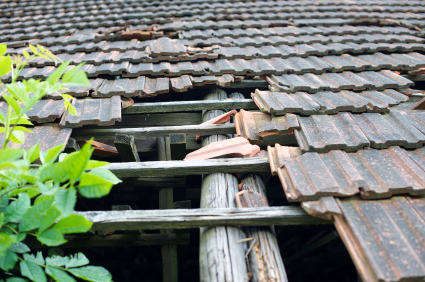
After any big storm, there is a frenzy to find roofers to repair the damages to your home. Due to the high demand, you aren’t always able to receive help right away. The following is a guide on how to make temporary roof leak fix  after a storm. There are certain precautions and steps you should take to evaluate and repair your roof.

Precautions

– Make sure everyone is in a safe place.

– Use caution as you near the room or area you are looking to evaluate.

– If the lights are out in the damaged room, do not enter the room because there may be power or electrical lines free.

– Never climb on a roof that has been damaged because the roof may not be sturdy enough to have additional weight on it.

Keeping the damage contained

– If there is a water leak coming from the roof, place a towel on the floor and place a bucket on the towel to catch the water drips. Follow the water tracks to evaluate the damage and see if mold is involved.

– Use a tarp and weather tolerant tape to cover the hole until further help and repair can come.

– If just a few shingles have come up during the storm, you can use roofing cement to hold them down until you can replace them with new shingles.

These tips should keep the damage to a minimum until professional help can restore your home to its original state. Check out TalkLocal to find a professional near your neighborhood. TalkLocal is free to use and will connect you to a professional that can come at the time that is most convenient for you and your schedule.

Different Types of Hamster Cages

Wednesday, November 7th, 2012

Different Types of Hamster Cages Veterinarians

Your pet hamster will spend most of its life in its cage, so it is important to pick out the right one. Cages come in all shapes and sizes, from plain and simple to flashy and colorful. When choosing a hamster cage, make sure to choose one that is large enough to accommodate your hamster and all accessories. This includes water bowls, food bowls, a hamster wheel, and a hamster house. If you have more than one hamster, make sure there is enough room for all pets to live comfortably. Read on for the different types of hamster cages.

Wire Frame Cages

This cage style is popular because it is virtually chew-proof. Your hamster will try to chew on anything it can, including his cage. Pet supply stores have many kinds of wire cages in stock and they can come in single and multi-levels.

Glass Aquarium Cage

Glass enclosures give you the ability to see your hamster’s burrows, reduce drafts, and reduce the chances of escape. However, they are harder to clean, heavier than wire cages, more expensive, and sometimes have problems with condensation.

Plastic Cages

Plastic cages have many of the same advantages and disadvantages as a glass cage because it is completely enclosed. However, plastic cages are lighter, easier to clean, and usually cheaper.

Plastic Tube Cages

This type of cage is very popular among young hamster owners. Although fun to look at, plastic tube cages are difficult to clean. Cleaning involves removing the tubes completely to clean the inside. Condensation may also occur, which is why many owners prefer wire frames. Plastic tube cages have the advantage of having pre-made burrows in which your hamster can run and play. They also provide entertainment to observers.

Additional Help

No matter what cage you choose, it is crucial to keep the cage clean for your hamster’s safety. If your hamster does happen to get sick, you can consult with a veterinarian for recommendations on how to maintain the cage. Use TalkLocal to get in touch with a high quality veterinarian in minutes!

How to Repair a Split Tree Trunk

Tuesday, November 6th, 2012

How to Repair a Split Tree Trunk Tree Removal

Severe storms can leave behind a mess in your yard. They destroy your landscaping, lawn ornaments, and even your roofing. There is a lot of cleanup involved with post-storm damages. If you have damages to the trees on your property, this article will help you learn more about how to repair a split tree trunk.

Materials

– gloves

– hard hat

– safety glasses

– a block and tackle

– rope

– drill with 1/2-inch diameter bits

– 1/2 inch steel bolts

– washers

– nuts

Instructions

Before beginning any repair, make sure you are safe. Wear gloves, a hard hat, and safety glasses.

1. Look above the strongest side of the tree and find a horizontal limb.

2. Hook the top pulley of your block and tackle over it.

3. Divide the split into thirds and mark each third.

4. Drill through the split on both sides at your first two marks. Make sure to use a 1/2 diameter drill bit.

5. Put the bolts through the holes you drilled. Make sure to screw the bolts in tightly.

6. Put washers and nuts on both ends to secure it.

7. Now you can remove the block and tack. However, you should leave the lash on top of the split for six months for safety purposes. During this time, watch the tree to see if it is healing. If it wilts considerably, you will have to cut it down. If the tree does not grow new leaves the following year, you will have to cut it down.

If the trunk is split on one side, with a large amount of wood on one side and just a little on the other side, you should not try to save it as this could be dangerous. If the tree trunk’s diameter is greater than 15 inches, it will also be too dangerous to save by yourself. Additionally, if the tree is very old, you should hire a professional to remove it.

If you do not think you can repair the tree, find a tree removal service through TalkLocal. You can be on the phone with up to three high quality local tree removal professionals in minutes!

How to get Rid of Camel Crickets in your House

Tuesday, November 6th, 2012

How to get Rid of Camel Crickets in your House Pest Control

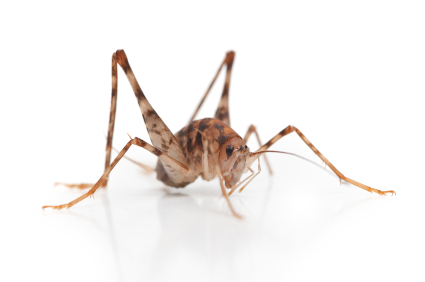
Camel crickets, or cave crickets, are often found inside homes, garages, and sheds. They are about 1/2 – 1 ½ inches in size and unlike field crickets, they do not chirp. Since they do not make noise, you may not realize the crickets are in your home until you find them or their fecal droppings. Camel crickets are not dangerous, but their droppings are unpleasant and they may chew on clothing if trapped inside a building with a limited food supply. If want to know how to get rid of camel crickets in your house, try the following tips:

– Camel crickets will enter your home, shed, or garage through holes and cracks. Walk around the exterior of the structure and fill any of these openings with caulking material. Silicone caulking will also keep out moisture, a cricket-attracting element.

– Install weather stripping material around the bottom of the baseboards of your home and your garage door. Weather stripping will prevent the camel crickets from slipping under the cracks of your baseboards and underneath your garage door.

– Use a dehumidifier in any rooms where you have previously found camel crickets. Crickets actively seek out moisture, so this will dry out the area.

– Set sticky traps in areas where you have previously found the crickets. Set that traps in the corner of room and behind furniture. Check them daily and dispose of used traps.

– Keep any mulch at least 12 inches away from the base of your home. Camel crickets are attracted to the moisture within the mulch, and they are more likely to enter your home if the mulch is close by.

– Spray the outside of your home, shed, or garage with insecticide. Make sure to spray the entire perimeter of the structure.

Need professional help? TalkLocal will connect you to reliable pest control professionals in no time!