Archive for the ‘services’ Category


Draft Coming Through Windows

Monday, October 1st, 2012

Draft Coming Through Windows Window Replacement

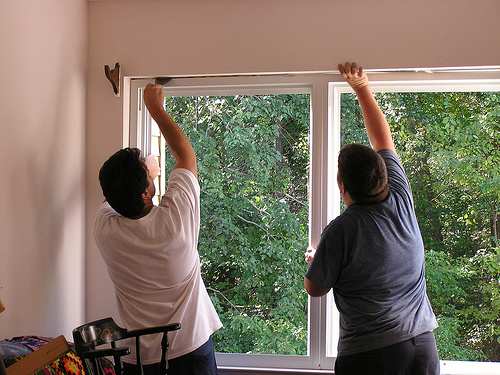
If you are experiencing wind indoors and your fans are turned off, you may have a draft coming through your windows. A draft can cause a loss in heat in the colder seasons and spike up your utilities bill. Read on to learn the causes of drafts and how to stop them.

Cause of Drafts

Older windows are more likely to have draft problems. The trim on the bottom of the window may be rotten and cracking. The frame around the window may also rot or rust over time, which will make the surface uneven. This will leave little cracks that allow cool air in. If the frame is warped, the original insulation will not work as effectively, and thus let air into your home.

Solution to Drafts

If your window frames or window trim are really old or warped, you should consider replacing them. If the problem can be fixed with a minor repair, then you should proof your windows by sealing the cracks. Caulking is good for sealing window edges and cracks, along with installing the window-sealing film. Weatherseal tape also keeps the draft outside and the heat inside. Another small fix–specifically for double-hung windows–is to put a “draft snake” in the window sill. You can make a draft snake by wrapping a cloth around dry rice or beans to form a tube. This should act as additional insulation for your window.

You may also consider installing a heavy curtain in front of the window to prevent the draft blowing directly into the room. This, however, is just a temporary fix and does not actually get rid of the draft problem.

If you need to replace your windows, TalkLocal can help you find the best repairmen in your local area. They can connect you with a professional in minutes after you submit an online service request.


Truck Door Won’t Open From Inside or Outside

Monday, October 1st, 2012

Truck Door Won't Open From Inside or Outside Auto Repair

If you are having trouble because your truck door won’t open from the inside or outside, there is most likely an issue with rods that hold the lock in place. These parts run between the key tumbler, the door lock button, the lock mechanism, the interior and exterior door handles, and the release mechanism for the latch. These rods keep the door locked, but they can cause problems when they slip out of place.

An easy way to solve this problem is to prevent the rods from slipping. You can do this by threading a lock nut (available at most hardware stores) onto the threaded rod to act as a bumper. Then, clip the threaded rod back into the appropriate clip and secure it there with a plastic zip tie.

Other solutions

There may be a break in the linkage. To check, take off your door panel. Pull on the door handle to see how the mechanism works. The linkage is usually a plastic clip that attaches to a metal piece. You should be able to tell if there is a linkage problem.

The problem may also be with the inside door handle. Take the window switch panel off, remove the screws, and pull out the door panel. Replace the old door handle with a new one. Check with your car manufacturer for a replacement door handle. You can also look online for a better deal.

The cable for your car door may have snapped. To replace the cable, you will have to first remove the actuator, which is connected to the cable. Then, remove the plastic cover to reveal two cables. Replace the broken one with a new one. Cables can also be purchased from your car manufacturer or online.

If you would prefer a professional locksmith to help with this problem, use TalkLocal to connect you to a high quality professional in minutes!

Home Remedies for Fruit Flies Indoor

Friday, September 28th, 2012

Home remedies for fruit flies indoor Pest Control

Pesky fruit flies are most active during the summer and early fall. Attracted to the sweet smell of ripe or rotting fruit, fruit flies are often seen flying around fruit bowls or grocery store produce sections. Characterized by bright red eyes with a light yellow to tan body color, fruit flies are common summertime pests. To rid your home of this annoying pest, consider using some of the following home remedies for fruit flies indoor.

Rubbing Alcohol

Fill a fine-misting spray bottle with rubbing alcohol. When you spray them with the mist, the flies will be killed instantly and fall to the floor. Just sweep them up and the flies are gone for good. Parents tend to favor this method because it is a safe alternative to pesticides.

Apple Cider

Make a simple fruit fly trap by filling a jar halfway with apple cider. Punch a few holes into the lid, screw it on, and place it anywhere around your house. The fruit flies will be able to enter the jar but won’t be able to escape.

Basil

Deter fruit flies by placing a bowl of basil on a windowsill or table where the flies congregate.

Fly Strips

These sticky strips work well to eliminate large fly populations. Hang them around your house where the flies frequent.

Clean Your Kitchen

Fruit flies are attracted to mold and moisture. They will sense even the slightest sign of old fruit pieces, so it is vital to keep your kitchen clean.

Remove Overripe Fruit

Fruit flies love the smell of overripe or rotting fruit. Make sure to periodically inspect fruit that is kept out in the open and remove fruit that easily attracts flies.

Open Your Window

Flies dislike the cold and wind, so keep a window open to let the air circulate freely.

If you can’t rid your house of fruit flies, it may be time to call pest control. TalkLocal can find you a local pest control service in minutes!

Exterior Home Painting Tips

Friday, September 28th, 2012

Exterior Home Painting Tips Painters

Painting the exterior of your house takes a lot of effort and preparation. If you do not paint your house carefully, you will end up with an unattractive and blotchy paint job, which decreases its life expectancy. There are many factors that contribute to a well-painted house that can be easily overlooked. So before you begin, read over these exterior home painting tips.

The first step you take should be to check the exterior of the house. Check for dirt stains, mildew, paint that is chipping, etc. It is important to get rid of obstructions to create a smooth surface for the paint. You can even sand down the walls before painting. A power hose washer is also strong enough to get rid of these obstructions. More specifically, you can use a mildew remover solution which is available at many hardware stores. If this area on your house is highly susceptible to mildew, you can also purchase a mildew resistant additive you can put into your paint for future protection.

This is also a good time to take care of rotting wood. Repair small pieces of rotting wood with caulk, or replace the rotting wood completely. Also check for leaky gutters and pipes, as well as pests and rodents that may cause damage down the road.

After checking the exterior of your house, it is time to prepare the painting materials:

– You will need a ladder and—depending on how sturdy the ladder is—someone to hold it steady. The ladder you use may also mark up the walls. Tape a towel to the tops of the ladders in order to avoid marking up the walls. To prevent streaking, paint your house from top to bottom.

– Make sure to use painter’s tape for windows, lights, and doors. This will help maintain straight and clean edges.

– The fastest and most efficient way to paint is to use an airless paint spray. If you do not have one, you can rent one. Remember that the paint particles will drift some distance in the wind, so keep cars and other valuables at a distance.

– If you do not want to use a air spray, use a paint roller at first and then use a three to four inch bristle brush to touch up the spaces you could not reach with the roller.

– Use an oil primer in addition to latex or acrylic to add extra protection.

– If you are using multiple cans of paint for the exterior, try to mix them all together so that the paint remains consistent throughout the whole house.

– If you are painting the ground, it would be best to add sand into the paint. This is beneficial because it adds traction while walking.

If you feel like you cannot handle the job, use TalkLocal to find a professional painter.


Glass Stuck in the Garbage Disposal

Friday, September 28th, 2012

Glass Stuck in the Garbage Disposal Plumbers

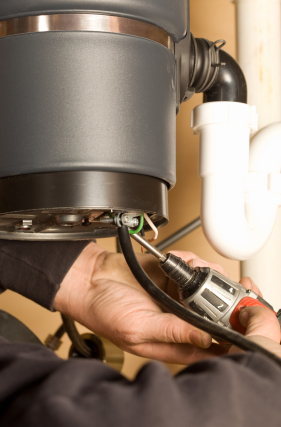
The garbage disposal in your kitchen is a convenient way to remove scraps and leftovers, but when objects, such as glass, get stuck, the mechanism can become jammed and stop working properly. Read the following methods to find out how to clean out the glass stuck in the garbage disposal.

1) Disconnect your garbage disposal appliance from the main power source — This is to make sure that its not accidentally turned on while you remove the glass, which could cause serious injury.

2) Remove any large pieces of glass with pliers — Use needle-nose pliers to remove all the large pieces of glass that you can find.

3) Dislodge the glass — If you can’t move the glass, you’ll need to dislodge it first. Remove all pieces of glass you can easily reach with pliers.

4) Vacuum the garbage disposal — Use a wet-dry vacuum to remove smaller shards of glass. Simply hold the opening of the hose over the top of the garbage disposal and let the vacuum run until you can’t hear anything be sucked up anymore. If the sink isn’t wet, you can use a normal vacuum if you cover the end of the extension tube with a nylon stocking secured with a rubber band.

5) Reset the garbage disposal

a. Reconnect the garbage disposal to the power source.

b. Partially cover the drain with a plate.

c. Turn on the cold water.

d. Turn the garbage disposal on.

e. If the disposal still jams, there’s probably glass stuck in it. Turn it off, turn off the water, and repeat the process from the start.

6) Remove the garbage disposal from the sink

a. Use your product manual to remove the garbage disposal from the sink.

b. After you remove the disposal, carefully remove any remaining glass.

c. Reinstall the garbage disposal following the instructions on your manual.

If you still have questions or problems with your garbage disposal, use TalkLocal to get in contact with a professional who can help you now.

Cannot View My Network Computers

Friday, September 28th, 2012

Cannot View my Network Computers Computer Repair

A common problem in networks is the inability to view My Network Places or Network Neighborhood of all the systems that are in the workgroup. This problem may lead people to wonder “why can’t I view my network computers?”  We will discuss what prevents you from viewing network computers and the possible solutions for successfully seeing those computers.

Computer Not in Workgroup

Your computer may be in the wrong workgroup. To be able to see all computers in the network, you must make sure they are all connected to the same workgroup. Go into your Properties and verify that the workgroup name is the same as for the other computers. If not, you can change the workgroup name in order to join the correct workgroup.

Not Connected to Network or Network Discovery Disabled

Another issue could be that your computer is not connected to the network. If you are not connected, simply connect to the network or set up a new network. If the network discovery is disabled and blocking you from seeing other computers in your network, you need to turn on network discovery by going to Network and Sharing Center >> Change Advanced Sharing Settings >> turn on Network Discovery >> Save.

Password Protected Sharing

When the Password Protect Sharing is enabled, you will not be able to view your network computers. Disable password protected sharing by going to your Control Panel >> Network and Internet >> uncheck “Password Protected Sharing.”

If you are having further difficulties viewing your network computers, TalkLocal can help connect you with the right IT professional in your local area. Just fill out a service request on the website, stating your availability, location, and service need. It’s that simple.

Car Door will not Unlock with the Key

Friday, September 28th, 2012

Car Door will not Unlock with Key Auto Repair

If your car door will not unlock with the key, but the key is still working to start the car, then the problem is most likely with the lock on your car door rather than the key. Read on for potential problem areas.

One possibility is that the lock cylinder needs new tumblers. These could be replaced or you could replace the entire lock. You will need a locksmith that specializes in auto locks in order to do this.

Another reason that your lock may not be working is that the latch assembly is jammed. In order to check for this, you can take off the door trim panel and check the rods. If the rods are not the problem, you can then take off the lock. You will probably have to take the entire door handle assembly out in order to do this.

After you have taken the lock out, put your key in the lock (make sure you do this or the tumblers and springs will fall out) and then remove the retainer holding in the inner piece of the cylinder. There may be a lock cap that you will have to take off first.

Once you have taken the lock cylinder apart, check and see if any of the tumblers are not flush with the inner cylinder. File down any that are not. Put everything back together and see if your lock is now working.

If you are not able to perform these fixes or they do not work, then you may need to contact an auto repair professional or a locksmith. You can use TalkLocal to receive up to three phones calls in minutes from high quality auto repair professionals and/or locksmiths in your area that are available when you are.

Ceiling Fan is Making a Clicking Noise

Friday, September 28th, 2012

Ceiling Fan is Making Clicking Noise Electricians

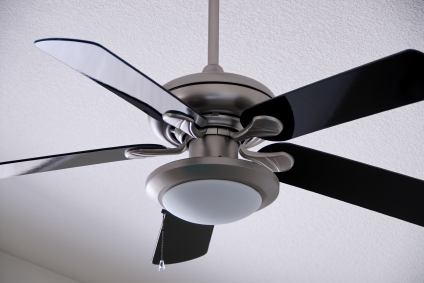
So your ceiling fan makes noises while it is turning? You might be scared that it might fall down on you or your loved ones, potentially hurting someone very badly. It’s actually a legitimate concern. Noise indicates that there is a physical problem with your fan, and parts might break off the fan if the problem goes unresolved. Read on if your ceiling fan is making a clicking noise.

Immediate Action

Noise from the fan installment can be two things: a problem with the rotors or a problem with the mounting of the rotor device itself. Check the components listed in this guide in order to identify and troubleshoot the problem.

A misplaced blade in the ceiling fan will throw off the balance of the rotor device, making it spin out of control and causing some of the internal components to collide with one another.  This makes the clicking noise that you are fearing. Needless to say, collision between the internal components of the rotor is not good. The fan may fall apart if the internal parts wear out.

If the imbalance and the speed at which the blades are turning is big enough, it may even cause the entire ceiling fan to shift as the blades go around. Look for a gap between the ceiling and the base of the fan installment as the fan moves to identify this problem.

Also, check if the center of the blades (the main axle of the rotor) is stationary as the blades in your ceiling fan are turning. If the center stays stationary, then the blades must be balanced. If the base of the fan and the center stays constant, the balance is not a problem at all – there must be some external problem.

Possible external problems can include the wind from the fan constantly hitting something making a noise or the blades of the fan itself hitting something.

Additional Help

If you feel like you need professional help on identifying ceiling fan loud clicking noise, TalkLocal can help with finding the correct local experts in this case, saving you time and energy in what may be a stressful situation.

Why are my Teeth Yellow?

Thursday, September 27th, 2012

Why are my teeth yellow Dentists

Your teeth are exposed to the world every day. A person’s smile can be the first feature we notice when meeting someone new, and it is often involved in making that “first impression.” Growing up, we all heard the prized directions to brush and floss twice a day, both in the morning and at night to retain a perfect, white smile. Though, whether it is a result of your eating, smoking or brushing habits, you may find your teeth to be a yellowish shade. This might cause you to ask yourself “why are my teeth yellow?” Read on to learn more about causes and solutions to yellow teeth.

What causes yellow teeth?

Naturally, teeth have a layer of protection called enamel, which helps to keep your teeth white and shiny. If you smoke, drink too much coffee or soda, eat a lot of sugary or acidic foods, or fail to brush, floss and use mouthwash enough, this can cause the dentin to wear away, resulting in the yellowing of your teeth. These refer to situations of extrinsic (or external) staining. There is also something called intrinsic (or internal) staining on the insides of your teeth, which may be a result of medicines that you took when you were a young child, excessive consumption of fluoride, or even trauma that can cause bleeding on the inside of your teeth.

Yellowing may also be caused by your genetics and/or age. As bad as this may sound, you may simply have yellower teeth than others because of your particular genetic makeup. In addition, as you get older, your enamel may wear down therefore making it easier to stain your teeth yellow through diet, smoking, or lack of dental hygiene.

What can you do about it?

The solutions for whitening your teeth are quite simple. If you smoke, drink a lot of coffee or acidic substances, or eat a lot of candy or other sugary foods, either cut down on the intake or quit altogether. You can also improve your dental hygiene by brushing more often (if you don’t already brush twice a day), flossing , and getting your teeth cleaned by a dentist regularly. You can also try using teeth-whitening toothpastes or strips purchased either over-the-counter or prescribed by your dentist.

If none of these remedies are taking effect, you may want to see a dentist for other options. If you need to find one in your area, try using TalkLocal. TalkLocal is a FREE service that will connect you with top-quality, reputable dentists in your neighborhood, within minutes. Simply enter in your problem, availability and location and TalkLocal will contact multiple specialists, who will then call YOU directly, ready to help.

Moving with Plants

Thursday, September 27th, 2012

Moving with Plants Moving and Storage

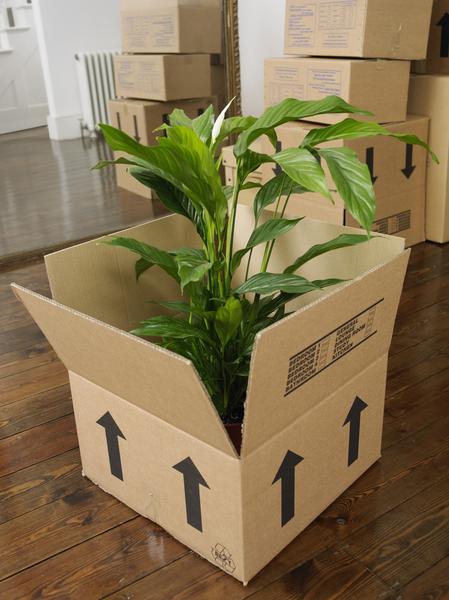
Are you planning to move and wondering what you should do about moving your precious plants to your new home? How will you find a mover that will be willing to move your plants? Read on for tips on moving with plants.

Check State Laws

If you are moving to a new state, you need to check the laws for the state where the plants will be relocated. Some states, such as California, Florida, and Arizona, have laws against bringing certain plants across the border and guidelines for how to properly sterilize your plants before bringing them.

Transplant Plants in Plastic Containers

Clay and glass pots are fragile and you don’t want them to break during the move. Plastic containers are good temporary containers for transporting plants with breakable pots. Make sure to transplant your plant into a container of approximately the same size as the one your plant was previously in, as a change in pot size can be shocking for the plant.

Sterilize Your Plants Before Moving

Make sure to kill any bugs, mildew, and diseases that your plant may have before moving so you don’t transfer these things to your new home. Bug bombs, bug power, and pet flea collars can all be useful for sterilizing your plants. You can also research remedies for any specific problems that your plants may have. If you cannot cure something before moving day, leave that plant behind.

Prune Your Plants Before Moving

Prune your plants to keep them more compact for moving. Pruning will also make them more attractive looking. You can prune by pinching back newer growth with your thumb and forefinger. Remember not to prune succulents and ferns because they do not respond well.

Water Your Plants Normally Before Moving

Even if you anticipate warmer temperatures in the area you are moving to, you should still water your plants as you normally do. If you overwater your plants, they could contract a fungus (warm weather) or freeze (cold weather).

Find a Mover That Will Move Your Plants

Some movers may be unwilling to move your plants because they are perishable items–particularly if you are moving more than 150 miles–so you should make sure ahead of time that you find a mover who can accomodate your plants. With the help of TalkLocal, you can find local movers within minutes. TalkLocal matches you with movers who can meet your specific need, so you dont have to waste time finding help move your plants to your new home.