Buying a John Deere Lawn Mower

Friday, October 11th, 2013

Buying a John Deere Lawn Mower - Landscapers

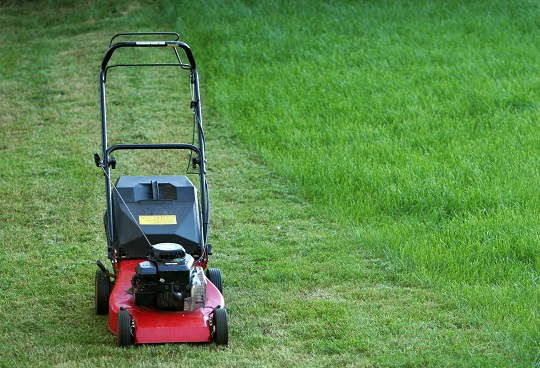
John Deere is a trusted name in lawn equipment and is known for manufacturing heavy duty lawn mowers. Their mowers feature 7-gauge steel frames and are painted with rust/corrosion inhibitor paint. Each part of a John Deere lawn mower is inspected and re-inspected carefully, and each unit is tested for 20 hours per day. This high level of commitment to quality is John Deere’s main advantage over other brands.

Factors in Choosing a Mower

John Deere offers a wide range of lawn mowers to help you care for and maintain your lawn regularly. There are several factors in choosing a John Deere lawn mower that will best suit your needs. One of the factors to consider is the size of your property, which will determine how much horsepower you will need in a mower and its specific features.

A walk-behind John Deere lawn mower will do a great job on a property that is half an acre or less. For larger properties, a riding mower is a better option. However, make sure you choose a type that will be able to maneuver around the different areas in your yard.

Also, look at your property’s terrain. Riding mowers with more horsepower are recommended for hilly areas. It is important to consider the type of grass as well. A mower with taller wheels and high horsepower is the best choice to clear coarse or thick grass.

Comfort & Safety

For your own comfort while using the mower, make sure to choose one with features like arm rests and adjustable seats. In terms of safety, look for a John Deere lawn mower that has automatic shutdown if the operator happens to release the push bar or get up from his or her seat. Riding mowers with foot controls encourage safety, as the operator can place both hands on the wheel.

Cost

John Deere lawn mowers cost several thousands of dollars depending on the model you choose. However, the company offers flexible financing options to make it easy for their customers to buy their products.

Hire a Pro Landscaper

In addition to investing in a durable and high-quality lawn mower, hiring a professional landscaping service is another way to keep your yard beautiful. Let TalkLocal help you now to find a qualified contractor who will fit your needs.
How to Patch a Hole in Drywall

Thursday, October 10th, 2013

How to Patch a Hole in Drywall - Painters

Do you have a hole in your drywall? Whether the hole got there accidentally or by way of an intentional punch or kick, it’s possible to patch a hole in drywall yourself. It can be tricky to do it successfully, so here are some proven steps to help you.

How to Patch a Hole in Drywall

1. Find a piece of drywall that is as thick as the damaged one. To use this as the patch, cut it out in a square big enough to cover the hole. Hold the square patch against the hole, and trace its outline on the wall.

2. Cut the hole into a square using a drywall saw, cutting from the center of the hole to the edges of the outline. While this means you’ll be making the hole bigger, it’s easier to do the drywall repair this way instead of cutting the patch into the exact odd shape of the hole on the wall.

3. Add a board to the back of the hole. For medium holes, cut a ¼-inch plywood about six inches longer than the hole’s height. Apply some construction adhesive to the board. Carefully insert the board into the hole with the adhesive side facing you. Pull it firmly against the wall. Screw the board in place, making sure to drive the screws through the drywall and into the board but with the screw heads just below the wall’s surface.

4. Cover the hole with the patch, firmly pressing it against the adhesive on the board.

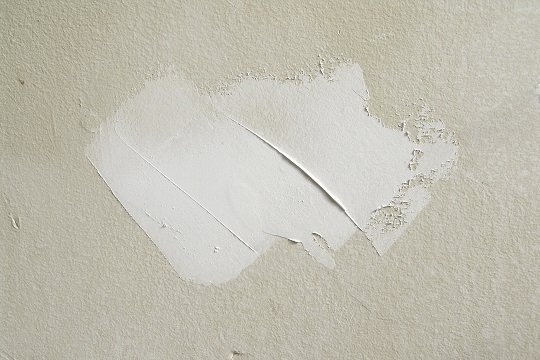
5. Using a 6-inch drywall knife, apply a layer of joint compound thinly over the seams, patch, and screw heads.

6. When trying to patch a hole in drywall, you’ll need a piece of window screen or mesh tape that is cut a few inches wider and longer than the patch. Press the screen into the compound using the knife. This step helps prevent cracking between the old drywall and the new patch.

7. Apply another layer of compound from the center going outward, trowelling off any excess.

8. When the previous coat has dried completely, put on another thin layer using a 12-inch drywall taping knife. Smooth out the compound at least 6 inches from the edges of the previous coat.

9. When the last layer has dried, sand using fine (100 grit) sandpaper. Be careful not to expose the window screen or mesh tape.

10. Prime the wall and then paint it the matching color.

Find Professional Help

With the steps above, you will not need a repair kit to patch a hole in drywall. If you need help painting the patched up area or would rather have a professional do the entire drywall repair, contact TalkLocal now and we’ll be glad to connect you with the right professional in your area.

Oil Furnace Repair

Thursday, October 10th, 2013

Oil Furnace Repair - Heating and Cooling

Oil furnaces are complicated heating systems. Nowadays, they are known under the name of pressure burners because they have a combustion chamber where oil is sprayed. Unless you choose to make their maintenance one of your priorities, you can’t enjoy them up to 20 years without any problems. Sometimes repair work may be necessary.

There are several repairs that you can perform yourself, and others that require at least the advice of a professional.

4 Oil Furnace Repair Works You Can Perform Yourself:

> Adjusting or replacing the motor belts

> Cleaning or replacing the filters

> Checking the blower

> Leveling and checking the thermostat

1. First, turn the furnace off.

2. Take the fuse out and check it using a multimeter. If need be, change it.

3. A belt may break during the service, so you will have to replace it. But it may happen that the belt is not broken or worn out, but just needs realigning.

4. Take out the motor and open the access door to the blower, take the filter out and use a vacuum cleaner to get rid of the dust. If necessary, replace the filter with a new one, observing the manufacturer’s recommendations.

5. The blower is also very important, due to the fact that it causes the heat to circulate in the house. If the blower works incessantly, the limit switch needs to be adjusted.

6. Level your thermostat. It controls the activity of the blower.

7. A heating monitor that has been broken may cause problems. All you have to do is put a jumper across the thermostat and then turn the furnace on.

 4 Oil Furnace Repair Works You Need Professionals For:

> Air tubes

> Air nozzles

> Pumps

> Transformers

Additional Help

If you want an expert to deal with these problems or you just need a piece of advice, TalkLocal can help you address these issues by connecting you with the right professional in just minutes!

How to Build a Picnic Table

Thursday, October 10th, 2013

How to Build a Picnic Table - Handyman

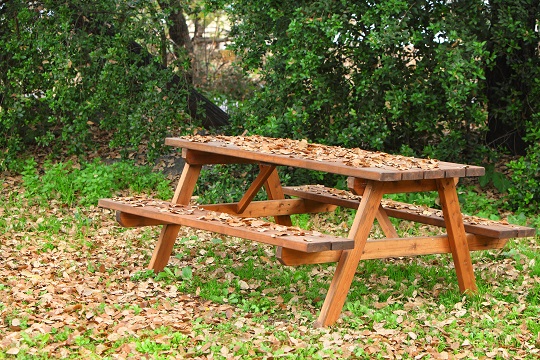
The traditional picnic table provides excellent seating to your backyard with its attached benches, allowing people to sit elbow to elbow to maximize space. It works on any terrain, so you can put it on grass or on your attached deck. While there are ready-made kits available to build a picnic table quite easily, you may find it more fun, as would any do-it-yourselfer, to assemble the table from scratch. Here’s how:

Cut the Wood Pieces

1. Cut four table legs from 2 x 8 wood boards. Each leg should be mitered 22 degrees at the top and bottom.

2. Make the horizontal crosspieces that will support the top and the bench: two 2 x 4 pieces for the top and two 2 x 8 pieces for the benches.

3. The end of each bench crosspiece should have one corner cut off.

4. For the braces that will run along the table’s underside from the sides, cut two pieces of wood measuring 2 x 4 with ends mitered 45 degrees.

5. Cut middle braces measuring 2 x 4 for the benches and the table top.

Assemble the Table Frame

With the frame parts ready, build a picnic table frame by doing the following steps on both ends of the frame:

1. Use 2 ½-inch decking screws to attach the top crosspiece to the table legs.

2. For the bench crosspiece, position it 15 inches from the bottom of the table legs and attach to the legs using carriage bolts with a length of 3 ½ inches.

Finish Building the Table

1. Cut seven 2 x 6 pieces of wood, two to be used for the benches and five for the table top. Include an overhang 2 inches on both sides. Cut the corners of the bench planks.

2. With the table A-frames up, attach the bench pieces to the top edge of the bench crosspiece using 2 ½-inch decking screws.

3. Use the same type of screws to attach the table top pieces to the top crosspiece.

4. Position all the middle planks with ¼ inch spacing in between them.

5. Use a deck stain to paint the table.

Need Professional Help?

With your picnic table built, you can start enjoying it by having a classic backyard BBQ with family and friends. If you’re not able to build a picnic table on your own, why not hire someone else who can? Use TalkLocal, and we’ll connect you with qualified professionals within minutes to fit your request. Try us now!

How To Fix A Snow Shovel

Thursday, October 10th, 2013

How To Fix A Snow Shovel - Snow Removal

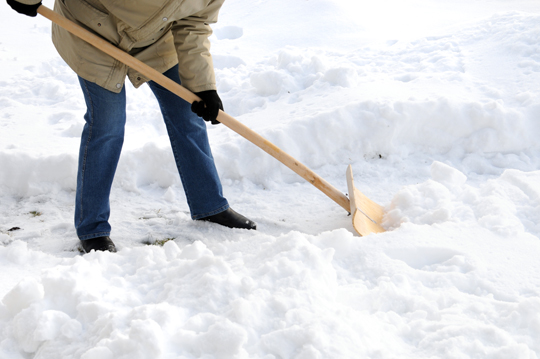
Winter can be a wonderful time filled with fun activities out in the snow. Unfortunately, none of that is possible if you can’t get in or out of your own driveway. Luckily, you have your snow shovel, but if you invested in a cheap one, you may be wondering how to fix a snow shovel. Investing in a quality snow shovel can really save your health, but if you aren’t ready to throw the old one out, here is a method for fixing it.

How to Fix A Snow Shovel

1. The scoop is the portion of the shovel that breaks most often. As long as your handle is intact, you’re still in good shape.

2. You’ll need to gather a few things: medium-sized piece of scrap metal, vice grips, hammer, clamp, drill and bit, hollow metal pipe (about two feet long), and bolts.

3. Using the vice grips, fold three of the four edges of the scrap metal about an inch back. Use the hammer to pound them flat. This will not only smooth out the edges but will also strengthen the scoop.

4. Use the pipe and hammer to shape the scoop. This method will both create a smooth slot to attach your handle holder (the pipe) and help you to achieve the roundness you want. Use your previous scoop as a guide for your shape. Once finished, flatten out the bottom portion that was shaped by your pipe.

5. Use the clamp to place the pipe in the groove you created in your scoop. It may help to flatten one end of the pipe with your hammer to create a smooth finish.

6. Insert your old wooden handle into the pipe.

7. Use the drill and bit to drill pilot holes for your bolts.

8. Use the bolts to secure the three pieces together, and your shovel is finished!

Not everyone has spare pieces of metal lying around or even the tools to complete this job. If you aren’t in an emergency situation, you may prefer buying a new shovel. Or, to spare the wear and tear on your body, a snow blower may be more your style.

Find Quality Snow Removal Services

You may be at the point where you are done dealing with snow hassles completely. If you’ve switched from wondering how to fix a snow shovel to how to hire a professional snow removal expert, TalkLocal can help. We’ll connect you with a professional quickly and easily, in just minutes.

Cost of Utility Trailers

Thursday, October 10th, 2013

Cost of Utility Trailers - Towing

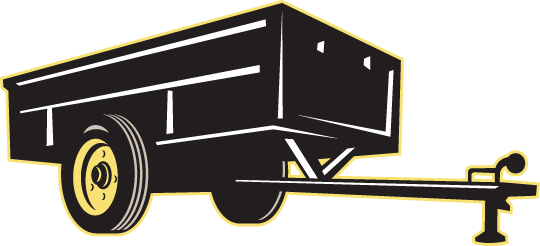
The smallest utility trailer can be a great asset for homeowners who have to carry a lot of items from one place to another on a regular basis. In fact, utility trailers are very practical, versatile, come in a great variety of models, support different weights, and are perfect for hundreds of different applications. In this context, how could you possibly find the best one and how much should you be willing to spend on it? How much is too much, when it comes to the cost of utility trailers?

Decide based on what type of utility trailer you really need to buy 

Dig a little deeper before making a purchase. Why do you need the utility trailer in the first place? Do you plan to use it during your camping trips, to move stuff around the house, or to start your own business and carry heavy materials (like lumber pieces, for instance) every single day?

Your answer will help you make a wise decision. If you need the trailer to transport weighty objects, invest a little more in it and make sure it comes with great suspension, bigger wheels, and that it is manufactured from extra-solid materials.

The price tag of a utility trailer varies a great deal according to many factors, including its manufacturer, model, material, size, weight capacity, special features, and so on.

Handcrafted, second-hand, or brand-new?

Next, try to evaluate your needs in an objective manner. Would you be willing to settle for a second-hand product that might cost you much less, or would you only go in favor of brand-new products launched on the market by respectable brands, hoping to profit from a premium utility trailer for a longer period of time?

You should know that you could find fully functional, used utility trailers for less than $200 on popular e-commerce platforms. However, if you’re determined to invest in first-class trailers, be prepared to pay approximately $2,000 per piece – maybe even more.

Ask an expert

If you know very little or nothing at all about trailers, estimating the average cost of utility trailers can be quite challenging. Choose the easy way out. Get the best answer from a towing expert, identified with a little help from TalkLocal, your number one connection to local professionals.

Oil Furnace Prices

Wednesday, October 9th, 2013

Oil Furnace Prices - Heating and Cooling

Oil furnaces are great systems that keep your homes heated. They last up to twenty years of service, and they won’t cause any problems or difficulties unless you neglect them and forget to have them inspected once per year. Let’s look into oil furnace prices.

How Much Does An Oil Furnace Cost?

If you wish to acquire an oil furnace, prices vary from $2,000 up to $10,000. An average model with basic features can cost $2,000 or more, up to $5,000. If you choose to buy a special model, your purchase may amount to $10,000.

What Factors Should You Take into Consideration When Buying an Oil Furnace?  

It would be great to successfully straddle the issues of safety, cost-efficiency, and energy savings you can make in time. You should know certain details in order to be able to make a choice. Here are 4 important imperatives you should pay attention to if you want to have an oil furnace with a longer lifespan:

1. Choose your furnace according to the space you can allocate in your home.

2. Pick your oil furnace according to the temperatures you prefer.

3. Don’t buy an oversized/undersized furnace.

4. Spend efficiently.

You shouldn’t buy an oversized furnace because it can trigger higher fuel consumption. However, an undersized oil furnace may be cheaper, but will probably not heat your home adequately. There is no golden formula – you should have in mind the amount of space that the heating system will fill.

The saving of energy is a very important factor as well. AFUE shows you the amount of energy that is turned into actual warmth. Why should you think of AFUE? Because it is translated into the money you pay for your energy supply – a better AFUE means a friendlier bill.

Need Professional Advice?

If you need more information on this topic or want expert help, TalkLocal can put you in contact with specialists ready to assist you with the buying of a new oil furnace.

Clean Fireplace Brick

Wednesday, October 9th, 2013

Clean Fireplace Brick - Maid Services

Lots of homeowners choose to spend their spare time in cozy environments, enjoying the warmth, the discreet light and the elevated level of comfort provided by a fireplace. However, every once in a while, all fully functional fireplaces, regardless of their design, structure, size, and shape, should be thoroughly cleaned to avoid fire hazards.

Keep reading to find out how to clean fireplace brick fast and effortlessly on your own, and how to identify the very best maid services, in case you want to let professional workers do the heavy lifting… or cleaning.

Gather all of the essential tools and get started

You will need a durable, resistant scrub brush, one bucket filled with hot water, modeling dough for kids, baking soda, and trisodium phosphate (TSP). Also, choose to invest in a first-class fireplace brick cleaning solution, if you are dealing with difficult stains.

Follow a few simple steps to obtain flawless results

You don’t need a lot of experience, remarkable skills, or special tools to clean fireplace brick. The cleaning process is actually quite simple, as long as you rely on basic equipment and you follow a few simple steps.

1. First, use a brush soaked in water to scrub the bricks and eliminate all grime and dirt accumulations.

2. Take a closer look at all remaining stains and eliminate soot particles by applying modeling dough on the surface that you’re trying to clean.

3. Gently peel it off after a few minutes and evaluate the result.

4. If you’re still far from eliminating the toughest stains, prepare of mix of water and baking soda, and generously apply it on the dirty spots.

5. Leave it there for a few minutes and then rinse the whole area with a sufficient amount of clean, hot water.

6. Residual stains can be removed using TSP, but before applying this powerful chemical, make sure to ventilate the whole room and wear goggles and gloves.

7. Rinse one more time and start analyzing every single brick.

8. If some of them still don’t look clean, scrub them with a brush soaked in commercial cleaner for fireplace bricks, dissolved in water, according to the manufacturer’s instructions.

9. Rinse one last time and let the whole area air dry. In the end, there shouldn’t be any stains left on your fireplace bricks.

Ask an expert

Don’t have the time, the patience, the equipment, or the skills required to clean fireplace brick on your own? In this case, it shouldn’t be difficult to find qualified professionals who could easily complete this project in a cost- and time-effective manner. Spot the best professionals by consulting TalkLocal, your one and only source of information allowing you to save time and money while meeting trustworthy specialists living and working in your area.

System Restore in Safe Mode

Wednesday, October 9th, 2013

System Restore in Safe Mode - Computer Repair

System Restore is a tool that automatically monitors and records any changes that are made to the core Windows system files and to the registry. If a change causes your system to function incorrectly, System Restore will allow the user to “roll back” to a time when the system worked correctly.

Safe Mode is a special way for Windows systems to load when there is a critical problem that interferes with normal operations. In the event of a critical error, users are likely to use System Restore to fix the problem. To use System Restore in Safe Mode simply follow the steps outlined below.

How to Use System Restore in Safe Mode

1. Restart your computer, and then press and hold F8 during the initial startup. This will start your computer in safe mode with a Command prompt. A bootup screen will appear and prompt you to make a selection.

2. Use the arrow keys to select the Safe mode with a Command prompt option, and press Enter.

3. If you are prompted to select an operating system, use the arrow keys to select the appropriate operating system for your computer, and then press ENTER.

4. Log on as an administrator or with an account that has administrator credentials. If there is only one user account on your computer (such as for a personal laptop), log on as normal.

5. At the command prompt, type %systemroot%\system32\restore\rstrui.exe, and then press ENTER.

6. Follow the instructions that appear on the screen to restore your computer to a functional state. This should allow you to resume normal use of your computer without sacrificing vital data.

Need Computer Help?

If these steps do not solve your problem, you may want to consult a computer repair professional. TalkLocal is a great tool to help you find reliable computer repair professionals in your area! We will connect you with up to three professional in just minutes.

Power Steering Gearbox

Wednesday, October 9th, 2013

Power Steering Gearbox - Auto Repair

As a driver, you know that the steering wheel is that part of the car which allows you to have control over your vehicle. But have you ever wondered how it is that rotating the steering wheel makes the front wheels move, and keeps them moving? To answer this question, you need to consider the power steering gearbox. This means that you need to understand how the steering box and the steering gear work.

What Is the Role of the Power Steering Gearbox?

The combination between the steering box and the steering gear makes your car’s steering system, which converts the circular movement you make with the steering wheel into the motion of the vehicle’s front wheels, which move to the left and to the right. This is what allows you to make a turn, change lanes, or go past another car.

This function is essential and your car can’t function properly without it. That is why this part of your vehicle must be durable. The materials used in making it need to be very solid to prevent easy deterioration.

How Does the Power Steering Gearbox Work?

The commands sent by the steering wheel to the gearbox are interpreted in relation to the pressure exerted. When you turn the steering wheel, the vehicle turns thanks to power steering. How does this happen? A fluid pump sends the power steering fluid up through pressure lines into the steering gearbox.

What Are the Main Components of a Power Steering Gearbox?

The internal components of the gearbox are contained in a gearbox housing, which is generally made of resilient cast iron. There are four line inlets built into the casing of the gearbox. One is connected to the reservoir, another to the pump, and two leading to the fluid lines.

There is a rotary valve inside the gearbox, which senses the pressure applied with the help of the steering wheel. This valve works only when it detects pressure. When the movement is straightforward, the rotary valve doesn’t do much. Other key components of the power steering gearbox are the torsion bar, the shafts, and the power piston.

Additional Help

If you’re experiencing problems with your power steering gearbox, TalkLocal can help by putting you in contact with a local qualified professional for free.