What Does Notarize Mean?

Wednesday, September 25th, 2013

What Does Notarize Mean? - Notaries

What does notarize mean? A notarized document is simply a document with a seal or a stamp indicating that the signature on the document is legitimate. A notary (or an authority figure, for instance), watches as you sign the document and then places a seal next to your signature signifying that your signature is legitimate and was signed in the presence of an authority.

This is an important step that tells the bank that it was really you who signed the loan document (for instance) and not somebody else. In this day and age of identity theft and lawsuits, this is really an important step when you should ask for help with a contract.

It’s fairly simple to get a document notarized. All you have to do is to sign a document in front of a notary public. A notary public is a person who is in a position of authority to notarize documents.

You will need to present official proof of identification with pictures, such as a driver’s license or passport. You need to bring the document unsigned to the notary public. You can’t sign it ahead of time.

You may also need to pay a small amount depending on where you will get your document notarized. They need to keep records and maintain their offices, so don’t be surprised if they charge you a minimal fee for notarizing your document for you. You can get your document notarized in your bank or credit union.

So, now that you know what notarize means, you can get your document notarized! Contact TalkLocal today and we’ll help you get your documents notarized in no time! We will connect you with a notary in your area in just minutes, so you can get the help you need when you need it.

What Are Roofing Squares?

Wednesday, September 25th, 2013

What Are Roofing Squares? - Roofers

Most people who are trying to build a new home or to conduct a house renovation process have a hard time trying to understand several technical terms used by professionals operating in this line of work. For instance, one might not be able to understand the exact specifications given by a roofer hired to build or repair the roof area. Keep reading to find out what are roofing squares and how to get accurate answers to all of your roofing problems that might be on your mind at this point.

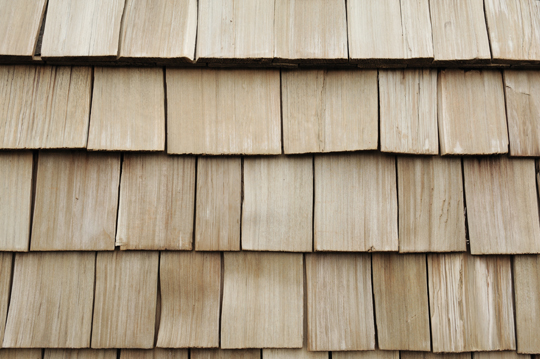
The term “roofing squares” is frequently used by experts specialized in exterior siding, and refers to 100 square feet of roof shingles. You should also know that 100 square feet is the equivalent of 10 feet by 10 feet (10 feet X 10 feet). Constructors use roofing squares to talk about massive quantities of roofing materials, because it wouldn’t make much sense to count shingles individually.

In other words, shingles are available in bundles and generally speaking, one roofing square is the equivalent of 3 or 4 shingle bundles. For instance, your contractor might tell you that 23 roofing squares would be enough to cover your entire roof area, measuring 2,233 square feet. Use this information to understand exactly how much roofing material you actually need and to be on the same page with your roofer at all times.

Constructing or renovating your roof is a costly, time-consuming assignment. This is precisely why you need to rely on excellent professionals, allowing you to choose the perfect materials and helping you complete this important project in a timely manner.

If you want to find the very best roofers who can address all of your problems, share your vision, and enable you to take pride in an appealing, fully functional roof, rely on TalkLocal. We are your reliable, free service that connects you with first-class roofers in your area, and ensures high-quality services and expert guidance around the clock.

Persona Building: It’s Elementary, My Dear Watson!

Wednesday, September 25th, 2013

Persona Building: It's Elementary, My Dear Watson! - Small Business Advice

Written By TalkLocal Co-Founder, Manpreet Singh

You know how to market to your customers, right? You know which products and services sell themselves right off the shelves. You know which directories and ads drive the most leads through your doors, onto your phone-line, and onto your appointment schedule. You may even know that loyal customer Jeff is allergic to nuts, yet still manages to make an incredible pecan pie.

But, do you know your prospective customers? Obviously not. After all, most of them you’ve never met. Still, if you want to win over those customers, you’ll have to learn about them… somehow.

The main tool for helping you conceptualize the perfect, perfect stranger is called persona building, Through buyer personas, not only can you make your marketing outreach as personalized as a one-on-one consultation, you can also become a regular Sherlock Holmes.

First of all… What are Buyer Personas?

Buyer personas are in-depth characterizations of the customer types you want. They are designed to help inform marketing strategy and other business choices.

Now, what are the steps to creating buyer personas?

There are three steps in buyer persona building and, just like a Sherlock Holmes mystery, the process combines your knowledge and your deductive powers.

1. Start with your product and work backward: Fortunately, understanding your unknown customers begins with something you know very well: your product. Ask yourself, or rather, your inventory list…

> What kind of products and services do I sell?

> What bigger-ticket products and services do I want to sell more of?

Once you’ve rattled off the list, it’s time to answer the pivotal questions. Think about the people who need such services. What do they tend to have in common? What sets them apart?

For example, if you are a landscape artist, your prospective customers are probably all property owners. Most may own family homes, and you have your fair share of those types on your docket, but the commercial property owners are still largely beyond your reach. So, already you’ve deduced the beginnings – the shadows – of two personas. Now, it’s a matter of giving them flesh and bone.

2. Dig deeper with demographical details: Using your current customer pool to keep your thinking grounded in reality, you can get a lot of information from your current knowledge and experience. A commercial property owner, you know, is usually in their 30s or 40s or hires a property manager of that age who would be the gatekeeper. People of such an age likely happen to have children. And since both extra land and disposable income are needed to employ a landscaper, you know that a certain economic status is shared among your ideal customers as well. So, now you’ve built the skeleton of the persona; the demographic details that will inform their habits/needs and inform your strategy of engagement.

3. Given the background details, determine  what habits and needs each customer type has. So, you’ve gone from knowing just your own products, to knowing a little bit about your target demographic. Here is where you go completely Sherlock. Using research (search for surveys on various topics) or just common sense, determine how those details impact each persona’s life and the lives of the real people just like them.

What does a 30- or 40-something, working age parent and property owner read, when do they have to time for reading, and using what medium — computer, mobile device, newspaper? What specific concerns or needs do they have regarding the product… child-safety, allergies? What other obligations do they have to squeeze into their average day?

You can even ponder what they had for breakfast. Just draw inspiration from real or desired customers, research, and experience to give each persona as much depth as you would a new friend.

Now, you should have five or six personas complete with their own priorities, consumer habits, and personal lives. So, when designing a marketing strategy, you can dialogue directly with those personas to better communicate with the real people just like them.

Of course, it’s reasonable and not at all schizoid to give each persona a name and even a magazine cut-out face if it helps. What matters is that you keep each persona in mind as you develop various marketing strategies that touch their unique needs. Your new customers will think you’re Sherlock himself.


Power Steering Fluid Change

Tuesday, September 24th, 2013

Power Steering Fluid Change - Auto Repair

A car designed to have power steering fluid can be dangerous to drive without power steering fluid. A power steering fluid change is therefore essential for any owner of a car with power steering. If your car’s power steering goes out suddenly, you could lose control of your car and you could crash and end up in a really bad accident.

Power steering fluid is not like car oil, which can sit for long in a car and not cause any damage. It is important to change the power steering fluid of your car periodically to avoid accidents.

1. Lift the car using a hydraulic jack and ensure that you can slide easily underneath the wheels at the front of the car. You can find a trustworthy mechanic to do this for you, of course, but just in case you can’t, we’ll show you how.

2. Remove and locate the car’s catch tray found underneath the power steering system of the car.

3. Disconnect the hose from the steering pump to drain the power steering fluid. After this, you have to reconnect the hose.

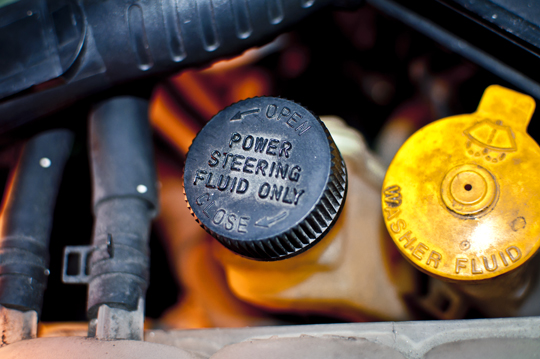
4. Unscrew the cap to the reservoir, and add the manufacturer’s recommended amount of steering fluid.

5. Replace the cap and start the engine. Listen for a buzzing sound and turn the steering wheel until the fluid is properly circulated in the system.

6. Turn off the engine and allow it to rest for a few minutes.

7. Turn the engine off and allow it to rest again. Drain the fluid once again through the hose.

8. Reconnect the hose again and fill with fluid once again. Restart the engine again and rotate the steering wheel to release any air. Turn off the engine and let it rest again.

9. Repeat this process until you have drained three quarts of fluid out of the system.

10. Lower the vehicle, start the engine, and you are done.

Let TalkLocal help you locate a mechanic near you to get the professional help that you need! We will connect you with the right professionals in your area, so you can get the help you need when you need it.

How to Care for Reptile Pets

Tuesday, September 24th, 2013

How to Care for Reptile Pets - Veterinarians

Snakes and lizards are cold-blooded animals that are often kept as pets. Lizards and snakes are typically inexpensive to purchase, and are also hypoallergenic pets. However, the equipment needed to care for them in the long run can cost many times the amount needed to purchase them.

The first step in determining if you want a lizard or snake as a pet is to know how large they will grow when they get older. Lizards such as iguanas can grow as large as 5-6 feet in length as adults, and some snakes can grow as long as 10 feet. Ask yourself then, “am I ready to care for reptile pets?”

You have to take care of their body temperature because they are cold-blooded, meaning that their body temperature is dependent on the temperature of the outside environment. This will require that you purchase heat lamps to keep the temperature consistent.

Make sure to give specialized care. These reptiles, especially snakes and lizards, grow to large sizes. This means that their living quarters have to adjust as they grow older. Make sure you have enough space in your home to accommodate their increasing size. Reptiles may seem like a good choice initially for an apartment, but as they grow larger, they won’t be.

Be sure to keep yourself safe. There are reptiles that are not safe to handle. Things like venomous snakes are obviously off-limits, except for expert handlers.

Be very wary of contracting Salmonella. Many reptiles carry Salmonella, so you have to be very careful when handling reptiles to make sure you don’t infect yourself with this bacteria.

Contact TalkLocal today and let us help you find a veterinarian near you. A qualified veterinarian will be able to tell you how to properly care for your pets.

How to Grow Shrubs in Pots

Tuesday, September 24th, 2013

How to Grow Shrubs in Pots - Landscapers

Shrubs in Your Garden

A shrub is different from a tree because it is shorter and it has more stems. It is usually under 20 feet tall and is grown in a place called a shrubbery. In the garden, shrubs are a great addition, especially if you have limited space. Lawns can often benefit from shrubs because they are decorative. Lavenders, roses, and other flowering plants are considered as shrubs and grow to less than 7 feet tall.

Shrubs, in general, have broad leaves, although mountain pines and other conifers have needle-shaped leaves. There are types of shrubs that produce berries while other shrubs are very fragrant. There are also creeping shrubs that serve as groundcover, such as junipers. If you have been wondering how to grow shrubs in pots, read on.

Soil Preparation

Choose a suitable compost that has a lot of nutrients that will nurture your shrubs properly. The compost should also be heavy, to prevent the plants from being blown over by strong winds.

How to Plant

Broken terracotta or polystyrene should be placed at the bottom of the pots to prevent the holes at the bottom of the pots from being clogged up. Fill the pots with compost and special compost for acid-loving plants.

Mix in fertilizer with the compost. This is crucial for shrubs, as they require a lot of nutrients – more than any other plant in your garden.

Aftercare

These plants need to be watered regularly, even if it just rained. The reason for this is that these plants have an extensive root system and always need water. If the plant has outgrown its pot, replant it to a larger pot. Annually, remove the top 2 inches of the soil and replace it with fresh compost mixed with fertilizer.

Now you know how to grow shrubs in pots!

Need a Consult?

For all of your landscaping needs, contact TalkLocal today! We will connect you directly with up to three landscaping professionals in your area who can help you when you need them most.

Utility Trailer Lawn Mower

Tuesday, September 24th, 2013

Utility Trailer Lawn Mower - Towing

Most homeowners agree on the fact that utility trailers represent a great investment, since they can be used around the clock in different applications, making their lives and their daily chores a whole lot easier. However, most of them don’t really need huge utility trailers with an increased weight capacity.

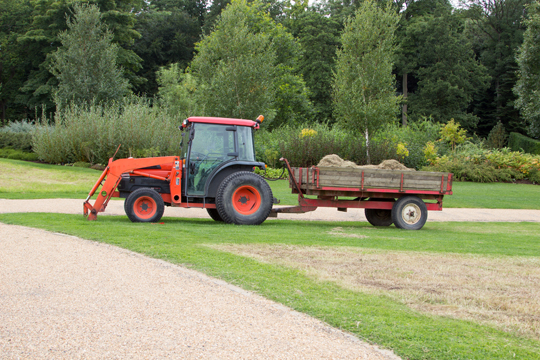
All they are asking for is a tiny trailer, used to carry unneeded products (usually lightweight supplies, rocks, or waste in the form of dead leaves, dirt, manure, and so on) from point A to point B. In this case, a great utility trailer lawn mower is an excellent alternative at hand, requiring a relatively small amount of money.

Believe it or not, with the right materials (preferably marine-grade wood and steel), some tools (including a wood saw, jig saw, circular saw, wood chisel, hammer, and a drill-driver), lots of patience, and great attention to detail, you could easily build your very own utility trailer lawn mower, on time and on a budget. If you follow all of the right steps, you should be able to make the most of a fully functioning product without investing more than $200 in this interesting DIY project.

One could easily analyze a generous selection of garden utility trailers, displaying different sizes, design ideas, special features, dimensions, and capacities. Some of the most popular models are 22 cubic feet in size, with a capacity of approximately 1,500 pounds. However, you could easily find a utility trailer lawn mower especially designed to support a bigger weight while optimally handling all of your daily requirements.

With so many models displaying different features and shockingly different price tags available on different e-commerce platforms, it might be hard to make an informed decision. When in doubt, simply call a towing expert, by using TalkLocal, your reliable source of information that puts you in contact with hundreds of competent professionals in your area.

Chapter 13 Bankruptcy Definition

Tuesday, September 24th, 2013

Chapter 13 Bankruptcy Definition - Lawyers - Bankruptcy

People dealing with massive debts are often looking for expert advice, enabling them to make a smart decision and restore their financial balance without experiencing significant losses. Unfortunately, those who seek guidance in a very advanced stage of their financial distress often discover that filing for bankruptcy is the only option at hand.

What does this mean, and what kind of consequences does this process involve? How could one possibly find the best bankruptcy lawyer in record time? Keep reading to analyze the Chapter 13 bankruptcy definition, and ask for legal help today to understand the particularities of your unique situation while implementing a debt-relief plan designed to work to your advantage.

Chapter 13 bankruptcy definition

What does the much-feared Chapter 13 bankruptcy definition actually involve? Chapter 13 has become a relatively common term used to describe the reorganization of the debtors’ finances, dictated and closely supervised by the court.

The main goal of this bankruptcy proceeding is to force the debtor to implement and follow a strict plan in order to erase his/her debts and repay all creditors within a well-determined period of time (3 to 5 years). The repayment plan should include a considerable payback to all creditors, even though it might require the entire income of the debtor until the whole debt is erased.

Things that you should know about Chapter 13 bankruptcy

Filing for bankruptcy is definitely not the most satisfying decision one could ever make. However, for those with substantial debt, Chapter 13 bankruptcy can still be a valid, beneficial alternative worth considering, since it is less complicated and expensive than the complex debt restructuring process reflected by Chapter 11 bankruptcy, plus it does not involve outright foreclosure described by Chapter 7 bankruptcy.

Chapter 13 bankruptcy is a great method of preventing shameful, stressful foreclosure problems, enabling people with massive debt to follow a strict plan to regain their financial freedom.

Ask an expert

Are you having a hard time trying to understand the Chapter 13 bankruptcy definition? Are you worried about the ways in which bankruptcy could impact your whole life? Don’t waste any more time and contact a great lawyer, specialized in solving bankruptcy problems. Find real pros with help from TalkLocal, your free, unbiased, trustworthy source of information designed to simplify your daily life, by putting you in contact with some of the most dependable professionals in your area.

Washing Wool Sweaters

Monday, September 23rd, 2013

Washing Wool Sweaters - Tailors

Washing wool sweaters is not something that is easily done, and it’s not something that should be done often. Wool sweaters are not like regular clothes that should be washed after just one wear. They can shrink on you if not washed properly. Cold-resistant clothing, like wool sweaters, should be washed with care. You will need wool sweaters in your home, especially if you have a poor HVAC system, and you need to stay warm in the winter.

Ask yourself this question many times before attempting to wash your wool sweaters. Often, wool sweaters don’t need to washed frequently if you get used to spot-cleaning them and airing them out. Even wool socks don’t need to be washed frequently if they are aired out often.

Do this until all of the woolen fibers are saturated with cold water to prevent the wool sweaters from shrinking.

Instead of washing the whole sweater, why not just spot clean it first? Wool is incredibly good at keeping itself clean, so try spot cleaning it first by brushing the soil off and rinsing it with cold water.

There are products on the market made especially for use with wool. Alternatively, you can make your own mixture by preparing a tiny amount of laundry soap, some water, and a little bit of essential oil such as lavender. Mix it first with some warm water and large quantities of cold water and then you can use it to wash the wool.

Never assume that just because the product name has “wool” in it that it is safe for use with wool.

Be careful to gently squeeze the wool and don’t rub it against itself to prevent felting. If you opt to use a washing machine, do not agitate the wool sweater. Wash it very, very gently. Agitation and heat are the enemies of wool and will cause it to shrink.

Dry the wool sweater flat and in the shape and size you want it to be.

Contact TalkLocal today and we can help you find tailors near your area! We will connect you with up to three, high-quality tailors in just minutes.

How to Pick the Best Privacy Fencing Ideas

Monday, September 23rd, 2013

How to Pick the Best Privacy Fencing Ideas - Landscapers

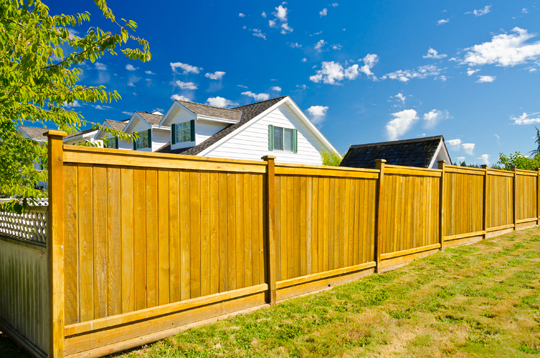
Privacy fencing ideas are a great way for keeping your home and garden away from the prying eyes of neighbors. A little privacy is always a good thing. Although it’s always good to have beautiful homes and gardens, it’s always something you want to share with families and friends and not with the general public.

There are several ways to make your garden more appealing, such as garden terraces, gazebos, and beautiful, decorative plants. However, in our private moments, we need our solitude as well.

Fencing ideas are a good way to have this privacy. Not only do you get your own privacy, but you get to keep your guests’ privacy as well when you have your own parties and get-togethers. There are a lot of privacy fencing ideas. Here, we show you how to pick the best privacy fencing ideas for your home and garden.

1. First, you have to consider the cost of your fencing ideas. Determine your budget. Building your own fence brings the cost down substantially, because you don’t have to pay someone else to do it.

However, you have to invest in your own tools and, not to mention, your own time in doing so.

2. Another way of bringing down the cost is by recycling the materials of a neighbor who is tearing down a fence or a building that is up for demolition. Usually, you can get the materials for free.

3. Another factor for cost is also the material you use. Trees, shrubs, and trellises are relatively inexpensive and offer good privacy fencing ideas.

These will give you the best ideas because they will keep the cost down as opposed to buying readily made fences that use materials such as brick, wood, or plastic that, aside from being harder to maintain, will cost you more to install.

Need help landscaping your garden or installing a new fence? Contact TalkLocal today for help on your privacy fencing ideas! We will have you on the phone with the right professional in just minutes.