
Small Bathroom Makeovers: HVAC

Friday, September 27th, 2013

Small Bathroom Makeovers: HVAC - Heating and Cooling

Ceiling Fans and Vents

Installing ceiling fans and vents in your bathrooms, which you can include in your small bathroom makeovers, can be one of the most important things you can do. Not only will you prevent mold and mildew from forming in your bathroom, but you will breathe easier in your bathroom, too. You will also prevent stale odors and steamy mirrors while taking a shower.

1. First, find the right fan size to install in your bathroom. Fans are rated by a CFM (cubic feet per minute) rating, helping you determine the right size.

2. To find the CFM rating, multiply the square footage of your bathroom by 1.1.

3. Next, mark the space where you want the fan to be. Ideally, it should be between the shower and the toilet.

4. After that, you have to trace where the vent of your fan will come out. It should always come out to an outdoor outlet and not just to an attic.

5. Next, cut out the ceiling where you marked out the space you want the fan to be.

6. Outside, mark the space where the duct will be.

7. Run the duct from the bathroom to the outside and attach the fan. Or, you could opt for professional help.

Changing Radiators

In order to change radiators, you will need some carpentry tools. Of course, if you need to change radiators in your bathroom, the simplest thing to do is to find the same radiator. However, if you are unable to do so, here is how you can change a radiator.

1. You will need to adapt the pipework for a new radiator. First, you will need to disconnect the old radiator, complete with its pipe system from your wall.

2. At this point, all you need to do is to replace the heated towel rail, if you have one.

3. Then you will need to adapt the new radiator system to the old radiator system’s size. This means opening up the floorboards and altering the pipe system.

4. After this, you have to install the new heated towel rail.

Ask us for Help

Contact TalkLocal today and let us help you find a heating and cooling professional near you. We will connect you with up to three professionals in your area in just minutes, so you can get the help you need when you need it.


Homemade Bird Houses

Friday, September 27th, 2013

Homemade Bird Houses - Landscapers

A beautiful, unique, colorful, handcrafted bird house can be a great feature for any outdoor area. To be honest, you don’t need excellent skills, experience, special tools, or costly materials to design and create gorgeous homemade bird houses for your yard. There are hundreds of online tutorials and fun ideas that can become your main source of inspiration. Check them out and unleash your imagination, or simply contact a landscaper, specialized in both simple tasks like this one and much more complex assignments that will instantly add value to your property.

Getting started

Choose the design that you like best and get to work. Use durable, weather-resistant materials like plastic, metal, or premium wood and don’t hesitate to explore your creativity to come up with unique, awesome-looking innovations.

For instance, you could choose to apply mosaic tiles or gems on the entire surface, using special glue. If you want to take pride in fully functional, appealing homemade bird houses attracting those little winged creatures like a magnet, personalize your birdhouses by adding one or two exterior layers of natural material, like pinecones, rocks, twigs, moss, or a mix of these elements. This will make the birds feel much more comfortable in their new home.

You could also choose to give new meaning to old, boring stuff that you no longer use around the house, like buttons, car number plates, wood-based decorative elements, and so on. After the designing phase is over, all you have to do is paint your new masterpiece in bright colors and hang it in the right place.

Where to place new homemade bird houses

After manufacturing the homemade bird houses, you’ll have to place them in an ideal spot, high enough to be often visited by birds and still low enough to be admired by your guests. You could choose to display them on an old wooden ladder or place them on a tall shelf, secure them on your wooden fence or on a tree located in your backyard.

When to hire an expert

If you’re really strict when it comes to the aesthetics of your outdoor area, or if you simply don’t trust your artistic side and your handcrafting skills, it is recommended to consult a landscaper before implementing any changes. Find the best ones in your area by using TalkLocal, a free service that connects you with skilled professionals operating in different fields of activity, who have what it takes to simplify your life 24/7.

Types of Martial Arts

Thursday, September 26th, 2013

Types of Martial Arts - Personal Trainers

Martial arts are great for self-defense purposes and are also an extraordinary method to relax, de-stress, and stay in shape. Before hiring a personal trainer to profit from these remarkable benefits and more, discover some important information on various types of martial arts currently practiced all across the world to find out exactly which style suits you best.

How many types of martial arts are there?

It’s difficult, if not impossible, to count all of the combat styles developed and perfected in different parts of the globe. There are thousands of types of martial arts, and each one has its unique particularities.

However, martial arts can be divided into two main categories: those based on empty-hand combat techniques and those involving several kinds of weapons. Some of them rely on traditional weaponry, like Kendo, Gatka, or Fencing, while others depend on modern weaponry, like Eskrima or Jukendo.

Martial arts can be classified by the type of striking allowed during the combat. If you’re into punching, you might want to try Wing Chun or boxing. Savate or Taekwondo are all about kicking, and Jujutsu, Judo, and Sambo involve throwing techniques.

There are different other types of martial arts that require a whole set of different combat techniques, including knee, elbow, and open-hand strikes, like Karate or Muay Thai.

Older types of martial arts have been developed hundreds of years ago and are associated with alternative therapies, like bone setting, acupuncture, or acupressure, due to their remarkable health benefits.

Which style is truly adequate for me?

Choosing the right combat style for yourself can be quite challenging, especially if you’re a novice with little or no experience whatsoever in this department. It all depends on your goal (learning new self-defense strategies, losing weight, staying fit, and so on), your physical shape, your favorite striking methods, and the amount of time that you plan to invest in this new hobby.

Ask an expert

When it comes to identifying the best martial arts systems for you, it is recommended to talk to a dedicated, friendly, experienced personal trainer who has what it takes to evaluate your needs and provide the best answers. Contact the best ones in your area by counting on TalkLocal. We will connect you with the right professionals in your area in just minutes, for free!

How to Change Sway Bar Towing Links

Thursday, September 26th, 2013

How to Change Sway Bar Towing Links - Towing

Sway Bar Towing

A sway bar or stabilizer bar reduces the roll of the body of a vehicle during fast cornering or over irregularities in the road. It connects opposite wheels using a lever arm, and the arms are linked by a tension spring. The sway bar roll increases stiffness of the suspension. The sway bar reduces the sway of the vehicle against turns on sharp corners, making it safer for the passengers.

This is very important, especially in towing vehicles. When the sway bar is removed, the vehicle can tilt from the road by larger distances, presenting a safety hazard. During a fast turn, a common occurrence is for the vehicle to rely on the outer wheel when the sway bar is absent. When it is present, the sway bar will bring the other wheel closer to the outer wheel, thus stabilizing the vehicle. For safety reasons, sway bar towing should always be used when towing. This would decrease the torsion when turning sharply in corners.

How to Change Sway Bar Towing Links

1. First, make the wheel lug nuts looser. Do not remove them, only make them slightly looser.

2. Use a hydraulic lift to lift the car. You will need this jack to lift the suspension arm of the car. The tension on the link is relieved and the suspension is compressed.

3. Then, remove the wheels and the lug nuts.

4. Next, you have to identify the bad link.

5. Once the bad link is identified, remove the nut connecting the sway bar link to the sway bar.

6. Install the new link to the sway bar.

7. Re-tighten the lug nuts.

8. After this, you need to have the bushings tightened.

9. Lastly, you need to replace the wheels and lug nuts.

If You Need Help…

You can always contact TalkLocal to find a professional near you. The steps to the procedure above are not easy, and you may need professional help. Call us now to be connected with qualified professionals in your area!

How to Clean Wool Carpet

Thursday, September 26th, 2013

How to Clean Wool Carpet - Carpet Cleaners

Cleaning wool carpet is easy if you know how. Wool carpets are luxurious additions to your home and make your home cozier and more attractive. They are very durable and are of the highest quality. Wool carpets are also quite decorative and available in a lot of colors and designs. Sometimes, however, they do get dirty, such as when your dog urinates on your carpet. Here, we present simple steps on how to clean wool carpet.

Step One: Take Your Wool Carpet Outside

Shake it, toss it, turn it. Get debris and dirt out in a clean, dry area. Make sure the area that you are doing this in is dry, or else your wool carpet will get dirtier than when you started.

Step Two: Vacuum

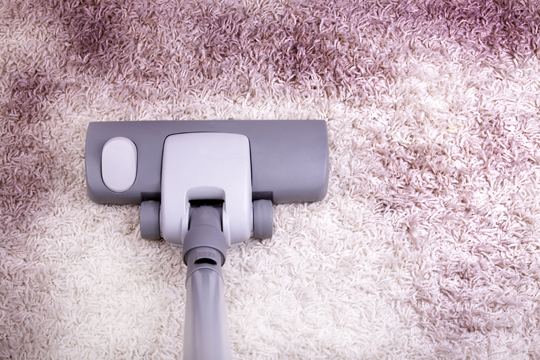
After shaking off dirt from your wool carpet, vacuum it thoroughly. Remove any remaining dirt and debris that was left after shaking it off. Vacuuming is a great way of removing pet odor from the carpet. You should regularly vacuum your wool carpet to remove any dirt and debris from it, at least once a week.

Step Three: Wet Your Carpet

Using a mild detergent solution, wet your rug thoroughly. Hose down your rug in a clean area outside your house until all the soapy solution has been removed.

Step Four: Dry Your Carpet Immediately

Once all of the soapy solution is off the carpet, squeeze out any excess moisture and hang it out in the sun to dry. Never, ever place your wool carpet in the dryer. This will ruin your carpet immediately. It’s best to sun-dry your carpet the natural way. Prevent stains before they occur by removing them with stain remover immediately.

Ready for Some Help?

Contact TalkLocal today for some professional help! We can help you with cleaning your wool carpets today by connecting you directly with up to three cleaning specialists in your area in just minutes.

Windows Vista Slow Startup

Thursday, September 26th, 2013

Windows Vista Slow Startup - Computer Repair

Are you finding yourself frustrated at the slow start-up speed for your Windows Vista computer?  Are you waiting for ages before you can finally begin to use your computer?  There are many simple fixes to optimize Windows Vista to run faster at start-up so that you don’t have to wait for long at all!  This article will cover some of the major fixes to Windows Vista slow startup.

Limit the number of programs loading at start-up:

This usually is one of the major causes of slow computer start-ups.  A lot of programs are designed to automatically load after Windows loads, so that you can instantly load them when you need them.  However, for the programs that you never end up using, these programs only slow down the start-up process by taking up memory and processing cycles.

The solution would be then to only allow the programs that you use consistently to load on start-up.

1. In order to do this, you should use Software Explorer in Windows Defender to see which programs are currently automatically starting up when you load Windows Vista.

2. You can then select a specific program and then click Disable, which will prevent it from running at start-up, saving you time and your computer memory at start-up

Defragment the Hard Drive:

As you constantly use the data on your hard drive, it slowly becomes fragmented, which forces your hard disk to do extra work to allocate memory, which in turn slows down your computer.  While disk fragmentation is already usually set on a weekly schedule, you may still want to manually defragment your hard drive.

1. If you click on the Windows button and then click All Programs, click Accessories, and then System Tools, there should be a Disk Defragmenter tool.

2. All you have to do is click Defragment Now and, depending on the size or degree of defragmentation, it may take from several minutes to a couple of hours to finish.

Free up space by deleting programs you never use:

Uninstalling programs (especially manufacturer programs that come pre-loaded) that you never plan on using will free up precious memory and disk space. To uninstall programs, all you have to do is access the Control Panel, click on Program and Features, and click Uninstall while selecting the specific program you don’t need anymore.

Another easy fix to free up more space would be to use the built-in Disk Cleanup utility, which is located in System Tools like the Disk Defragmenter tool.  All you have to do is select whether to clean up personal files or all the files on the computer, and then press OK.  The Disk cleaner utility will detect which files are unnecessary and free up space accordingly.

Need More Help?

If none of these tips helped speed up your Windows Vista start-up time, it might be best to get a personalized assessment on your computer.  Just use TalkLocal as a free, fast, and easy way to connect to highly-rated local computer professionals!

Bonsai Tree Types

Thursday, September 26th, 2013

Bonsai Tree Types - Landscapers

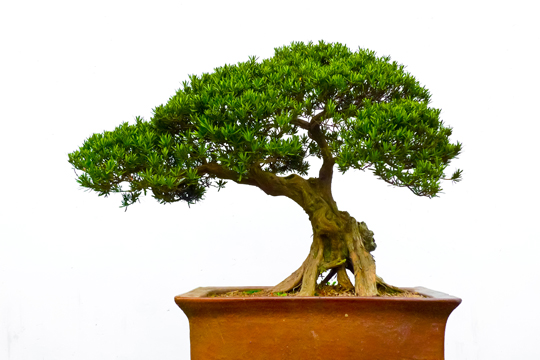
People who seek to turn their homes into welcoming, friendly, vibrant environments mimicking nature’s absolute perfection are always looking for the best types of potted plants for their property. Some of them will settle for no less than exquisite, amazing varieties representing real oxygen-producing artworks.

For these homeowners, a bonsai tree might be the perfect option at hand. Connoisseurs are fully aware of the fact that there are numerous bonsai tree types. Which one would be right for you? Keep reading to find out.

Many shapes and sizes, many possibilities

When it comes to purchasing a bonsai tree for your home, its shape and size are probably the most important selection criteria that might influence your final decision. Keep in mind that bonsai trees are extremely versatile, require extensive maintenance, and their form will always reflect your imagination and your trimming skills.

Even so, there are plenty of bonsai tree types to choose from. Pick the most amazing one based solely on your aesthetic requirements.

> If you want to admire a tiny bonsai tree that looks pretty much like a centuries-old gothic cathedral, then the simple, yet extremely sophisticated and popular Chokkan style could be the perfect option for you.

> You could also opt for the Hokidachi style (broom form), Shakan style (the well-liked slanting form, representing the perfect symbol of stability).

> Or perhaps the Moyogi style, with its gorgeous curves, is more toy our taste.

> The cascade form, also known as the Kengai style, is perfect for people who want to grow beautiful bonsai trees hanging out of their pots.

> If you’re a big fan of tasteful elegance and thin, rare branches grown in an upright position, then you might appreciate the simplicity of the Bunjingi style.

Ask an expert

Of course, one could easily find numerous types of plant varieties that could be easily grown in a pot as tiny trees. The Juniper, the Black olive bonsai, the Ficus, with over 100 different species, the low-maintenance Chinese elm, the Jaboticaba bonsai, famous for its exotic, amazing flowers and fruits are only one of the few tempting alternatives that you might want to consider.

You should always pick the best bonsai tree types for you based on where you live, the particularities of your indoor space, and the exact amount of time that you plan to spend trimming the branches of your bonsai. When in doubt, get the best answers from an experienced landscaper. Find the best ones by counting on TalkLocal, a free service that will connect you with the right professional, right away!

Custom Glass Cutting

Wednesday, September 25th, 2013

Custom Glass Cutting - Window Replacement

Custom glass cutting is a valuable and rewarding experience. It’s an experience that many people have found to be recreational and that is worthy of their time and effort. Many custom glass cuttings have revolved around cutting glass for picture frames or windows.

Custom glass cutting for windows can be a rewarding hobby or one-off project. We have outlined the basic steps for you to try out your first custom glass cutting project on your own!

Step One

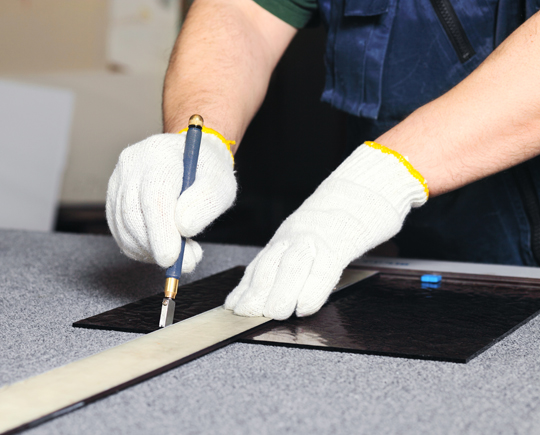
You need to make sure that the glass cutter that you are using is new and that it is sharp. The glass cutter is actually used to score along the lines of the molecules of the glass.

Step Two

Make sure that your glass cutter is well-lubricated with oil. If not, it will not cut as well as it should. Lubricating it with oil will make it glide along the surface of the glass more easily. It will cut the glass more precisely and accurately. All kinds of oils will work. Motor oil, sewing machine oil, and other kinds of oils will also work.

Step Three

You need to ensure that you can make a straight edge that you can control. Make sure that while you are cutting, your hands don’t move so that you can make a straight cut. Be careful with how much oil you use with the cutter. Excessive oil will make your hands slide while cutting.

Step Four

You need to measure the exact insides of the window frame that you will need to use the glass for. You need to be exact in doing this. Place the glass on a hard surface and score the glass. Make sure you place the glass on a hard surface when you score it so it doesn’t break.

Step Five

Start making your hairline cut. Make very thin cuts on the surface of the glass. This is where you can break off the glass where you need to.

Need Help?

Custom glass cutting for windows is extremely difficult, and may not be for everyone. Fortunately, there are window companies that specialize in custom glass cutting, and can find the best windows for you! Contact TalkLocal today and let us help you find the window professional help that you need!

How to Get Rid of Broken Furniture

Wednesday, September 25th, 2013

How to Get Rid of Broken Furniture - Garbage Removal

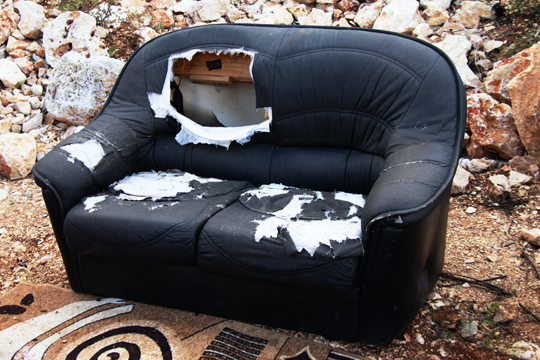
Ratty, busted, dirty furniture is typically a must-go from your house. However, you may not feel comfortable passing old, beat up furniture to the college student down the street or the new renters you just met. There are some places you can get rid of broken furniture.

1. Take it to the Curb

In many cities, it’s easy to get rid of broken furniture. All you have to do is take out all of your broken furniture and place it on your curb on trash day. Like getting rid of old television sets, garbage trucks often will pick up old or broken furniture that you won’t use and take it straight to the garbage dump.

Before going this route, however, make sure to check trash regulations in your community. Some require that you give them special notice, and others might even charge a small fee. Whatever you do, be careful when moving broken furniture, though, as the broken edges can potentially cause scratches and wounds when you move them. To prevent this, secure them with foam and masking tape.

2. Call the Salvation Army

Someone who cannot afford to buy furniture may be willing to fix up your broken furniture. You can call the Salvation Army and schedule for them to pick up your old furniture at a time when you are home, so that you can get rid of broken furniture, and someone else can use it.

3. Place an Ad in the Newspaper

Someone may be willing to get your furniture for free – even if it’s broken. There are people who cannot afford to buy new furniture but are willing to fix up your broken furniture. Putting an ad in the paper may be a good bet for you. You may be able to find someone willing to recycle your furniture. This is a great way of removing your own garbage. Remember, one man’s trash is another man’s treasure!

4. Call Relatives

If the broken furniture you are trying to get rid of is part of your family’s heritage, some relatives might be interested in getting it. Call them and see if they are willing to fix it up and recycle it. Depending on how badly broken it is, they might be willing to take it from you.

Need Professional Help?

Contact TalkLocal today and let us help you get rid of broken furniture! We can help you find garbage removal professionals near you!

How to Install Bamboo Fencing Rolls

Wednesday, September 25th, 2013

How to Install Bamboo Fencing Rolls - Landscapers

Bamboo Fencing Rolls

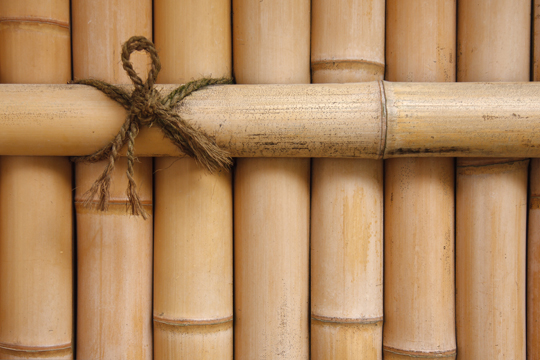
Bamboo fencing has become more and more popular as an alternative to wood fencing. It is more economical, and bamboo is easier to grow. Bamboo is actually a faster growing plant than wood and is widely available. It is also very abundant and is a renewable resource.

It is a tropical-looking fence that has become the trend in recent years, and it deserves your attention. It is very flexible, thus it does not break as easily during severe storms. Additionally, it complements wooden arbors perfectly and does justice to beautiful gardens. Read on to find out how to install bamboo fencing rolls in your garden.

Installing Bamboo Fencing Rolls

1. First, you have to choose the right bamboo. Two types of bamboo are used commonly for fencing.

> The first type is ½” to 1” in diameter. The shoots or canes are held together by galvanized wires into bunches.

> The other type uses a smaller diameter of bamboo and is woven. Using only the outer part of the bamboo cane, split bamboo is another popular type of bamboo used for fencing.

2. Before purchasing, you need to consider how strong the fence needs to be. You will also need a bamboo saw to cut your bamboo into the size that you need to fence your garden.

3. Because bamboo tends to decompose when it comes into contact with water, you have to install your bamboo fence with a few inches of space from the ground.

4. You may also choose to install your bamboo fence over an existing chain or wooden fence on your yard for easier installation. For this, you can simply staple your rolls of bamboo onto the fence.

Bamboo fences are a great way to landscape your garden and should be considered as a cheap alternative to regular fencing.

For Professional Help…

Contact TalkLocal today and let us help you find a landscaper near your area! We will connect you directly with up to three qualified professionals in your area in just minutes.