Archive for April, 2013


How to Replace Motorcycle Brake Pads

Thursday, April 4th, 2013

How to Replace Motorcycle Brake Pads - Auto Repair

Wondering how to replace motorcycle brake pads? This article is here to help you answer that question! Below are the proper steps to replacing the brake pads on a motorcycle.

Where Do I Begin?

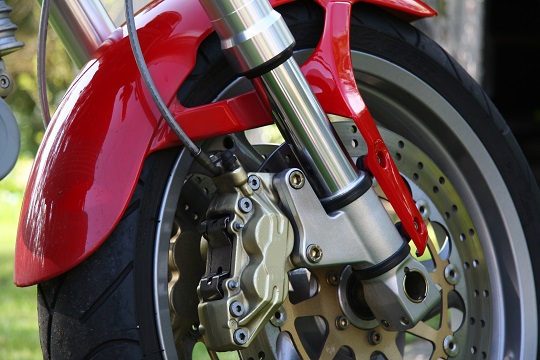
1. To begin replacing your brake pads, locate the mounting bolts near the calipers and the forks.

2. Unscrew these mounting bolts.

3. Your goal is to remove the calipers from the forks. If you have retaining pins, take those out as well.

What Do I Do Now?

1. When the retaining pins are removed, you will be able to access more of your bike now. Now that your brake pads are loose, inspect them. Check out the condition of your brake pads and the surrounding area. Check for cracks, holes, or tears. Evaluate whether or not it is time to replace your brake pads. If it is time to get new pads, keep reading.

2. Clean out the dirt and debris that has built up around your retaining pins. Also, use brake cleaner to clean the area close to the caliper pistons.

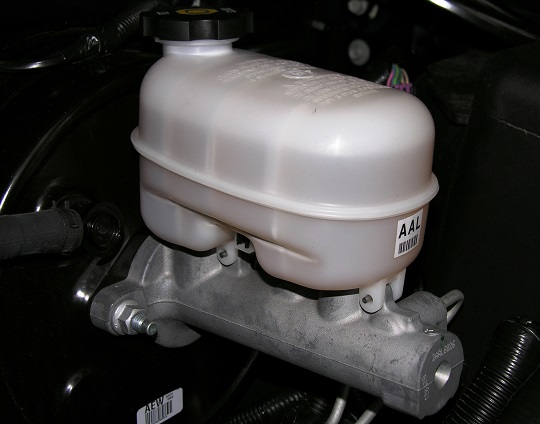
3. After the area is clean, use a screwdriver and push the pistons back to their original position within the bores. As you do this, make sure the brake fluid is not overflowing in the master cylinder.

4. Install in the new brake pads. Helpful tip – as you install the new pads, try not to get grease or oil on the surface of the pads.

5. Replace the pins, clips, and bolts all to their original positions. In addition, check out the fluid level of the master cylinder again. Check out this helpful article about replacing motorcycle pads.

Now you are all set to start riding again! Go slow at first and check out your new brakes.

Get Professional Help

Still need help? Try connecting with a professional auto repair technician who will know how to replace motorcycle brake pads. Check out TalkLocal! We will connect you directly to local, high-quality professionals who can help you out whenever is most convenient for your schedule. It’s free, and it only takes a few minutes!


Paint Removal From Brick

Thursday, April 4th, 2013

Paint Removal From Brick - Handyman

The natural look of brick offers a lot for your home, whether on the interior or exterior. If you have beautiful brick trapped under paint, these tips for paint removal from brick will help you get back the rustic look you were longing for once again.

Tips For Paint Removal From Brick:

1. Start out with a paint solvent. This should be a gel or a paste and it should be applied generously. Don’t hold back on it. That said, you do want to start off with a small test patch to make sure the solvent will work well.

2. After applying the gel or paste solvent, put some strips of a heavy duty material over top. As the paste gets softer, it connects to the material while disintegrating the paint. At this point, you can peel off the strips. Just make sure you don’t leave little paint chips scattered around your brick surface.

3. If you don’t have enough material, or are working with a significantly large area, just let the solvent soften and scrub it off of the bricks afterwards. Make sure you are using a stiff bristle brush for this so you don’t damage the brick.

4. After scrubbing, rinse the brick off with clean water. If you’re removing paint from a really big section, you might break it up into smaller sections and use more steps to make it more manageable.

5. After removing the paint, you might need to do more work with your brick surface. There might have been a reason why the bricks were painted in the first place. If they are damaged, faded or discolored, you might consider painting them a more natural looking color with only minimal coating. This will hide the damage and give you the brick look you love, whether you’re painting the exterior of your brick home, a fireplace or just a small section.

Seek Help

If this project is too big or too tough to do on your own, you may consider connecting with professionals in your area that can help. TalkLocal can take the work out of that search and connect you with the help you need. Just tell us what you need, where you are, and when you’re available, and we’ll connect you with the right professionals.

Speed Up Firefox Loading Page

Thursday, April 4th, 2013

Speed Up Firefox Loading Page - Computer Repair

Tired of waiting too long for your pages to load while surfing the web? We might have a solution for you. If you’re a Firefox user who is frustrated by slow-loading pages, keep reading. We have some steps for you to follow if want to speed up Firefox loading page.

How to Speed Up Firefox Loading Page

1.      Type “about:config” into your address bar and hit return.

2.      Look through the results shown to find “network.http.keep-alive.” If it says false, double-click on it to change it to say true.

3.      Next, look for “network.http.version” and make sure it is set to 1.1.

4.      The next thing to look for is “network.http.pipelining.” This needs to be set to true.

5.      Find “network.http.proxy.pipelining” and set that to true as well.

6.      When you get to “network.http.pipelining.maxrequests,” change its value to 8 by double-clicking it. This will allow your browser to process eight requests at once, rather than the default four requests.

7.      This last step is optional. Right-click anywhere on the screen, and select “new” and then “integer.” Change the name to “nglayout.initialpaint.delay” and set its value to “0.” This value represents the amount of time the browser waits before it processes your request and relays the information it has received.

Is Your Firefox Browser Still Too Slow?

After completing these steps, your Firefox page loading time should be much faster. Enabling the “pipelining” feature allows your browser to process more than one request at a time, therefore speeding up page loading. However, if you are still experiencing problems that are beyond your ability to fix at home, contact your manufacturer or a service professional to help you out. Try using TalkLocal to be connected to local computer technicians in just minutes. We will find up to three professionals in your area who will call you, ready to help — for free!

Tree Has Frost Cracks

Thursday, April 4th, 2013

Tree Has Frost Cracks - Tree Removal

If your tree has frost cracks, you will want to heal them. Frost cracks pose a serious threat to the health of your tree, and a dying or dead tree poses a serious threat to your yard and your home. Fortunately, frost cracks can be healed.

How Does A Tree Get Frost Cracks?

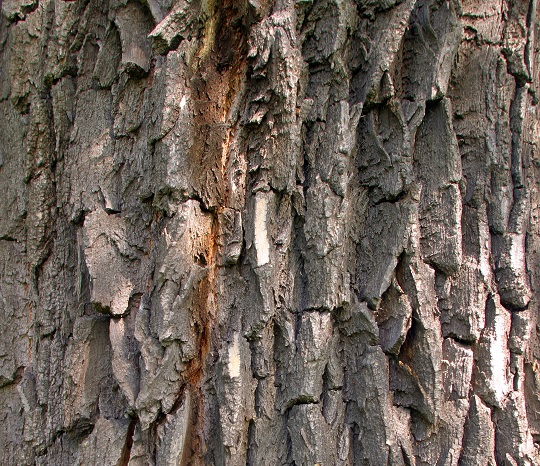
Frost cracks are caused by sudden drops in temperatures. On cool days moisture can collect on the bark of the tree. When the temperature drops suddenly, such as when the sky becomes overcast, the bark cools rapidly and the moisture freezes, causing the bark to expand. This exposes the inside of the tree like an open wound; bacteria, fungus, and insects have easy access to the tender wood of the tree and cause disease, or even simply wear down the health of your tree.

What to Do If Your Tree Has Frost Cracks

Frost cracks can usually heal on their own if there is clean crack with no loose bark. If the tree has a jagged crack and loose bark is present, you may have to heal the tree yourself. The tree heals frost cracks by forming a callus layer to seal edges of the crack. Neither tree paint nor tar can cause this formation and should not be used to heal a tree’s frost crack. When healing the tree yourself, you will enact this formation of the callus layer. To heal the frost crack you will need: denatured alcohol, water, a sharp knife, an empty spray bottle, and a towel.

1. Mix denatured alcohol and water, consisting mostly of alcohol.

2. Dip a knife into mixture.

3. Carefully remove loose bark and smooth the edges of the crack with the knife without cutting deep into the wood.

4. Cut a ½-inch deep oval around the frost crack while sterilizing the knife with the alcohol mixture between each cut. Have the cut 1 or ½ inches away from the frost crack.

5. Remove bark from the newly cut area, so that the area is bare.

6. Pour the mixture into a spray bottle and spray it onto the exposed area to sterilize it.

7. Soak up any excess mixture with the towel.

Need Professional Help?

If you think your tree has frost cracks, or may be dying, contact a quality tree removal service. TalkLocal will connect you with up to three tree removal services in your area in just minutes. Try it out today, for free!

Energy Efficient Roof Systems

Thursday, April 4th, 2013

Energy Efficient Roof Systems - Roofers

Becoming environmentally-friendly is the new thing to do.  Many people have recently developed an awareness of how to live in more eco-friendly ways, and one popular way to do so besides recycling is to build energy efficient roof systems.  There are a couple of different options you can choose from if you decide to pursue energy efficient roofing.

Energy Efficient Roof Systems

Not only do energy efficient roofs help to be environmentally-friendly but they also can save you a lot of money on your next utilities bill.  You may have to invest more money in the first place but in the long run it will pay itself off.

One decision to make when trying to build energy efficient roofs is between steeply-sloped and low-sloped roofs. Steeply-sloped roofs are what you typically see on homes.  These roofs stay cool by being made out of tiles and painted metal.  Clay and concrete tiles only reflect 10-30% of sunlight heat, but the colored metal and tile roofs reflect from 25% to 90%.  This solar energy really helps to cool your home and keep your energy bill low.

Low-sloped roofs are more commonly found on industrial or commercial buildings.  They are energy-efficient if they have singly-ply, cool membrane coats applied on them.  This has the consistency of paint and can be applied to various types of surfaces.  Applying this coat will also help with adhesiveness, durability, and reducing mold growth.  They act in the same manner as tiles by reflecting back sunlight and holding in solar energy.

Other options include installing solar panels on your roof, or growing a garden up there.  Solar panels are good for trapping heat and providing energy for your home, lowering your energy bills.  Roof gardens are energy-efficient because they receive even more sunlight than ground-level gardens would.  Plants flourish and grow more quickly when placed on top of the building.  There are a lot of options when it comes to installing energy-efficient roofs, and you should consider them all.

Need Help Installing An Energy-Efficient Roof?

If you have more questions about energy-efficient roof systems, you could speak with a professional roofer in your area. TalkLocal will connect you with up to three, reputable roofing companies in just minutes. Just tell us what you’re looking for, where you are, and when you’re available, and we’ll find the right professional for you –free!

Upgrade Graphics Card In Laptop

Wednesday, April 3rd, 2013

Upgrade Graphics Card in Laptop - Computer Repair

Upgrading the graphics card in a laptop will result in better graphics quality. Despite being a difficult and time-consuming process, it can be done DIY-style. Here is an easy, step-by-step process to upgrade the graphics card in your laptop.

Upgrade Graphics Card In Laptop

1. Check with the manufacturer to see if the graphics card can be upgraded. Some older laptops might have irremovable graphics cards that are soldered, or might have very specific graphics cards.

2. After verifying this information, start disassembling your laptop. Newer laptops will give you easy access to your video card by simply removing the bottom of the laptop. However, older laptops might be different, and you may need to remove the hinge on the monitor.

3.  Remove the keyboard. Detach the keyboard by removing the screws that hold it down and unplugging the connector. Be sure to keep track of which screws come from which part of the laptop so that you can easily reassemble your laptop after you are finished.

4. Remove the laptop’s display monitor. Unscrew the screws and unplug any cables, such as the video and WiFi antenna, that are attached to the bottom half of the laptop. Remove the optical drive by pushing down the latch on the bottom of the laptop.

5. Remove the screws of the shell and take off the protective shell of the bottom half of the laptop.

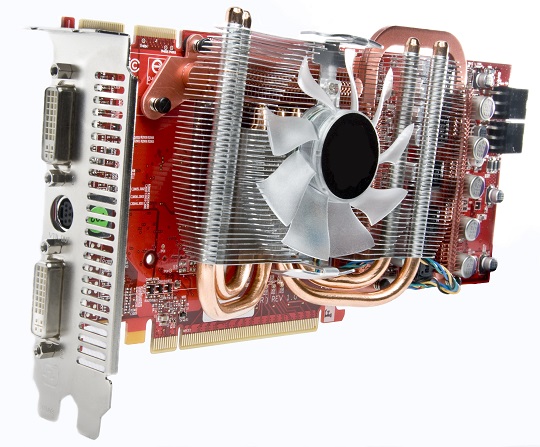
6. You are now ready to remove your old graphics card by removing the screws that hold it in place and put in the new one.

7. Simply reverse these steps to reassemble your laptop with your new graphics card. You will also need to install any necessary drivers from the new graphics card’s manufacturer.

External graphics cards are also available if this task is too tedious or time-consuming for you.

Have A Professional Replace Your Graphics Card

If you perform the upgrade operation properly, you will not be disappointed. However, do not hesitate to contact an IT professional to help you upgrade your laptop’s graphics card. TalkLocal can connect you with the best IT technicians in your area in just minutes. Let us help you find the right professionals when you need them!

Picking The Best Gym

Wednesday, April 3rd, 2013

Picking The Best Gym - Gyms and Fitness

Getting rid of that spare weight and working to improve your physical fitness can be difficult, especially when picking the best gym can be confusing or intimidating. When it comes to exercising, everyone has different needs, which is why picking the best gym requires you to focus on what you want.

To help you figure out what you want from a gym, ask yourself some of these questions:

Do I want to tone and build my muscles?

If you do, you need to evaluate the gym’s availability of free weights and weight machines. If you are advanced in strength training, you probably already know what you need. If you are a beginner, you want to make sure you have access to hand weights, starting around five pounds each. You will also want machines that work various parts of your body (core/abs, arms, back, and lower body) and leave you with room to add more weight and improve.

Do I want to use cardio machines, or do cardio activity in a large free space?

This is an important question. Some people prefer the bikes, elliptical machines, and treadmills, but others prefer to have a large, open space for various interval training and individual activities. Some gyms don’t have the space to support those activities.

Do I want to take classes or utilize a personal trainer?

Sometimes, especially if you’re new to working out, taking fitness classes can be very helpful. In this situation, you usually have a professional instructor who leads you and a group of other people in a fitness activity, usually related to cardio. Some options include:

– Yoga, which tones muscles and helps you relax

– Pilates, which is a cardio exercise that also tones muscles

– Zumba, a cardio activity disguised as a form of Latin dance

– Kick boxing, a cardio activity that also teaches basic self-defense

If any of these classes sound like something you might want, make sure the gym offers them. You may also consider the class sizes.

If you are looking into a personal trainer, you will want to research the trainers at gyms in your area to be sure they can help you meet your goals, at a price you can manage.

Find Gyms And Trainers Easily

If you still have more questions, TalkLocal connect you with someone that can help. We can connect you to the professionals in your area and make picking the best gym a breeze.

When Should a Cat Get Feline Distemper Vaccination?

Wednesday, April 3rd, 2013

When Should a Cat Get Feline Distemper Vaccination? - Veterinarians

If you have a new kitten, you might be wondering, “when should a cat get feline distemper vaccination?” The feline distemper vaccine is given to cats usually between 9 to 11 weeks old and is administered to kittens because of the communicability of the distemper virus. The distemper virus starts by causing respiratory infections in felines, followed by gastrointestinal infections.

Symptoms of the distemper virus include seizures, twitching, weakness, neck pain, and changes in behavior. Your cat may also not eat much, act lethargic, have discharge from the eyes, and develop a cough and diarrhea.

Feline Distemper Vaccination

To prevent your cat from contracting a virus like this, you should give your cat a feline distemper vaccination as soon as is safe – as early as 6 weeks, and generally no later than 12 weeks. After the initial vaccination, a cat should be given a booster shot every two years to ensure the cat’s immunity to the distemper vaccination remains.

A feline distemper vaccine should be given to healthy cats only. If your cat is suffering from a previous disease, its immune system may not be strong enough to handle the new vaccination. Make sure your cat is fully healthy before administering a dosage. Also, kittens younger than 4 weeks of age should never be given this vaccine, as their immune system is still developing. There is a very slight chance of side effects from the feline distemper vaccination, but this chance versus the risk of a cat actually contracting the distemper virus heavily lies in the vaccinations’ favor.

Basically, if you want to keep your kitten or cat safe, make sure they are up to date on their vaccinations. The feline distemper vaccination is one of the most important of these, and booster shots should continue to be administered every two years to ensure your cat is immune to the distemper virus.

Get Vaccinations For Your Cat

If you need to get your cat the feline distemper vaccination, consider using TalkLocal to find a veterinarian for you. TalkLocal is a free service that will connect you with top-quality veterinarians in your neighborhood within minutes. Just enter in your specific problem, location, and availability, and up to three veterinarians will call YOU directly, saving you the time and stress of finding one yourself.

Benefits Of Using Geothermal Heat

Wednesday, April 3rd, 2013

Benefits Of Using Geothermal Heat - Heating and Cooling

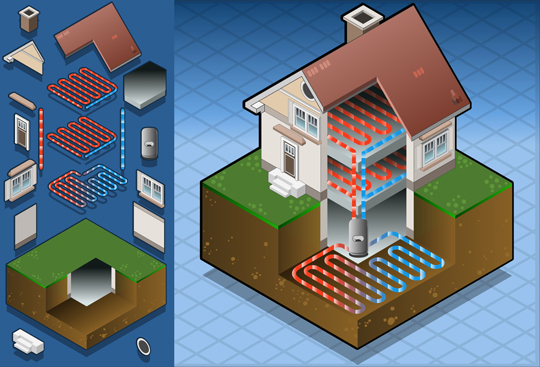
Geothermal heating is a type of energy that is used to cut energy costs. This type of heating basically uses the heat that is stored beneath the crust of the earth as a renewable resource.

There is an enormous amount of potential in this type of power. Current research is being conducted to learn more about how we can harness and use this power to our advantage.

The benefits of using geothermal heat are practically endless. The following is a just a few of the perks that you can take advantage of by using this type of heat for your home.

– Cut energy bills: You can cut your energy bills by as much as 80% using geothermal heating methods. Who does not want to save 80 percent on their heating bill?

– Higher efficiency: Geothermal-powered furnaces are 48% more efficient than gas furnaces. Not only can you save money, you can help the environment and heat your home more efficiently.

– New and existing homes: The benefits of using geothermal heat include being able to use this heating option in both new and existing homes.

– Cheap products, but relatively expensive installation: Geothermal heating can help you save money in the long run and the cost of materials is very cheap. The main disadvantage of geothermal heating is the fact that it is quite expensive to install.

Geothermal heating can allow you to dramatically reduce the size of your carbon footprint. The benefits of using geothermal heat are centered on saving you money and saving the environment simultaneously.

Get A Geothermal Heating System Professionally Installed

You can rely on TalkLocal to connect you with businesses that specialize in geothermal heating and cooling. These professionals are not a dime a dozen, but we will sift through companies that don’t offer this service, and help you find the right people for the job.

When to Change Brake Fluid

Wednesday, April 3rd, 2013

When to Change Brake Fluid - Auto Repair

When trying to care for your own car, keeping track of every working piece can be tiresome. Changing the oil, transmission fluid, and brake fluid are all vital to maintaining a healthy engine. Knowing when to change brake fluid is an important part of maintaining your car. Read this article on some tips on when to change brake fluid in your car.

What Does Brake Fluid Do?

Break fluid is able to draw in moisture like a sponge, and excessive water content in brake fluid weakens its condition. Copper content is also a measure of the condition of brake fluid. A greenish tinge to the fluid is an indication of excessive copper content. You can easily test for water and copper content with test strips, which are available at most auto parts stores.

When to Change Brake Fluid In Your Car

Generally, the type of driving you do should determine how often you change your break fluid. You should change your brake fluid at 2% water content if you use your vehicle in heavy-duty situations, such as towing, driving in mountainous regions, driving at high speeds, or if you have ABS brakes.

Otherwise, you should change your brake fluid when water content reaches 3%. Motor vehicle companies debate between changing brake fluid every 12 or every 24 months. Choose what you feel works best for your vehicle. You should also have your brake fluid tested and replaced, if necessary, every time you take your car in for a tune-up.

Copper also has a direct role in the corrosion of the brake system. You should also change the brake fluid if it has signs of a high copper content, such as a greenish tinge.

Your brakes are one of the most important parts of your vehicle. Take good care of your car and your own safety by checking your brake fluid at least once per year, and having it changed when necessary.

Need Help Changing Your Brake Fluid?

Looking for a qualified auto-repair professional? TalkLocal will connect you to up to three, reputable auto repair professionals in your area. Just tell us what you need, where you are, and when you are available, and we will find the right professional for you in just minutes!