
Archive for the ‘Handyman’ Category


How To Seal An Asphalt Driveway

Monday, May 27th, 2013

How To Seal An Asphalt Driveway - Handyman

An asphalt driveway can be a nice asset to any home. They tend to be more durable as driveways than concrete or other paving methods due to their ability to withstand extreme temperature changes.

Unfortunately, nothing lasts forever, and that once-smooth, bright, black driveway can dull and crack. Sealing an asphalt driveway can greatly extend the life of it.

How To Seal An Asphalt Driveway

1. Clean off the driveway by first sweeping and then power washing (or at least using a high-pressure hose attachment). This clears off all dirt and debris so it is not permanently sealed into the driveway.

2. For small defects in the pavement, use a crack sealer to fill them in. For larger ones, asphalt patches may be required. This is sometimes called “cold patch” by distributors because it is a cold form of asphalt that may be packed into potholes. This is the material used by road crews to patch asphalt roads.

3. Once the driveway is as smooth as possible, use a squeegee to apply an asphalt sealer according to package directions. Be sure to stir the sealer first using a paint stirrer or something similar. Use the squeegee in the manner you would a paint roller taking care to cover the driveway in a thin, even layer.

4. Be sure to wash the squeegee when finished or it will be ruined and unable to be used for future jobs.

5. Stay off the driveway for 24 to 48 hours, or according to the sealer directions. It needs time to set.

Not An Easy Task

Ultimately, there is a reason professionals that know how to seal an asphalt driveway make their living doing so — the task can be challenging for the inexperienced. If you are worried about where to find, or how to apply, the necessary materials, call an expert.

While most handymen do not generally install asphalt driveways, many can certainly seal one. TalkLocal will help you find a qualified handyman near you quickly. Our service is entirely free and you will not regret asking for the help.


Install A Wrought Iron Gate

Saturday, May 25th, 2013

Install Wrought Iron Gate - Handyman

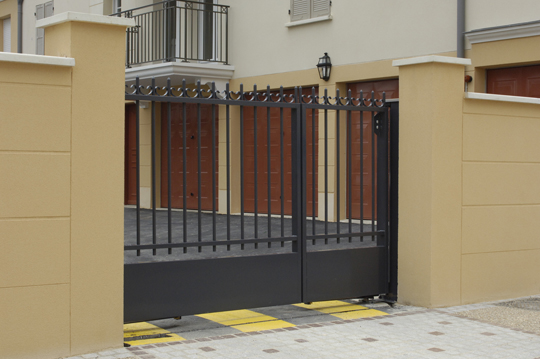
Adding a wrought iron gate to your fence can add a very unique touch of beauty. These gates are known for their simple elegance with twists and turns featured in the iron that end in points and various designs.

Although it may seem difficult, learning how to install a wrought iron gate is a do-it-yourself project. By following some simple steps, you can have the beauty of a wrought iron gate in your yard.

What you need:

– The gate

– End plates

– Hinges

– Bolts, nuts, and washers

– Ball bearings

– A friend or helper

How To Install A Wrought Iron Gate:

1. Bolt the end plates to the end posts. To do this, make sure the holes drilled in your posts are sufficient for the wrought iron gate’s end plates. That means the plates have to be able to fit over the holes properly.

2. Each plate has four holes so it can support two hinges. Use a small washer under each bolt and tighten them by hand.

3. Next, attach the hinges. You can do this by sliding one of the hinge bolts into each of the holes on each of the gate’s panels. Make sure you add a nut and a washer to each one. You want the bent head of each bolt to point downward. Rotate them if you need to.

4. Take a ball bearing and place it in the barrel of each hinge plate. Have your friend help you by holding the gate panel so you can lower the hooks of the hinge bolts into place in the hinge plate barrels.

5. Make sure the gate is hanging level by tightening or loosening the nuts with a wrench accordingly. Be careful not to over-tighten — that will make the gate harder to move. Grease the hinges, too.

Looking For Help?

With these steps, you will be left with a new wrought iron gate in your yard. If you have more questions about the process or how to pick out a wrought iron gate, TalkLocal can connect you with the professionals in your area who can help. Try our fast and free service to save you time and energy.

Install Wrought Iron Fence

Friday, May 24th, 2013

Install Wrought Iron Fence - Handyman

Although they are typically used for safety and privacy, fences add to your home’s aesthetic value. No one wants an ugly fence. Those beautiful fences you often see in which the iron features various shapes on top are called wrought iron fences. Learning how to install wrought iron fence in concrete is not terribly difficult, and it can add a lot of beauty to your home.

How To Install Wrought Iron Fence

1. Use wrought iron fence mounting brackets. These can be purchased at most home renovation stores. Mount these to the posts on the bottom using the screw mounting system that they come with.

2. Put your wrought iron fence together and place it where you want it to go. You want to make sure the line is clearly marked on the concrete. When it is, you can take off the mounting brackets from the posts.

3. Now you want to take those mounting brackets and put them on each location mark. Mark the hole in the middle so you know where to drill later.

4. Use a hammer drill with a masonry bit to drill that center hole you just marked.

5. Now, you want to take your masonry anchors and run them through the holes in the concrete.

6. Put the mounting brackets over the anchors and secure them with the screws on the anchors. You can just use a screwdriver for this step.

7. You can then place the wrought iron fence back into the mounting brackets. After it’s placed properly, you can secure it into place with the screws on the mounting brackets.

If The Job Is Too Big…

This is just a quick, seven-step guide on how to install wrought iron fence, which can help you understand the basics of the process. You might have more questions or desire guidance from a professional. In that case, TalkLocal can connect you with the appropriate professionals in your area.

Install An Automatic Gate Opener

Wednesday, May 22nd, 2013

Install An Automatic Gate Opener - Handyman

Gates are often used for added privacy and security to a home. However, they can become pretty inconvenient if you have to manually open and shut them all the time. If this is the case, it might be time to install an automatic gate opener. This is an electronic arm or mechanism connected to an access control that allows a gate to close automatically or with a remote.

This seems like a project only a professional could handle, but surprisingly, a lot of automatic gate openers on the market are easy enough to install yourself. Here are some steps that could help you install an automatic gate opener at your home or office.

Picking Out The Right Gate Opener

Automatic gate openers are far from one-size-fits-all. You have to be careful to install an automatic gate opener that can handle your specific gate. To do so, you must ask yourself a number of questions. How big is your gate? How much does it weigh? Does it swing inward or outward? When you shop around, chances are, a store attendant will be able to help you make the right buy.

Review Installation Instructions

These systems come with in-depth instructions specific to the product. You might be eager to install an automatic gate opener, but you need to thoroughly review all of the instructions before tackling the project. Some even come with a DVD that will provide helpful visual instruction.

General steps for the installation process include:

– Fasten the bracket assembly to one of the poles.

– Using the bracket assembly, mount the gate opening arm.

– A stop plate goes on the other end, allowing for the arm to stay in position when the gate is closed.

– A control box is mounted nearby with the proper power source. This is the brains of the automatic gate opener.

– Power cables must run from the control box to the arm.

– Adjust all of the settings on the control box to ensure that the opener functions as needed.

Call In For Back-Up

Again, this process will be a little different, depending on what kind of gate opener you purchase. While this seems like a very random home improvement project, there are professionals in your local area that can help. You can find them through TalkLocal. We will connect you with only people that can help, so you don’t have to wade through a sea of unqualified professionals.

Building A Chain Link Fence

Monday, May 20th, 2013

Building A Chain Link Fence - Handyman

Chain link fences seem to be as practical as they are cost-efficient. Like driveway gates, many people utilize these types of fences in their yards to keep unwanted visitors away and to stop their children or pets from wandering off. Building a chain link fence in your yard will take plenty of time, effort, tools, and supplies, but it is certainly a do-it-yourself project worth taking on if you are concerned with saving a few bucks.

Building A Chain Link Fence

1. Before you even break ground, you’ll want to examine your property line and make sure that you are not infringing on someone else’s territory. If you constructed your fence and your neighbor had an issue with it, you might be forced to take the whole thing down. Also, you’ll want to make sure that building a chain link fence complies with property codes for your area. You always want to comply with local statutes when altering or renovating your property.

2. Plan out the areas where your chain link fence will run. This takes careful measurement and the right tools to ensure that the fence is straight. You can either mark the fence line with spray paint on the grass or else outline it with string tied to wooden stakes.

3. The posts are the first element of the fence to go in. Dig each hole with a post hole digger. These holes must be separated by equal distance. Also, the post hole should be deep — approximately 1-2 feet. Once the posts are dropped into the holes, fill in the holes with cement to stabilize the posts.

4. Most common chain link fence kits come with pipe fittings and tension bands. Install this hardware on the poles before bringing out the chain mesh.

5. Run the chain mesh from post to post, making sure it stays tight the entire way. Through careful planning, you should have purchased just the right amount of chain meshing for your fence.

6. Most chain link fences include a gate. Gate kits are commonly available with all chain link fence supplies and make installing a gate amazingly simple.

Too Much For You?

It takes a lot of energy and know-how to build a chain link fence that looks good and serves its purpose. There are always local professionals available to help when you are in a jam. You don’t have to search hard for them, either. Just use TalkLocal‘s nifty service and you’ll be talking with someone that can help in a mere 90 seconds.

Different Wall Anchors

Saturday, May 18th, 2013

Different Wall Anchors - Handyman

If you are trying to hang a painting, shadow box, shelf, or a creative art piece that seemed like a good idea when you bought it, you might be considering different wall anchors. Attempting to hang something too heavy for the wall can be both frustrating and damaging.

As a rule of thumb, you will likely be looking to hang your piece on drywall, so below are three basic types of different wall anchors and their purposes.

Plastic Ribbed

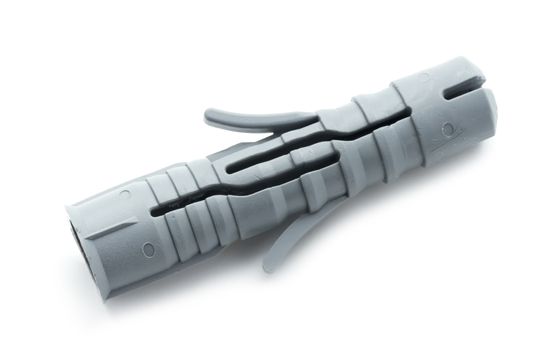
These are the most common type of anchors used. They are best for lightweight objects like pictures and small wall décor. You will first drill a pilot hole in the spot you wish to insert your screw. The plastic sleeve of the anchor then twists into the predrilled hole and you may then screw your screw into the sleeve.

Self-Threading

These anchors are made for medium-duty hanging such as larger pictures in frames, larger wall décor and so on. The basic design of these anchors is that the anchor itself is pretty much just a nut with a point on the end. These anchors require no drill or screwdriver, and can be twisted into the spot where you wish to hang. You then screw the screw into the anchor to hang your piece.

Toggle Bolt

These facilitate the heaviest weight among the different wall anchors, holding up to 40 pounds if installed correctly. Their strength comes from wings that grip inside the wall and give more stability.

Remember, any wall anchor will be strongest when installed directly into a stud. Studs are the pieces of wood that make up the frame for your wall. They are generally around 12 inches apart. Studs can be found through the tried and true knocking method, or you could simply invest in an electronic stud finder.

At A Loss?

Try contacting a professional. A qualified handyman will know which anchor you need and where to hang your piece. TalkLocal can find a qualified handyman in your area quickly and easily. The best part is that our service is entirely free.

Different Types Of Batt Insulation

Monday, May 13th, 2013

Different Types Of Batt Insulation - Handyman

Proper insulation is essential in a home to help with heating and cooling. Without effective insulation, warm or cold air can easily escape, leading to sky-high energy bills. It also helps with soundproofing rooms.

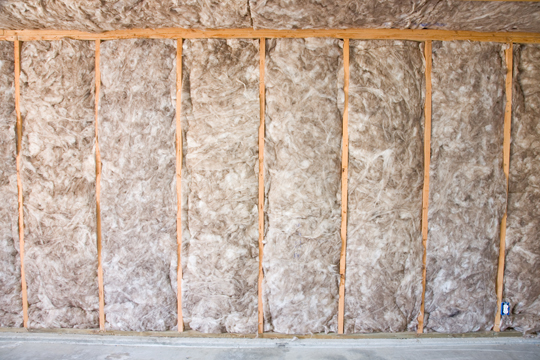
Insulation can be comprised of a variety of materials and come in various forms. Batt insulation is one of those forms. While there are different types of batt insulation, all of it comes woven together and can be purchased in panels. This makes it a lot easier to install than loose-fill insulation, which has to be blown into the wall with a giant hose, usually by a trained professional.

If you are a do-it-yourselfer, and installing batt insulation seems like a task you can easily handle, consider some of these different types of batt insulation.

Fiberglass: Of the different types of batt insulation, this is easily the most common. A large amount of fiberglass is produced from recycled glass. This glass is heated up and melted. Once it is melted, it is woven into small fibers. The glass fibers are bound together to create the panels of insulation. It is important to remember that when handling fiberglass, you must always wear protective gear, such as gloves and safety glasses.

Cotton: Some people fear that fiberglass will put harmful materials into the air of a home. While this is not concern that many professionals deem legitimate, if you want to be safe, you can pick up cotton batt insulation. Cotton is very common, so you know it is not harmful. In fact, you will require very few safety precautions when handling this type of batt insulation. To make it a more effective insulation, a flame-retardant chemical is applied.

Minerals: Some batt insulation is comprised of mineral materials like basalt and slag. This type of insulation is generally used in commercial buildings, and is a lot denser than the other types of insulation. It is also incredibly flame-retardant and helps in situations where supreme soundproofing is required.

Need Someone To Install Your Batt Insulation?

Even though the different types of batt insulation are easy to install on your own, you may require a hand. If so, simply log on to TalkLocal and quickly and easily find someone that can help.

Popular Handyman Jobs

Wednesday, May 8th, 2013

Popular Handyman Jobs - Handyman

Any homeowner will tell you that when it comes to repairs, the jobs seem never-ending. With to-do lists a mile long, it seems that the moment one item is checked off, another gets added. In an attempt to catch up on, or even eliminate, these lists altogether, some homeowners are seeking out the assistance of a handyman.

In order to know if a handyman is the right professional to help with your home repair needs, consult the following list of popular handyman jobs.

Carpentry: Whether you need a new deck built or old wooden trim replaced, a handyman can often help. He or she will generally be at least moderately skilled in choosing the right type of wood, tools, and knowing the cuts to take to make your finished project shine.

Masonry: Upheaved concrete sidewalks and crumbling bricks are not only unsightly, but can also be hazardous. Most handymen will know the proper methods for repairing brickwork or pouring concrete.

Plumbing: While serious plumbing issues may require a plumber, minor replacement of pipes or installation of new plumbing, such as the addition of a water line to a refrigerator ice maker, can usually be tackled by a qualified handyman.

Electrical: You will want to be sure that whoever works on your electricity is licensed to do so. Most handymen are very qualified. He or she should be able to handle minor tasks such as the installation or replacement of electrical outlets, ceiling fans, or running lights.

Sheetrock: If you need walls replaced, removed, or added to your home, generally a handyman should be able to tackle these processes. It can be messy, and requires a skill in drywall mud that the average homeowner might not want to take on alone.

Need One Fast?

TalkLocal can put you in touch with a handyman in your area very quickly. Our service is completely free, and we can guarantee the professional we find will be highly qualified to handle any of your popular handyman jobs.

Patio Stones Installation

Saturday, May 4th, 2013

Patio Stones Installation - Handyman

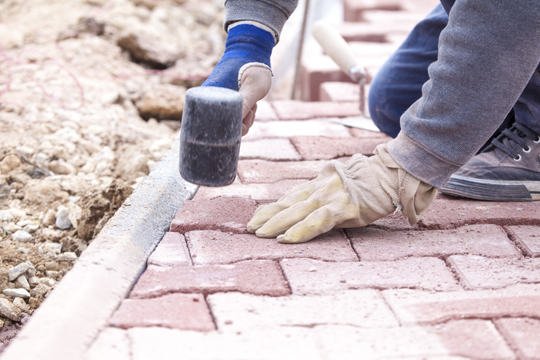
Patio stones are an attractive alternative to poured concrete. They come in a variety of colors, shapes and sizes, and can form a wide array of patterns from complex to very simple. If you are looking to do some home improvement and would like some information on patio stones installation, check out the following five tips prior to planning your project.

1. Consider drainage

This is especially important if your patio is near your home. You do not want your patio to slope toward your home or you risk flooding. Instead, when deciding on your patio stone placement, be sure to factor in a slight slope in order to ensure proper drainage.

2. Find a good, medium-sized level

Without a level, your stones may not only look unsightly when finished but may also pose a tripping hazard. A medium-sized level will allow you to place one end on the most recently placed stone while leaving the other end on an already level stone.

3. Consider the weight

Larger paving stones can be surprisingly heavy. Make sure that, if you plan to do the project entirely alone, you are able to handle the weight of the many stones you will be adjusting. Make sure that you have the right tools on hand to handle hauling the stones (i.e. a wheelbarrow). Also, make sure people are around in case an accident does occur.

4. Have a plan

Sketch out a plan of your project before placing the first stone. Then, roughly place the stones in order to check that your plan will work. Freestyling in this situation could make for a long and agonizing process.

5. Invest in paver sand

This special sand will allow for the stones to compact so that they will not slide out of place later on.

Seeking Help

If doing your own patio stones installation seems like a monumental task, consider hiring a professional. TalkLocal can find you a local handyman that has experience with patio stones. Our service is free, and you will only be put in touch with professionals who are qualified to take on your specific task. Try it out.

Paint Removal From Concrete

Thursday, May 2nd, 2013

Paint Removal From Concrete - Handyman

Sometimes, homeowners will choose to paint the concrete foundation blocks of their home to freshen its appearance. If you have moved into a home where the previous owners chose a house paint in which this idea went horribly wrong, you may be considering methods of paint removal from concrete. While various methods such as sandblasting and power washing may work, the most thorough and trusted method is through the use of a chemical paint stripper.

What You Will Need:

– Chemical paint stripper

– Protective gear as described on the label of the substance

– Paint brush or air-free paint sprayer

– Scraper or squeegee

– Bucket and mop

Paint Removal From Concrete

1. After donning complete protective gear, apply the paint stripper to the paint using the brush or paint sprayer. Don’t use a roller, as it tends to have more back splatter and can be dangerous.

2. Once the layer wrinkles, it is ready to be removed. Use the scraper or squeegee to remove the stripper. A hose or power washer may be used for this step, but it can make for tougher cleanup in the yard or driveway. Run-off from chemicals can also contaminate local waterways.

3. Some paint may be left over after this step. Re-apply the paint stripper and repeat the process until all paint is removed.

4. After all paint is removed, fill a bucket with fresh water and mop the concrete clean.

Taking on a project of this magnitude can be intimidating. The perceived permanence of both concrete and paint may make it seem altogether impossible. With a little elbow grease and the proper precautions, you can increase the look of various pieces of concrete around your home immensely.

Too Much Work?

If solving the process of paint removal from concrete seems like more of a project than you want to handle, a qualified handyman can help you out. TalkLocal can find you one in your area quickly. Our service is completely free, and we can have you speaking with a qualified handyman in minutes.