
Storm Windows Prices Made Clear

Wednesday, October 23rd, 2013

Storm Windows Prices Made Clear - Window Replacement

The cost of installing storm windows varies depending on several factors, including the skill level of the contractor and their seasonal rates, as well as the job location. Costs are generally higher in metropolitan areas. Of course, actual storm windows prices also vary depending on the material used and the product’s features.

Service Quote

Typically, a contractor will have a standard rate from which they will base the quote of a storm window installation cost. It is possible for a service professional to provide a cost estimate for the job without having to inspect the site.  A standard service cost estimate would include delivery costs, costs for modification and fitting of simple frames, exterior flashing, trims and weather stripping, and for fitting the actual window.

Typically, basic materials and installation of storm windows cost between $98 and $132 in a hurricane-prone, major city like Miami or Fort Lauderdale, Florida. Higher grade materials and more complex installation would range from $126 to $166, while the highest-end of the price range can go up to $205.

Extra Costs

Storm windows prices tend to be 5-14% higher if you are planning to use and install higher-end storm windows with complex configurations and patterns. More expensive storm windows are made of higher grade materials with excellent joinery, decorative finishes, and other designer features that may make installation more complicated. Also, if the window needs to be re-framed or you would like to add decorative fittings, you must factor some extra cost for this into the final tab.

Ways to Save

There are some ways you can save on storm windows prices and installation costs. One way is to request quotes from multiple contractors for the same job. Make sure to give each contractor the complete, same information about your project so you can make a sound comparison of their rates.

You can also save money on the cost of installation if you are smart and flexible about scheduling your project during a slow period for the contractor. The recommended time to install storm windows is during the summer through early fall. However, most people do it at the last minute just before hurricane season starts. Avoid this peak time, and you’re likely to get a good rate.

Save money on storm windows prices by shopping online or by buying products that have been discontinued but are still in stock. Look for opportunities to buy old inventory or items that have been ordered incorrectly for a lower price. Don’t hesitate to ask your retailer about discounted stock.

Need More Help?

We can also add to your savings. Save time looking for a local window installer. TalkLocal offers a free service that will get you in contact with three, local, qualified professionals to help with your project. Contact us now.
How Be Safe Using Leaf Spring Towing

Wednesday, October 23rd, 2013

How Be Safe Using Leaf Spring Towing – Towing

Leaf Springs

Leaf springs are a type of spring used in vehicles that are composed of steel, or several strips of metal joined together to form a single strip. It is used as a type of suspension and dates back to medieval times.

There are several advantages to leaf springs. The end of the leaf springs can be guided along a single path. It is a simple, arc-shaped spring that has tie holes that are used to attach to the vehicle.

For use with very heavy vehicles, leaf springs can be stacked on top of each other, often with progressively shorter springs approaching the top.

Leaf springs are good for towing because they offer better protection against slippage from the pulled vehicle.

Safety When Using Leaf Spring Towing

Leaf spring towing is a safe and reliable method of towing. There are several things you have to remember, though, before towing using leaf spring.

1. First, you have to check your mirrors in order to see passing traffic correctly using your vehicle and your towed vehicle.

2. Next, ensure you’ve chosen the correct vehicle and the towed vehicle properly. Make sure your vehicle can accommodate the towed vehicle’s weight.

3. Also, make sure the brakes and the lights are working properly to avoid accidents during the day and during the night.

4. Once you reach a steady speed, your towed vehicle will sway a bit more than the vehicle you are using to tow it with, so be prepared to make adjustments along the way.

5. Check your suspension periodically to make sure that everything is working properly and, if something is amiss, do not hesitate to contact a mechanic to have the vehicles fixed. Better to be safe on the road!

Need Help With Your Leaf Spring?

Contact TalkLocal today and let us help you find a professional towing service near you! We’ll connect you with up to three professionals in just minutes.

Repairing Roof Storm Damage

Tuesday, October 22nd, 2013

Repairing Roof Storm Damage - Roofing

Roof storm damage happens to all of us. Strong winds take their toll on even the best roofing. Some types of roofs are more susceptible than others, but all types of roofs take damage.

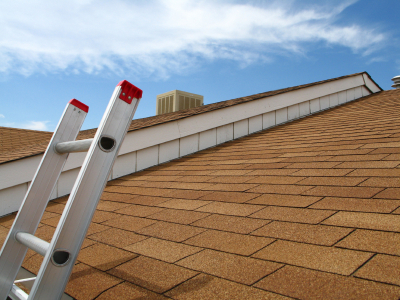
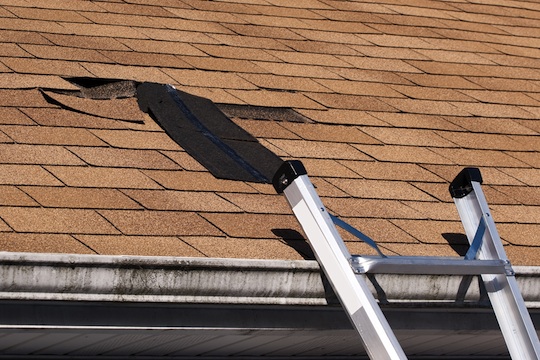
The parts of the roof that take the most damage are the shingles and the gutters. Therefore, these are the things that you should always check when repairing roof storm damage. Along with storm-proofing your home, you should hurricane-proof your home as well.

Prevention is Better Than Cure

The best way to minimize damage to your roof and gutters during a storm is to inspect your roof and gutters before a storm actually happens. There are several things that you need to look out for.

1. On your roof, you need to check for broken or missing shingles, missing granules, loose nails, and flashing damage.

2. On your gutters, you need to check that the downspouts have proper drainage and are not clogged.

3. You also need to clear any debris that you find in the gutters such as twigs, leaves, nests, and other debris.

4. Lastly, you need to make sure that the gutters aren’t loose in any way.

If Damage Has Happened…

It’s inevitable that damage will occur. When this happens, you need to act as quickly as possible. Clear any debris that has collected from the gutter. Repair the roof and replace any broken shingles. Repair any loose gutters or replace them entirely. Double check to make sure that all the attachments on the roof are still intact, and clear anything from the roof that the wind has blown there such as branches and leaves.

If significant damage has been done, it’s time to call an expert.

Help is Here

Contact TalkLocal today and we will connect you with a roofer near you to help you repair a damaged roof after a storm or a hurricane.

How To Heat Tape Gutters

Tuesday, October 22nd, 2013

How To Heat Tape Gutters - Snow Removal

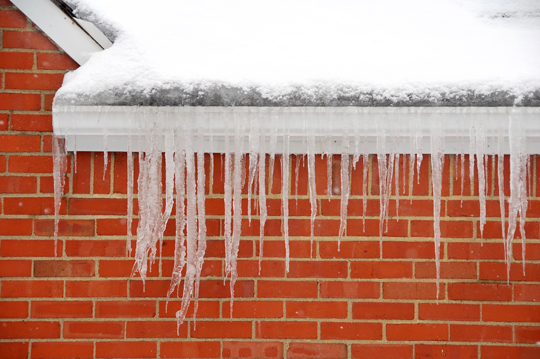
Frozen gutters can be one of the biggest nuisances during the winter months. When gutters freeze, they can become severely damaged. When the warmer, rainy months hit, you might find yourself having to replace them altogether.

You don’t have to let it come to that. Learning how to heat tape gutters in order to prevent them from freezing can be a small investment that pays off in a big way.

What Is Heat Tape?

Before you learn how to heat tape gutters, you need to familiarize yourself with the actual product. Heat tape is long strips that can be stuck to gutters and roofs. The strips are powered by an electrical source and heat up to prevent a build up of snow or ice.

Heat tape can be found at most home improvement stores, especially in areas where snow and ice are a serious factor during the winter.

Where Do You Install The Tape?

If you have never done this before, you might wonder where the best place to install heat tape would be. Not everyone does it the same. This partly depends on how bad the snow and ice get on your roof. However, to be safe, you’ll want to install it in the following areas.

In your gutters

The tape needs to go inside the gutters. Run the tape along the length of the gutter.

Down the downspout

Homeowners often forget that downspouts can freeze and become damaged. Run the tape down the downspout to avoid this.

On the roof near the gutters

This is somewhat optional, but it always helps to run the tape in a zig-zag formation along the roof near the gutter. This ensures that snow and ice do not even come close to your gutters.

Need Help Controlling Snow And Ice?

When nasty weather strikes, it never hurts to have professionals in your area that can sort out any issues you experience. TalkLocal specializes in finding you local service professionals in a matter of minutes. Flipping through the phone book and calling around are a thing of the past. Count on us to connect you with the right professional, right now!

Samsung TV Set Control Buttons Not Working

Tuesday, October 22nd, 2013

Samsung TV Set Control Buttons Not Working - TV Repair

After a long day spent at the office, you can’t wait to go home and watch your favorite TV show. What’s the worst thing that could happen? You could realize that your Samsung TV set control buttons are not working. In this case, you have two options: you could try to fix this problem on your own, or you could go in favor of professional services, ensured by a skilled TV repair expert.

Fix This Problem on Your Own

If you can’t control your TV screen using your remote control or the buttons located on the TV set, this means that you could be dealing with a defective control board. In this case, you could either replace the control board with a new one, or you could choose to change all the switches on the old board of your TV set.

This is a relatively complex process, so a DIY approach is not recommended unless you have the skills, the tools, and the expertise to complete this project on your own. Otherwise, it is advisable to rely on professional services ensured by a TV repair expert, who can fix your problem in record time and charge you less than $200 for this job.

What to Do When Remote Control Buttons Don’t Work Properly

Remote control issues can be easily identified and eliminated by most homeowners. If the control buttons on your remote are unresponsive, start by cleaning every single button with a mild solution based on detergent and ammonia or with a cotton swab dipped in alcohol.

Bad batteries, a faulty remote sensor, sudden electronic glitches, and defective remotes can be the real source of your problem. If you’re dealing with unresponsive control buttons, start by changing the batteries of your remote. Make sure the new batteries are properly inserted. If the remote control buttons are still not functioning, this means that you could be facing a TV remote sensor issue.

Ask for Help

Samsung TV set control buttons not working? Instead of wasting time and money trying to address this problem on your own, ask for professional help today. Contact the best TV repair experts in your area, by relying on TalkLocal, a free service designed to help you meet A-list professionals who work around the clock to keep you satisfied.

Electric Heating Radiators at Home

Tuesday, October 22nd, 2013

Electric Heating Radiators for Your Home - Heating and Cooling

Whether you’re renovating your home or moving to a new one, heating is always a major concern. Having appropriate central heating is essential to maintaining a comfortable and warm living environment.

Traditional heating systems used oil and wood as fuel. Today, however, more environmentally-friendly options exist, such as radiant electric heating radiators, which use heating elements powered by electricity to radiate heat into your home.

What Are Electric Heating Radiators?

There are several types of radiators. When talking about radiant electric heating radiators, there are two kinds: storage heaters and radiant heaters.

The radiant-type heaters provide heat on demand, which means they can simply be turned on and off depending on the need for warmth. This type is further categorized into three: radiant heating panels, convectors, and water/oil-filled electric heaters.

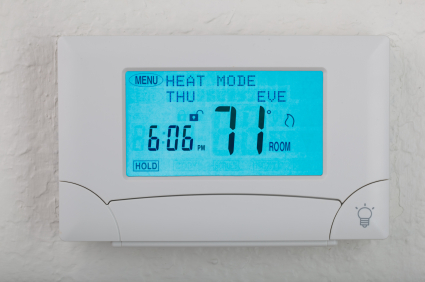
These radiators typically have a thermostat that detects the temperature of the room and turns the heater on or off depending on its programmed settings. They also have a time clock that can be set to turn the radiator on or off as needed. Some systems have controls that let you control some or all of the radiators from a central point.

Convenient and Easy to Use

Electric heating radiators don’t need any pipework and require very little installation. These heaters can be connected to an electric circuit via a wall connection or, if you purchase a portable standalone unit, then you just plug it into a power outlet to use.

Electric heating radiators are great space savers and can be placed in any corner or small nook in a room. Other configurations are also ideal for small spaces such as wall panels or wall-mounted units and ceiling units. These radiators, unlike storage heaters, don’t retain heat, which allows them to heat and cool fairly quickly. This is ideal for use in places that require instantaneous heating.

How can electric radiators help reduce energy costs?

With radiant electric heating radiators, you can heat a room based on your need. This is ideal when you spend most of your time in one particular room and therefore do not require centralized heating where the entire house is heated.

By just using an electric heater to provide local heating, you can lower your energy use and bills. It’s also possible to put radiators in every room and regulate them with a wireless thermostat so you can control the temperature throughout the home.

Need help to install these radiators?

TalkLocal can quickly connect you with up to three professional heating and cooling professionals who specialize in installing electric heating radiators. Try our free service now and enjoy a hassle-free way of finding a service pro.

What is a Froe?

Tuesday, October 22nd, 2013

What is a Froe? - Handyman

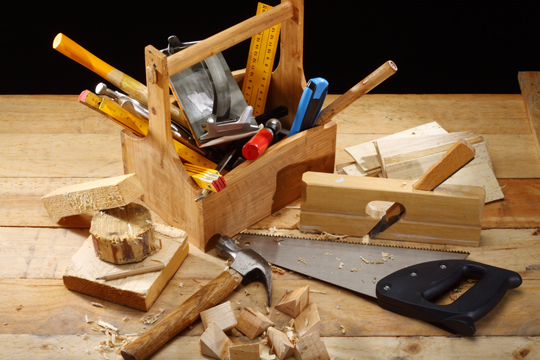
What is a froe? A froe is a carpentry tool that is L-shaped and is used to split wood along its grain. It is used by hammering the blade into the wood in the direction of the grain and then twisting the haft, thereby twisting the blade. It is more accurate than using a hatchet.

The froe uses the haft to split the wood by multiplying the force, thus, very little force is needed to split the wood. It is part of a carpentry tools list because it is very effective at splitting wood.

A froe is also called a shake axe and is similar in form to an axe. A froe is an assembly of a blade set at a right angle to a haft. There are some variations to the froe, with some froes not having any handles, but instead having an unbevelled edge that serves as a handle.

How to Use a Froe

Using a froe is not difficult because the force applied is multiplied significantly by the haft. Using it is similar to using an axe, although it is much more precise and accurate.

1. The first thing that needs to be done is to position the wood correctly.

2. Then, find the grain of the wood and measure where you would like to cut.

3. After this, strike the area where you would like to cut using the blade of the froe.

4. Then, using the haft, twist the blade until the wood separates. These steps will ensure that the wood is cut accurately and that the force needed to cut the wood is not too much. The froe is a useful tool that many carpenters use.

Need Help with Your Froe?

TalkLocal can help you find a professional near your area within minutes! Call us today and we will assist you in finding an expert that can help you!

What is a Shingle Froe?

Monday, October 21st, 2013

What is a Shingle Froe? - Roofers

What is a shingle froe? A shingle froe is much like a regular froe except that it is used especially for making shingles from wood. It’s an old-fashioned tool that’s used for making shingles or fences and is also used for round logs. Shingle froes are also used extensively for making rails.

The tool is L-shaped with a blade running perpendicular to a haft. The haft multiplies the force that is applied to the blade, which means you don’t have to apply a lot of force when you use the shingle froe.

How to Make Shingles

1. You must start with wood that has been cut to the size of the shingles that you want. For this, you will need a chainsaw and some other carpentry tools.

2. Once you have sized your wood blocks correctly, you can begin splitting them into shingles for your roof.

3. You’ll need a mallet along with the shingle froe in order to make shingles. Using the mallet, pound down on the blade of the shingle froe along the grain of the wood.

4. Once the wood cracks, use the haft to continue splitting the wood all the way down. Do this by pushing the froe all the way down while twisting the haft. If necessary, you can push the froe in about 3 to 6 inches more and twist the haft towards you or away from you.

5. After you have split all the wood into shingles, you can use them to cover your roof and give your house that rustic, country feel. If you feel that making your own shingles sounds too difficult, however, don’t hesitate to seek professional help.

Need Expert Advice?

Talk Local will connect you with the right professionals for all of your DIY projects. Contact TalkLocal today and we’ll have a professional contact you within minutes to help you make shingles for you home!

Is Central Heating Gas Right For You?

Monday, October 21st, 2013

Is Central Heating Gas Right For You? - Heating and Cooling

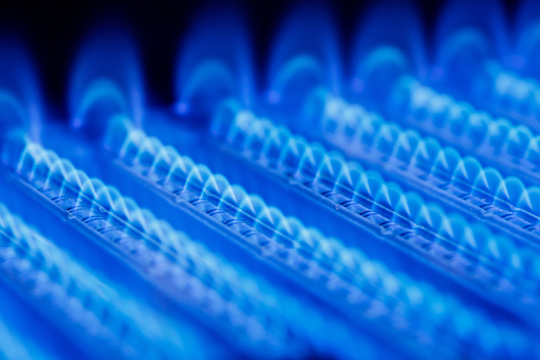
Many homeowners use central heating gas to keep their homes warm during the winter months. These heating systems are effective and economical.

If your house is not connected to the central gas network, you can opt to use liquid petroleum gas (LPG) or heating oil, which must be supplied to you every time you run out.

Sometimes, you may need to install heating vents in your home for central gas heating, but most of the time, central gas heating works well on its own.

Pros of Central Heating Gas

Since gas is a very efficient source of energy, you get a good return on your money for every unit of gas that you purchase. Most modern boilers that condense can give you as much as 90% return of energy as opposed to standard boilers. In most cases, gas is supplied directly into your home, so you don’t need to store any gas in your house, which is a positive safety factor.

Gas is also the most widely used heating fuel, so if your heating system fails, it’s fairly easy to find a professional to rectify the problem. Thus, central heating gas systems are economical and easy to maintain.

Cons of Central Heating Gas

The downside of using gas to heat your home is that gas prices are rising, and they are likely to remain high. Countries must compete with each other for gas prices and this drives up the cost of fuel.

Additionally, installing a central heating gas system on your own can be expensive and disruptive. Also, if you are not connected to the gas network, connecting your home can be quite costly.

Need a Gas Expert?

Here at TalkLocal, we make sure that you can get the help that you deserve. Give us a call today and see how we can assist you with all your heating and cooling needs!

Transfer Data from Floppy Disk

Monday, October 21st, 2013

Transfer Data from Floppy Disk - Computer Repair

It probably seems like a thing of yesterday when someone mentions a floppy disc. But if you run into a box full of those black and beautiful, 3.5” floppy discs that you stored your images from your old digital camera in, you feel a pang of nostalgia that modern computers don’t have disc drives.

So if you wish to retrieve data from old floppy discs, without a computer with a disc drive, what do you do? Well, you’re in luck because there are ways you can transfer data from floppy disk, without having to scour the antique shop for an old, big burly Compaq.

Get an External Disc Drive

These days, it is really easy to find an external disc drive on eBay and other places. In fact, they cost just about $15 to $20. Now that’s an amount you can easily spend for those priceless memories. All you need to do is plug it in and you can transfer all of your data yourself. It gets really simple once you get the right device.

First, you need to determine what kind of floppy disc you are dealing with. It could be a 5.25-inch floppy disc for Mac or a 3.5-inch Windows PC disc. Accordingly, you can get an external disc drive for your collection of floppies.

File Transfer Services

If you look online, you will come across a few websites that let you convert your floppy disc data. FloppyDisk.com and RetroFloppy.com are a couple of these. These websites help convert old files to formats new computers can read for a fee of about $6-$7 per disc.

Public Library

Another option you could try is going to an old, big public library, as it is most likely to have old computers that still have disc drives. You can easily retrieve data from your floppy discs on these computers and then use one of the aforementioned file transfer services to have them converted to a compatible format.

Get Professionals to Transfer Data from Floppy Disk

No matter what you try, sometimes you may not be able to successfully transfer the data. In such a situation, it is best to consult a professional for the job. TalkLocal can help you find professionals who can transfer all of your data in no time. We make sure to connect you to the best professionals in your area.