
What is a Fire Pit and What Can it Do for A Backyard?

Thursday, September 12th, 2013

What is a Fire Pit and What Can it Do for A Backyard? - Landscapers

Need to spice up your backyard a bit, while enjoying the cooler weather of fall? You could always turn your backyard into your personal relaxation area by building a fire pit. What is a fire pit, you ask? We’ll tell you!

A Fire Pit Has Numerous Benefits When Added to a Landscape

A fire pit is a permanent and attractive looking location to have a relaxing fire in the evening after a long day of work. It can also be a viable way to get rid of yard debris and some garbage, depending on the burn laws in your area.

What is a fire pit? A fire pit can be made of stone, metal, or other materials that aren’t easily set on fire. A patio can attractively surround the pit, or it can be set in the yard as a separate area. A fire pit must have enough distance from the house, other structures, and trees to protect those areas from the heat and the possibility of catching fire.

Help customers understand that there are many answers when they ask, what is a fire pit? The answer has a common area in general answers. Specific details, however, make all the difference for their situation.

Other Options for Adding Appeal to the Backyard

A fire pit does not have to be the only addition to the backyard to make it more appealing to the adult residents. There are additions like a hot tub that can help that as well.

If a hot tub is part of the backyard environment, make sure that you have properly prepared for all weather and all potential issues with the hot tub installation. Things like the location of the tub, the type of skirting used, and the type of cover for when the hot tub is not in use are all considerations that should be handled carefully.

When in Doubt, Call in the Professionals

The features of the backyard are important factors in a makeover for the area to become a fun place for the adults to relax. Remember that it is important for the backyard to look the part as well. One possibility is to plant shrubbery to add to the visual appeal of the backyard.

For help making these determinations, there is one reliable concierge to call first. That is TalkLocal, where you can talk to a professional and have questions answered quickly. The call is free, your information is kept personal, and the pro addresses your specific situation and questions.
How to Remove Tree Stumps

Wednesday, September 11th, 2013

How to Remove Tree Stumps - Tree Removal

Why Remove Tree Stumps?

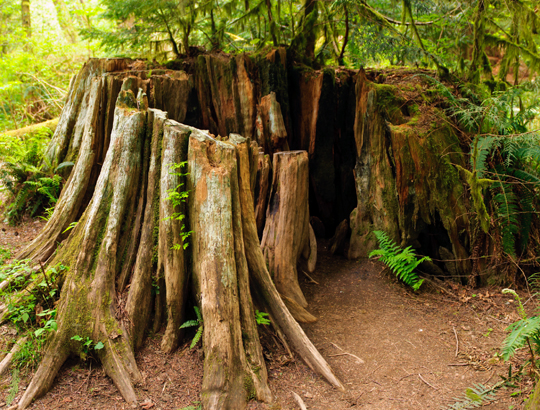
Trees add beauty and foliage to gardens and sidewalks. Tree stumps do just the opposite. Their roots cause uneven sidewalks and cause the concrete to rise and people to trip. The roots increase in diameter over time. Paved surfaces, such as roads, driveways, and pavements can become hazardous over time.

When removing tree stumps, you have to make sure that even the roots are removed because even they are a safety hazard and, actually, are more hazardous than the stump itself. Removing tree stumps is not as easy as chopping wood.

Buy a Stump Remover

This is the easiest way to remove tree stumps. It is available at most garden and home centers and it speeds up the rotting process of the wood. It is made of potassium nitrate, which quickly contributes to the acceleration of the rotting process of the wood. This is also a safe way to kill a tree.

1. All you have to do here is to drill 12-inch holes in the tree stump, pour the granules into the holes, and fill the holes with water. It is best to keep children and pets away as you do this.

2. Then you can use an axe and break the wood. Of course, if you want labor-free removal, you can pour kerosene or fuel oil on the tree stump after you put the stump remover and set it on fire. It will burn for weeks, so make sure nothing flammable is nearby. Take very, very careful precautions when you do this, however, because it is very dangerous. It is best to be very vigilant about this as well.

However, it is Best to Leave This to Professionals…

Contact TalkLocal today and let us help you find a professional near your area for tree stump removal. We will connect you with up to three professionals in just minutes, for free.

Air Conditioner Leaks Water

Wednesday, September 11th, 2013

Air Conditioner Leaks Water - Heating and Cooling

There is a strong chance that an air conditioner will leak now and again. There can be many causes for the leaking water from your air conditioner. Let’s examine the 5 most common.

1. The drain pipes are clogged

If the drain pipes are clogged, you will need to clean them. Take some baking soda, add a little vinegar, and fill the hole with this mixture. This is how you will clean your drain pipe. You can also use a metal wire in order to remove any dirt or clogging from the pipe. Its function is to prevent moisture from building up.

2. There is too much condensation

Condensation can be avoided through a thorough cleaning of the filter. Some easy steps for cleaning your HEPA filter may be useful. If it is not properly cleaned, the odds are that condensation will build up inside. The result is evident: the air conditioner leaks water.

3. There is too much humidity

The external parts of your air conditioner should be properly sealed, otherwise air will leak and humidity will be more likely to occur, which triggers the forming of water in the air conditioner. The result: your air conditioner leaks water.

4. The air conditioner is not properly installed

At times, the reason is simpler than you could think. If you possess a window air conditioner for instance, you should bear in mind that the front part, the one that is in your house, should be positioned a little higher than the back part, the one that is outside.

5. The forming and gradual increase of ice inside the air conditioner

This may also happen. If this is the case, ice will eventually melt and cause a leakage. All you have to do is turn the system off and wait until all the ice has melted. After it has thawed out, put a bowl or any other container under the air conditioner. The water will gather into it. Before turning it on again, you should clean the assembly properly.

If none of these work and you suspect a more complicated problem or if you just want to get in contact with an HVAC professional, TalkLocal can help. Give us a call or write to us and we will facilitate communication with experts for your benefit.

Composting Food Products

Wednesday, September 11th, 2013

Composting Food Products - Garbage Removal

Numerous homeowners buy more food than they actually manage to consume. Furthermore, it seems that no less than 50% of all the edible products commercialized in the U.S. are discarded every single year, as a result of surplus and spoilage. In this context, home composting represents the best alternative at hand, enabling people to recycle their food waste ideally and embrace a greener lifestyle.

Some family members who are interested in composting food products might be wondering: what do I need to start recycling food scraps? What kind of food waste is recyclable? How could I complete this task fast and effortlessly? Read on to learn how to compost food scraps in a few simple steps.

1) Check out your city’s regulations on municipal solid waste (MSW)

Composting food products is a great strategy, allowing homeowners to recycle food they no longer plan to eat in an optimal manner. Believe it or not, some cities do not encourage this eco-friendly practice, because inadequate food waste storage methods could attract a wide range of pests (rodents, scavengers or opossums). Moreover, some cities embrace a different type of municipal solid waste plan and implement special receptacles for food scrap disposal. So first of all, find out if you’re allowed to start composting food products in your own backyard.

2) Separate compostable food for non-compostable scraps

You should know that there are two categories of food waste: compostable elements (fruits, veggies, coffee and tea grounds, crushed egg shells, old pastry products, grains and spices, corn cobs) and non-compostable items, which usually breakdown at a slow pace and draw a large number of rodents (meat and dairy products and basically any type of grease).

3) Use a 5 gallon food compost bucket

Now all you need to do is to purchase a 5 gallon bucket to store the food scraps you’ve collected. Here’s an extra tip: once you put the food waste in it, line its lid with paper to stop bad odors from spreading in your backyard and to keep those annoying flies at a distance.

Truth be told, composting food products is easy, green and convenient. Here’s another extra tip: If you want to accelerate the process, simply add a layer of recently made compost on top of your food scraps stored in the 5-gallon bucket.  This way, the compostable food waste will breakdown faster.

Need Garbage Removal?

Follow these simple steps to start composting your leftovers in the comfort of your own home. This simple DIY project can be completed by any homeowner with minimal effort. When in doubt, it is recommended to discuss your options with garbage removal specialists. Find the best ones by relying on TalkLocal, your primary source of accurate information. Start composting food waste today to live a cleaner, greener life.

Transfer Data from Mac to Mac

Wednesday, September 11th, 2013

Transfer Data from Mac to Mac - Computer Repair

Have you just bought a shiny, new Mac? Want to transfer the data from your old computer onto your new one? It’s not too complicated to transfer data from Mac to Mac, and we have some steps to help you do it.

Streamlined File Transferring Between Mac Systems

Mac processors have a built-in design to make a file transfer between Mac computers simple. Commonly referred to as the Migration Assistant, this streamlined process is often used to transfer accounts, files, user and network settings, and other important information through the use of a FireWire cable or over a wired/wireless network. Using the FireWire cable is the easiest way to do the transfer.

Just Follow These Simple Steps

1. Connect both Macs through a FireWire cable.

* Mac A is the Computer you want to move files from.

* Mac B is the Computer you want to move files to.

2. Once Macs A and B are connected, restart Mac A while pressing and holding the “T” Key. (Once it has finished restarting, there is no point in holding the key further).

3. On Mac B, open the Migration Assistant located in Applications > Utilities.

4. Click Continue to continue with the process.

5. Type your administrator password as prompted.

6. The Mac will now ask you for a file transfer method between computers.

7. Select “From another Mac” and click continue.

8. Select “Use FireWire”.

9. Start the file transfer by choosing files from Mac A to transfer to Mac B.

Transferring without Using the Built-in Mac System

Many websites including Google provide file hosting. File hosting means that the owners of the website will allow you to store files up to a certain extent of size on their servers. Google’s Google Drive, for example, lets you store up to 5 GB for free. Any amount above that is premium that you must pay for.

Storing files in an online server gives you flexibility. Since it’s up on the internet, you can upload and download the files from any computer that is connected to the internet. And if the files are small and few, you may want to consider just emailing the files to yourself.

You can also buy and use an external drive to store your file and to transfer them between computers. USB drives or recordable CDs allow for a constant shift of different files between different computers.

Need Computer Help?

If you need additional help on transferring your files, TalkLocal can help with finding the correct local expert to fix your issue quickly, which saves you time and energy in a stressful situation.

How to Install Solar Panels on the Roof

Wednesday, September 11th, 2013

How to Install Solar Panels on the Roof - Roofers

If utility costs have really put a wrench in your ability to pay other bills, it is time to start looking for money-saving alternatives. Those can include a method of saving energy and money at once. That method would be the installation of solar panels on your roof. The average cost of solar panels is not nearly as high as you might think when initially considering this avenue of saving money and energy.

Take Each Step as It Comes in the Installation Process

This task is not as difficult as it may initially seem. It is a significant investment and a challenge of sorts. How challenging it is will depend on the slope of your roof and some other factors, such as nearby trees that shade your home.

How to Install Solar Panels on the Roof

Make sure to check with the local zoning board about all necessary permits and even the benefits of having solar panels installed, if there are any in your area.

Installation of solar panels requires understanding of the best layout for your home. Bringing in the professionals means peace of mind that the job has been done in the best and most efficient way possible.

There is a very organized way to do the installation, regardless of layout for your home. Be sure to carefully follow the best organization so the solar panels are beneficial to your home energy consumption.

Address Technical Issues with Experienced Professionals

Once the project is committed to, other concerns may arise. There may be technical questions or financial considerations. Questions about the technical aspect, like roof valleys, can be easily answered by a professional.

If this project is becoming a bit more than you feel comfortable tackling, make a call to Talklocal. Even if you think you can handle it, but you aren’t willing to put in the time that it will take to do the job right, make the call. Professionals can take the task on while you handle the numerous other things you have on your to-do list.

Let’s Remember and Reify our Resilience this National Day of Service and Remembrance

Wednesday, September 11th, 2013

Let’s Remember and Reify our Resilience this National Day of Service and Remembrance - Seva Call

Written by Dallea Caldwell

The sun rose this morning, prompt as usual. It’s hump-day, and you’ve resolved to drag yourself out of bed and muddle through it with varying degrees of gusto. A litany of deadlines, to-do’s, and distractions digs into your mind. All the while, a sobering fact floats above your consciousness, barely grazing your dim and befuddled awareness.

Today marks the 12th anniversary of one of the darkest days in American history, this National Day of Service and Remembrance.

And the call for remembrance is an earth-shattering whisper for all of us. Whether initially shaken by horrific news or utterly broken by personal loss that day, remembrance still threatens to undo the normalcy we’ve managed to hobble together in the years since. The senseless tragedy openly mocks the fragile sense we’ve managed to make of our everyday lives.

Except one thing: the day the Earth stood still has long passed and we, as a community, as a country, and as part of the human family…continued to move forward.

If you’ve been to New York City since the opening of the 9/11 Memorial, then you’ve noticed a few bittersweet features at the site.

The NY skyline remains marred by the horrors of that day. Yet the unfettered blaze of the sun fills the void where neither ghost nor shadow can lurk unbrightened. And with the names and memories of those lain low immortalized in bronze, the twin reflecting pools lay, deepening the space where the towers stood soaring.

Visitors watch the perpetual waterfalls cool and cleanse the pools’ depths and let the experience cool and cleanse their own.

And the 9/11 memorial is merely a symbol of human resilience and our power to redeem the darkest of moments. By serving, we create new memories, which further show proof of the resilience which is ours and bring light in place of darkness.

TalkLocal shares in your remembrance of 9/11 and calls on everyone to be the light that endures despite it…in any way they can.

Oil Furnace Burner

Tuesday, September 10th, 2013

Oil Furnace Burner - Heating and Cooling

Oil furnace burners are used by many people to heat their houses. An oil furnace burner is a rather complex assembly. It is generally called a pressure burner.

What Is It Made Of?

It is comprised of a combustion chamber, a blower, a motor, a pump, and a couple of switches, controls, and shutters.

How Does It Work?

Oil is pushed into a combustion chamber, from which it is propelled by a blower, and then it starts burning with the help of an electric spark. The oil continues to burn while the mist is being sprayed. In order to enjoy your furnace for a longer period of time, have it checked on a regular basis and make any necessary replacements or repair work.

Cleaning Is Very Important

Dust can be a great source of trouble. So, first of all, clean the components of your oil furnace burner. The filter, the blower, and the motor must be clean at all times. Clean all components in order to prevent clogging. Use the vacuum cleaner hose and a toothbrush for a thorough cleaning.

Oil Furnace Burner Maintenance

It is highly recommended that you have your oil furnace burner inspected by a professional once a year. But let’s see how you can make it last longer. Always make sure that your furnace receives power and that all switches and controls are working properly and are not damaged. Check your fuse using a multimeter. If it blows whenever you turn the furnace on, then there might be a problem with the electrical system. Check the settings of the thermostat. It must be well calibrated. Never forget to inspect the heat source.

Further Assistance

In conclusion, know your oil furnace burner; see how it works and how you can prolong its life by observing simple maintenance rules. However, if you need the precious aid of a professional, TalkLocal can connect you to the right professionals. Don’t hesitate to call us.

Garden Edging Ideas

Tuesday, September 10th, 2013

Garden Edging Ideas - Landscapers

Garden Edges

Garden edges are good ideas because they provide a barrier between your lawn and your neighbor’s space. The simplest garden edging idea is a shallow trench that is dug between your lawn and the adjacent garden of your neighbor. However, this is simply boring. Garden edging ideas are best used with garden fences. There are garden edges that are sold commercially. They can be wood, plastic, or brick, and they make for fantastic decorations that will spice up your garden. All of the garden edges will give your garden the look of a clean edge.

Ideas for Your Garden Edges

There are practical reasons for putting up garden edges. One of these is that grasses spread via stolons that, when left unkempt, will spread around your garden. If you put in garden edges, you can control the spread of grass. You can also use mowing strips around your garden to delineate between your lawn and your neighbor’s. This barrier will prevent mulch from leaving your garden and prevent grass stolons from spreading.

Another garden edging idea is to use interlocking concrete. This will also prevent grass from spreading where you don’t want it. The next of the garden edging ideas is to purchase readily made edges that can easily be installed. Installation can be done by an expert for a minimal fee. Of course, the same can be done using brick and other materials such as wood. However, wood has a shorter life compared to other materials. Plastic, on the other hand, needs more maintenance than most, as algae tends to grow on them as well as on brick. Garden edging ideas can also be taken from your local hardware store.

If You Need More Help…

Contact TalkLocal today and let us help you find a professional near you. We will connect you directly with up to three professionals in your area in just minutes.

Power Steering Pump Noise

Tuesday, September 10th, 2013

Power Steering Pump Noise - Auto Repair

The power steering system is a vital part of your car, but in time it may wear out, just like any other part of your vehicle. One of the most frequent problems that can make the power steering system stop working is the power steering pump.

What Does a Power Steering Pump Noise Tell You?

One possible cause is a low level of fluid. If the noise still persists after adding fluid, it might be because there’s air within the lines, and the fluid pushes it out. If air is trapped in the power steering system, you need to rev the engine and turn the steering wheel from side to side several times. Usually this pushes air out and eliminates the unpleasant power steering pump noise.

Can the Power Steering Pump Noise Signal Other Problems?

Yes, it can. Leaking is another possible cause of a power steering pump noise. If you’ve identified the leak and the pump noise is still there after fixing it, it might be that the parts used are made of plastic. Or maybe there is a blockage in the lines, which can also prevent the power steering pump from working properly.

If replacing the fluid, repairing a possible leak, and removing air or a blockage from the lines don’t solve your power steering pump problem, it might be time to change it. Avoid buying cheap, rebuilt versions, and purchase a new pump from your car dealer to make sure it does its job properly and you get rid of that annoying noise.

Also, remember that if you want your power steering pump to work well, it is advisable to use the right power steering fluid. If your car needs automatic transmission fluid, use that. If it’s a particular brand of power steering fluid, be sure to put that into your pump, otherwise you’ll need to repair it or even replace it sooner than expected.

Additional Help

Still can’t identify the source of your power steering pump noise? You might need the help of an expert. TalkLocal can put you in touch with local professionals who can assist you with your car problem immediately.