
Types of Paint Brushes

Monday, August 26th, 2013

Types of Paint Brushes - Painters

Choosing the right types of paint brushes is crucial to getting the right finish when painting a wall or surface. People pay plenty of attention to the kind of paint they choose, but very little attention is paid to the kind of brush used. Good quality brushes apply a thicker, smoother, more perfect, finished coat of paint, imparting a regal look to the painted surface. Choose the right brushes, and you will see how a simple paint job can transform your home or outdoors.

Different Types of Paint Brushes

The first and foremost way to classify types of paint brushes is by the bristles, which could be natural or synthetic. Depending on the type of paint you are applying, the choice of brushes will change. For instance, any brush could be used for oil-based paints, but if you are working with enamels or a topcoat, it’s advisable to use high-quality natural bristle brushes. Similarly, for latex coatings, you must use synthetic, preferably polyester brushes.

The size of brushes is also extremely important. You must use a size of brush appropriate to the kind of job you are doing. It is best to use a 4-inch wide flat brush for large surfaces, mostly exteriors. For corners and narrow places, use a 2-inch, tapered brush. A one-inch brush is great for molding and woodwork, while for precise and clean painting of window frames and trims, angled sash brushes are an absolute must-have.

What to Look for in Your Brush

Some of the crucial things a paint brush must possess are a good volume of bristles with the right flex. See to it that the bristles have split ends to give a finer finish and smooth results. The flex is crucial. A brush must spring back to its shape soon to consistently paint firm lines.

Bristles that are shorter toward the edges and longer in the center provide more control and better direction. Also, make sure to tug the bristles before you buy to check the quality. No more than two hairs should come out when you tug. If they do, that’s not one of the types of paint brushes you want to buy.

Get Professional Painting Help

If you need a professional paint job done, TalkLocal can help you find the best painters in town. Just let us know exactly what you need and we will be happy to connect you to the most suitable painter.


Types of Evergreen Shrubs

Monday, August 26th, 2013

Types of Evergreen Shrubs - Landscapers

Evergreen shrubs make your garden colorful and alive. These plants have a distinct look to them that will make them a great addition to your home. There are many types of evergreen shrubs, but we will discuss the most common and most colorful ones that will let you add variety to your garden. While they are smaller than espalier trees, many evergreen shrubs are known to produce flowers all year round, thus making them ideal as decorations.

Seven Types of Evergreen Shrubs

Winter heaths, or flowering stalwarts, are pretty shrubs that flower at the most unlikely of seasons. These plants live up to their name, and they flower in winter. They may even flower for half of the year if the conditions are ideal. Ideal conditions include nitrogen-rich soil and plenty of water.

Minuet laurels are plants with very colorful flowers. They are quite small, making them ideal for a small garden.

Blue Star Junipers are another type of evergreen shrub that are ideal for small gardens. These plants do not bloom, but they have blue needles that are quite attractive.

The next plants are Emerald and Gold Euonymus. They are so named because their leaves are emerald in the periphery but are gold in the center. They are quite beautiful plants that you can add to your garden.

Emerald Gaiety Euonymus are cousins of the emerald and gold, but instead, their leaves are green and white.

Moonshadow Euonymus plants are green and gold varieties of the euonymus plants. They are small and compact and make for a lovely ground cover.

Dwarf English Boxwoods are small plants that are attractive as the background for other evergreen shrubs.

Need Help With Your Landscaping?

If you are in need of a good landscaper but have trouble locating one in your area, then you can contact TalkLocal today and let us help you. We can find you a landscaper in your area in just minutes, for free!

How to Prepare for a Blackout

Monday, August 26th, 2013

How to Prepare for a Blackout - Electricians

Rolling blackouts usually happen during summer, when demand greatly outstrips supply. Prolonged power outages can also occur when electrical lines are knocked out during bad weather. Whether planned or not, don’t be caught off-guard when the electricity goes out for hours. Here are some tips on how to prepare for a blackout:

– Have a flashlight on hand in every room in your house. Make sure there are fresh batteries available, too. Better yet, consider getting a shake flashlight that works without batteries.

– Invest in emergency lights. There are many options for emergency lighting, including battery-operated lamps, rechargeable LED lamps, and solar lamps.

– Keep candles and matches on hand. However, always use them with caution. Never use candles if there’s a risk of a gas leak inside your home.

– If you rely on electricity for your water supply, make sure you have in stock at least a gallon of water safe for drinking for every person in your household.

– If you’re on any medication that needs cold storage, you must have an ice chest handy and a frozen ice pack ready in your freezer.

– Always keep your vehicle’s gas tank full or at least half full, because gas station pumps are powered by electricity.

– Post the emergency phone number for your electric utility provider where it can easily be seen in case you need to report the power outage.

Other Supplies to Prepare:

– Non-perishable food

– Can opener

– Portable battery-operated radio

– First-aid kit and a 7-day supply of medication

– Personal care and sanitation supplies

– Extra cash

– Copies of important documents

– Emergency contact information

Preserving Food

A big concern during a power outage is food spoilage. Here’s how to prepare for a blackout, specifically to preserve perishable food:

– Keep several coolers handy in your home. Styrofoam coolers are cheap and work well to protect perishables.

– Prepare a supply of extra ice in your freezer so you can quickly place them in one of the coolers to chill food.

– Know where to buy ice in your area. Food will keep longer if you surround it with ice inside the cooler or the freezer.

– Purchase a fast-response food thermometer. This thermometer can quickly and precisely check the internal temperature of perishable food like meat, which should be at 40 degrees or below in order to be safe for eating.

Find an Electrician Fast!

By knowing how to prepare for a blackout, you can stay safe in your home and be as comfortable as you can until the power comes back. If the power outage is due to a failure in your electrical system, use TalkLocal to find a local, professional electrician to fix the problem. Send us your request through our website, and we’ll send you qualified professionals that match your needs.

Reward Yourself with Rewarding Experiences (Finally) this Labor Day

Monday, August 26th, 2013

Reward Yourself with Rewarding Experiences (Finally) this Labor Day - Seva Call

Written by Dallea Caldwell

Let’s be honest. This probably isn’t the first time we’ve told you to treat yourself for the holidays.

Sure, you’re “Johnny on a Mission” when a clogged drain, leaky pipe, or broken garbage disposal  calls for your attention. Your house might as well be on a perpetual 5 alarm fire for all the urgent care it gets.

And as for the car, the way you tune into that baby’s every sputter and groan, I’d say you may be taking the anthropomorphic term “baby” a tad too literally.

And yeah… you prioritize office deadlines as if they were the steps to disarming a ticking time bomb.

Yet, when your own mind, body, and spirit are crying for attention, you somehow turn a deaf ear.

Enough is enough!

And all that you do, for home, family, business, and community… it really is enough!

You work as hard as anybody… if not harder. You’ve earned as much as anybody… if not more.

And you deserve so much better than you’ve been getting… or, rather… better than what you’ve been giving yourself.

And if there’s one day in the year when you have every right to reward yourself… finally… it’s now.

Labor Day is NOT just an extra 8 hours for you to work twice as hard as normal to get things done before work in the morning.

It’s an official, nationally recognized reward for all you’ve done as an individual and as a nation, to strengthen this country through hard work and historically unprecedented productivity.

You hear that? It’s official.

You’re allowed to sleep in and let a maid do the cleaning, have a spa day with a lavish massage, and head home by taxicab after an intoxicating meal.

In fact, it’s your duty to treat yourself in honor of Labor Day- a well-deserved reward from a well-served public… but a reward that you can either fill with rewarding experiences, or squander with trivial efforts.

And Talk Local is here to make creating those experiences less labor-intensive. Visit us at www.talklocal.com and talk to a fellow hard-worker in seconds. They’ve made it their job to help you recover from yours, so go ahead, you deserve it.

5 More “Oh Sh!t” Moments Where TalkLocal Can Help

Sunday, August 25th, 2013

Written by Steven D’Adamo

Due to the popularity of the first installment (thanks guys!), we’re bringing you five more “Oh sh!t” moments where TalkLocal can help. These are the moments when we often have to face life’s tough challenges head on, and not unnecessarily scream at the kids for something they likely had no hand in…likely.

A Tree Fell On Your Property

This can be pretty scary, especially if it occurs during a violent storm. Luckily, it’s not that hard to find a tree removal service any more. And just think, now you have all of that firewood for the fireplace that probably needs to be cleaned! This becomes much more serious if the tree falls on your house.

5 More "Oh Sh!t" Moments Where Seva Call Can Help - Seva Call

You Find a Nest of Pests in Your Home

Bedbugs, ants, termites, rats, mice, snakes, raccoons, alligators…A pest problem is serious no matter the size of the intruders. You especially don’t want to leave your family at risk of being hurt or your home at risk of being damaged.

You Broke/Lost a Tooth (and you’re older than 12)

Maybe you got into a stupid bar fight, or maybe you simply slipped and smacked your face on a table. Either way, a suddenly broken or missing tooth can be painful, and embarrassing. So, find a dentist to get it patched up in no time. And stop getting into stupid bar fights.

5 More "Oh Sh!t" Moments Where Seva Call Can Help - Seva Call

You’re Locked Out Of Your Car

This happens more often than you might think; your arms are full of groceries because you only want to make one trip. You hit the lock button as you step out of your car and hip-check the door shut. Then you see them: your keys, still in the ignition, in your now-locked car. Unless you’re a car burglar, you’ll need to find a locksmith. This moment becomes an emergency if your baby is locked inside.

You Find Two Feet of Standing Water in Your Basement

This may be the most shocking emergency to find in your home. You’ll want to find a professional immediately to find the source of the leak, patch it up, and repair any damage to your furniture. This may require more than one professional… In the meantime, grab a bucket and start de-flooding your basement.

So don’t get awe-struck by whatever just ruined your day (or week, or month). Use TalkLocal to find the help you need, exactly when you need it.

Life Experience and Inexperience: Helping at Home Starts in the Kitchen

Saturday, August 24th, 2013

A blog about life experience and inexperience, written by Dallea Caldwell.

I shoved my boyfriend in the grocery store last week.

IN MY OWN DEFENSE, I was only half serious. See, this was my first time “meal planning”. I normally pick up ingredients for the meals I learned from my mom, grab whatever else looks good, and just invent new meals with whatever is left. That’s why I always kick him out of the kitchen — so that I can…think.

Now, in order to make dinner time more of a team sport, he suggested we try some new recipes together. But first, we had to find them. And researching recipes online is pretty irritating. Something looks good…until you realize it requires 50 million ingredients you can’t pronounce and none of which you have in stock. Then, after all that thinking and strategizing — adding the duplicate ingredients, removing the in-stock ones — the basics become an afterthought.

And, even though “we” forgot the bacon…I alone fell short of the expectation to remember the bacon. So, it was “You forgot the bacon.” Oh, most stubborn remaining vestige of sexism, you slay me.

And that brings me to the shoving of the boyfriend.

I got away with it because he’s bigger than me and because we were both laughing at the time. But we couldn’t find the Italian sausage, and because we couldn’t find the Italian sausage, the whole world was on the brink of disaster in that moment.

So, I shoved him to save him from the derailed train/falling building/firey comet that was headed his way any apocalyptic moment… obviously.

In the end, however, we saved $30 on our regular grocery bill! Which felt far more satisfying than I had expected.

And we really connected on a deeper level! Really learning to understand one another.

BF: “How do you ‘brown the sausage’?”

Me: “You pour olive oil in the pan and saute the meat on top.”

BF: “How do you ‘saute the meat on top’?”

Me: “You pour olive oil in the pan and put the meat on top.”

And, I taught him to wash the pots rather than put them in the dishwasher where they get damaged.

And I laughed as he cringed at the feel of the sponge. (Yes, he’s one of those).

Most importantly, the Olive Garden Copycat Zuppa Toscana was delicious, even with Italian seasoned ground turkey!

So, if you can’t stand the heat, bring your partner into the kitchen. Strategize to plan quick and affordable meals that reduce waste  and impulse buying. With the money you save as a team, you can do something really great… like hire a maid or butler during the Playoffs so that your home team can enjoy a brief off season!

Size of AC Unit

Friday, August 23rd, 2013

Size of AC Unit - Heating and Cooling

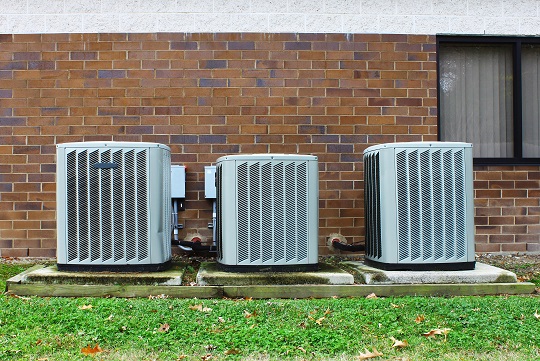
The size of AC unit will determine how much power it uses and ultimately, your electric bill. There are several ways to determine the appropriate size of AC unit for your home. Remember, the correct size unit will bring down your electricity costs and help you maintain the cooling system in your home. Aside from this, an oversized AC unit will short-cycle, meaning it will turn on and off frequently. Air conditioning units are typically measured in tons, and 1 ton equals 12,000 British Thermal Units.

How to Estimate the Size You Need

The most proper and scientific method for estimating the size of AC unit that you need in your home is the Manual J Load Calculation. This calculation will depend on your home’s insulation systems, the number of windows you have, and the sizes of the rooms in your home. A calculation is then based on this and the proper tons that you need will be apparent.

A rough estimate of the size you need can also be based on the comparison of your neighbors’ houses and yours. If your neighbor has the same size house as you, you can ask them what the size of their air conditioning unit is and base it from there.

You can also choose to hire a contractor to estimate the air conditioning size you need. Air conditioning professionals can give you an estimate on the size you need, while also offering installation of your air conditioning unit.

Lastly, if you are replacing an old air conditioning unit, you can check its size and base it from there. When you purchase an air conditioning unit, remember the above information so that you can save on electricity bills. You also need to find out how to maintain your AC unit, such as when you should clean the filter.

Ready for Professional Help?

If you need help in estimating the size of AC unit that you need, TalkLocal can help you find a professional near you. We offer reliable services that guarantee you can get the help you need.

Types of Hot Tub Skirting

Friday, August 23rd, 2013

Types of Hot Tub Skirting - Handyman

Hot tubs have become increasingly popular among homeowners who want to enjoy a 5-star pampering spa treatment on their own property. Despite the fact that this idea is received with great enthusiasm by most people, only a few of them know that hot tubs require a mandatory maintenance routine in order to look and function like new for a long period of time. In fact, there are various types of hot tub skirting, and all of them have their unique particularities that you should take into consideration.

First of all, when it comes to building and installing a beautiful hot tub, homeowners are advised to invest in a first-class cabinet, designed to encase their large tubs. One could easily find a generous selection of cabinet materials on the market, including wood and synthetic plastics.

Wood Hot Tub Skirting

If you want to go for the natural-looking alternative, wood hot tub skirting (like cedar and redwood, for instance) could be a perfect choice. However, if you have an outdoor hot tub, you should be aware of the fact that bad weather conditions and excessive moisture can easily deteriorate the wood surface and force you to invest in reconditioning processes. In this particular case, homeowners are advised to apply a water sealant to stop the cabinet wood from rotting. If you don’t have the time, the skills, or the patience to handle this simple assignment on your own, pay the right price for professional services ensured by a skilled handyman operating in your area.

Polymer Materials

Are you interested in discovering the most modern, durable, and cost-effective types of hot tub skirting? If you’re not a big fan of wood and/or you don’t want to spend a lot of time and money on regular upkeep, think about investing in polymer skirting materials, which represent a perfectly viable, maintenance-free alternative. Now you have the opportunity to find resistant, affordable products tailored to your taste, demands, and financial possibilities. Here’s an extra tip: Whether you opt for natural or synthetic hot tub skirting, make sure it is 100% sturdy.

Need Professional Assistance?

Remember that the best types of hot tub skirting serve two different purposes: They improve the aesthetics of your hot tub while masking and protecting the plumbing system. This is the main reason one shouldn’t settle for anything less than first-hand materials.

Are you looking for expert guidance, professional installation, or premium hot tub maintenance work? In this case, rely on TalkLocal, your trusted source of information, to get in touch with the best handymen available in your area. Find the best one today and get the right answers to all of your hot tub-related questions.

How Much Mulch Should I Buy?

Friday, August 23rd, 2013

How Much Mulch Should I Buy? - Landscapers

Using mulch can do your garden a lot of good, and this is for several reasons. First of all, it’s a natural fertilizer that improves the quality of your soil by providing it with nutrients. Besides this, mulch keeps water in the soil, preventing evaporation. It also keeps weeds from sprouting. On the aesthetic side, mulch gives your garden a unitary appearance, keeping its neat and tidy look.

What Kind of Mulch Do You Need?

There are many types of mulches, from leaves and straw to tree bark and gravel. The kind of mulch you use depends on what you want to achieve. For instance, if you have flowers and plants, organic mulches, such as compost and manure, are a better choice. On the other hand, if you’re interested in creating patterns of orderly paths in your garden, you might want to use gravel. However, in both cases you need to ask this question before you start adding mulch to your soil: How much mulch should I buy?

How Do You Answer This Question?

1.  You need to calculate the area of your garden in square feet. For this, measure the length of your garden, then the width, and multiply them. This way you get the total area that needs to be covered with mulch.

2. Then decide the depth of mulch layer. For flowerbeds, a three-inch layer is enough. The same goes for vegetable gardens. If weeds are particularly resilient in your garden and you want to keep them under, the mulch layer needs to be thicker, up to six inches.

3. Now you have to do more calculations. Take depth into account and multiply the total square footage of your garden with the depth of your mulch layer. For instance, if your total area is 500 square feet and you want a two-inch mulch layer, you multiply 500 by 2 and get 1,000.

4. Lastly, divide the result by one cubic yard. To do that you should know that one cubic yard means 324 square feet, with a mulch layer that goes one-inch deep. In the example chosen, 1,000 / 324 = 3.08. Round it up, and you’ll get 3.1 cubic yards. That is the answer to your question: How much mulch should I buy?

Looking for Help?

Need a hand with your landscaping projects? TalkLocal can connect you with an experienced landscaper in the area, for free and right away.

Heat Resistant Fabric

Friday, August 23rd, 2013

Heat Resistant Fabric - Tailors

The clothes we wear on a daily basis reflect our fashion sense and make us stand out, but also protect our bodies against a wide range of threats. Despite the fact that there is no such thing as a 100% fireproof clothing item, one can easily profit from a high-quality heat resistant fabric designed to resist fire in a much more effective manner than traditional materials. What are the attributes of heat resistant materials? Could we actually enhance the ignition resistance of our favorite materials fast and effortlessly? Keep reading to discover the answers to all of these questions and more.

Why is it so important to wear clothes made from heat resistant materials?

Most people don’t usually think about an emergency situation until they are forced to experience it. Unfortunately in such cases, lack of preventive measures leads to unwanted complications. The right clothes can save lives and minimize injuries in case the people who wear them become the victims of a home fire. On the other hand, certain materials are incredibly hazardous and can put their lives on the line. For instance, despite the fact that they display an elevated ignition resistance, nylon, acrylic, and polyester can cause severe skin burns because they melt easily.

How could we improve the heat resistance of our favorite materials?

Let’s face it: We wouldn’t want to go around town dressed like a fireman just to profit from the elevated protection ensured by a fireproof outfit. This is why you should be fully aware of the fact that your favorite materials can be improved to withstand increased temperatures. Materials made of natural fibers (wool, cotton, silk) and synthetic fibers (nylon, acrylic, and polyester) can become more flame resistant if a special chemical solution is applied on their entire surface.

How to find the perfect flame-resistant materials

These days, you have the chance to opt for innovative materials used by reputable manufacturers to create modern armors and top-quality bulletproof vests used by policemen. If you want to minimize risks and also wear comfortable clothes made from durable, heat resistant fabrics, all you need to do is to contact the best tailor in your area and discuss your options. Don’t waste any time in the process, and rely on TalkLocal to identify some of the most popular tailors operating in your area.