
Chapter 11 Bankruptcy Definition

Wednesday, August 7th, 2013

Chapter 11 Bankruptcy Definition - Lawyers - Bankruptcy

In these difficult economic times, many companies are finding it hard to keep their heads above water. All across the country, major corporations and small businesses are finding themselves in the untenable position of being unable to pay their creditors, suppliers, and employees. After exhausting all other financial avenues open to them, such as securing further loans or even bringing in a new business partner, the only option left is to declare bankruptcy. If this is the only choice left to you, the first thing you need to do is to get a clear chapter 11 bankruptcy definition.

It’s Not the End

It is a common belief that filing for bankruptcy means that you will lose complete control over your business and your assets and that you will be left with basically nothing. Yet, when you look into the chapter 11 bankruptcy definition, you will come to realize that this is not really the case.

Chapter 11 bankruptcy gives a business owner the ability to reorganize and restructure their company and business plan in order to remediate their credit and cash flow problems. When a company files for chapter 11 bankruptcy, the owners become debtors in possession of the business and are mandated to come up with a plan to service their debt and pay back their loans to their creditors. The owners, or debtors in possession, are still in control of the company and its operations, and their objective from the point of filing onward is to find a way to restructure the company so that the business is able to pay off its debts.

How it Works

1. Upon filing for chapter 11 bankruptcy, the debtor in possession has approximately 120 days within which to propose a plan for restructuring the company and paying off its debts. Once the filing is made, automatic stay immediately applies, meaning that all of the business’ creditors have to stop pressing the owner for repayment of his debts until the chapter 11 proceedings are over.

2. After the owner has proposed a plan, the creditors have the right to vote on it – they can either approve or veto it, in which case the debtor in credit has to come up with a new plan. At this stage, the company’s creditors can also propose their own plan.

3. Once a plan has been settled on, it has to be confirmed by a judge. Only a judge can do this – even if the debtor and creditors agree to a restructuring plan, it cannot go into effect until it has been confirmed by the courts.

At this point, the debtor in possession remains in control of the company and its operations as long as he or she sticks to the restructuring and repayment plan.

Consult a Bankruptcy Lawyer

If you need help filing for bankruptcy under chapter 11, TalkLocal can help. Visit our website and use our free referral system to be connected with experienced bankruptcy lawyers close to you. Filing for bankruptcy is a hard road, but with the right help, you can soon be back on your way to fiscal solvency.


Zombie-Proof Your Home: New Duds – Zombie Armor

Wednesday, August 7th, 2013

Zombie-Proof Your Home: New Duds - Zombie Armor - Seva Team

Written by Steven D’Adamo

Steve here with another update from Fort Talk Local. Manpreet has encouraged me to keep writing these blogs until we can connect with real people again, and hopefully find Seva Man, who is still somewhere in the Midwest.

Since reuniting with our leader and fortifying our home, we have become emboldened. We conduct frequent raids to CostCo, gathering up as much supplies as we can, and search through surrounding neighborhoods for other survivors. We’re ecstatic to report that there are more than we thought!

We also send out parties to find zombies. And boy have we learned a few lessons…

– Cotton t-shirts are not made for protection of any kind.

– Bare skin is an open invitation to bites and scratches.

– Real armor is hard to find.

And that’s why we’ve each begun designing our own, custom armor. I advise that you do the same, and I have some ideas to get you started. Now that you know how to zombie-proof your home, it’s time to venture out and help others. Here are some easy, DIY armor ideas.

1. Headgear. Helmets, goggles, sunglasses, those weird earmuffs that wrap around the back of your head, even a hockey mask. Protect your face and head from scratches. Ears, eyes, and long hair are particularly vulnerable to pulling and gouging.

2. Thick materials. Your plain cotton t’s won’t cut it anymore. Rummage through your parents’ closet for an 80’s-style leather vest, or find thicker jackets to use as upper body reinforcement. Scrap denim is great for reinforcing joints and limbs in long-sleeved shirts, or doubling up on leg protection.

3. Real shoes. You can wear sandals or crocs (vomit) the next time you feel safe wandering around outside mostly naked. Ditch the open-toed footwear for something that will actually protect your feet. Above-the-ankle, steel-tipped, waterproof boots are ideal.

4. Get creative. Use plastic or metal scraps as a form of padding on your clothes. Seriously. Just go Office Space on a computer monitor and tie the strips of plastic around your forearms for some homemade wrist-guards. Nothing says “Don’t bite me!” like a swinging, plastic-reinforced forearm to the teeth.

5. Duct tape. Yes, old reliable even has its uses during the zombie apocalypse. Don’t have any fancy clothes or makeshift armor? Duct-tape your arms and legs, or any bare skin you don’t mind taping up. While the zombies are busy chewing on your cheap armor, you’ll be busy bashing their heads in. Just don’t cut off circulation.

6. Combine 4 and 5. Go big by duct taping plastic or metal scraps to a long-sleeved shirt, and then taping up any open fabric. The tape will prevent fabric from ripping, and the added armor is just that.

It’s just so hard to find a reliable tailor in the post-apocalyptic wasteland. However, you should be able to find something to protect yourself with as you forage for food, survivors, or vintage Pokemon cards… whatever floats your boat.

Stay safe, and get to fighting. Steve out.

Growing Fruit Vines

Tuesday, August 6th, 2013

Growing Fruit Vines - Landscapers

What Types of Fruit Grow on Vines?

The typical answer to this question is usually grapes, but did you know that kiwi and passion fruit also grow on vines? Kiwi climbs a pergola pretty well and can be harvested in late autumn. Passion fruit, on the other hand, has a rampant growth rate and can be harvested in late spring to early autumn. Growing fruit vines is not difficult. With this in mind, growing these types of fruit is easier than growing espalier trees.

How to Grow Fruit Vines

Growing fruit vines is ideal for small, cramped gardens because vines grow vertically and don’t require much space. Of course, growing these types of plants depends on your climate and growing conditions. With the right climate and type of soil, you may be able to enjoy harvests yearly. When planting grapes, for example, you have to pay attention to the roots. Don’t let them dry out. You can keep them in a bucket of water for up to a day while you look for spots to plant them.

Grapes, like other fruit vines, grow well on fences and trellises. Water your plants frequently. Again, this is done so that the roots don’t become dry. Passion fruits, the same with grapes and kiwis, need full sunlight to grow well. Keep them in a spot with plenty of sunlight. It is best for these types of plants to grow in slightly acidic soil as well. It also helps if you prune your plants each spring. This will help them grow more vigorously. Check the variety of plants that you take care of, as pruning depends on the variety.

Where to Get Help

Professional landscapers will be able to help you grow fruit vines. TalkLocal will connect you with landscapers in your area. Contact us today!

How to Move Portable Storage Lockers

Tuesday, August 6th, 2013

How to Move Portable Storage Lockers - Moving and Storage

If you’re on the move a lot, investing in a portable storage locker is probably a sound decision. A storage unit will allow you to keep your valuables, heirlooms, seasonal items, and other goods in a safe place. However, when it’s time to move, there’s often little to do but manually unpack the neglected storage unit, only to pack a new one in a new town or city. Portable storage units enable you to move the entire container to wherever your new home will be, but how feasible are they? Let’s take a look at how to move portable storage lockers.

Size Matters

First of all, how large is your portable storage locker? If you’ve purchased a personal storage locker from a hardware store, most likely you will be able to move it yourself. However, if you have a large portable storage unit such as the ones offered by companies like PODS, then you will need to contact the company to arrange to have your goods moved.

Use Your Storage to Save on Moving Expenses

If you’re clever, you can utilize the additional room left in your portable storage to pack additional items and lighten the load of goods you’re taking with you. In fact, many suppliers of portable storage units offer the use of their containers specifically for moving, so you can rent one, load it up with all your belongings, and have it delivered to the driveway of your new home whether it’s across town or across time zones. It’s a great way to ease the strain of moving, and not having a moving truck to drive means one less vehicle to worry about fueling.

Need to Find A Storage Center?

If you’re planning a big move soon, looking for a place to stow away some odds and ends, or just looking for more information on how to move portable storage lockers, TalkLocal can help you find the right company to store, move, or both. We will connect you with the right professional, directly.

How to Use a Jigsaw

Tuesday, August 6th, 2013

How to Use a Jigsaw - Handyman

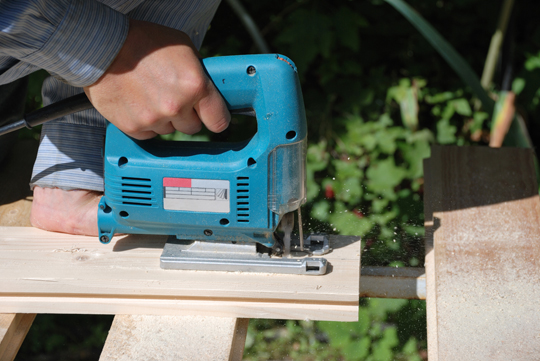
A jigsaw is one of the most versatile tools that can be used to cut the most intricate and trickiest of designs in wood – or a variety of other materials such as plastic, metal, or ceramic tiles. It allows you to cut absolutely fascinating designs with little practice. This makes it one of the best tools for all do-it-yourselfers and professionals alike, whether you are cutting posts for a new fence or redoing your kitchen.

Choosing the Right Jigsaw

To start with, you are going to need the right jigsaw, and that will take quite a bit of thought, as not all jigsaws are created equal. You will need to choose between battery-operated jigsaws or those with a power cord. Another important feature to look out for is speed control. Variable-speed jigsaws are definitely better for cutting different kinds of materials.

Choosing the right blade is extremely important to getting the right performance from your jigsaw. They can cut from metal to plastic, as long as you have the right blade. You must choose the right teeth per inch, or TPI, and also choose the blade with the right width.

How to Use a Jigsaw

The first step is to prepare the material you are about to cut. Carefully draw an outline of the design you wish to cut. It’s always a good idea to cut out a paper or cardboard impression of the actual design and use it to mark the final material you are going to cut, for accuracy.

Secure the Material to Cut

When cutting intricate patterns, it’s important that you have both hands free for effectively guiding the saw. It is therefore important that you place the material on a workbench and secure it with clamps so that it stays firmly in place. Make sure you have plenty of lighting to see the lines you are cutting clearly.

Start Cutting

Carefully position the jigsaw blade close to the line where you will start cutting. Press the trigger of the jigsaw slowly and firmly, and once it is at the desired speed, push it through the material. Now slowly begin to guide the jigsaw along the line you drew for the cutout. If at any time it appears that the jigsaw is being strained or loading up, stop, clear off the area of debris, and start again. Once you have cut through the entire design, use a sander to finish the edges and make them smooth and ready for use.

Looking for Experts?

If you have any home improvement tasks that require sawing or woodworking, let us connect you to the best professionals in town. At TalkLocal, we do the legwork and find the best professionals suited to your kind of job and let you choose from a narrowed-down list, connecting you directly to the person chosen by you.

What Are Mentastics?

Tuesday, August 6th, 2013

What Are Mentastics? - Personal Trainers

Relaxation and exercise play a key role in living a healthy life. One way to work your body and loosen up at the same time is by trying Dr. Trager’s kind of massage and body therapy, called the Trager Approach. Mentastics, which stands for Mental Gymnastics, are part of this approach that was developed in the 1920s.

What Is the Trager Approach?

Dr. Trager’s approach consists of two interconnected parts: tablework and Mentastics. The former is passive and the latter is active. More exactly, during tablework the practitioner performs bodywork exercises on the participant, which induce relaxation. The practitioner uses mental techniques to attain a state called “hookup”, which facilitates an energetic flow between the practitioner and the participant. The second component of the Trager approach is Mentastics, which is based on active participation.

What Are Mentastics, more exactly?

Mentastics are a series of exercises that allow you to release stress and tension in an easy and playful way. Practitioners show the participants how to attain a state of comfort by moving freely and relaxing both their body and mind. Mentastics exercises can be performed under the guidance of a trainer, in groups, or on your own.

Natural Movement and Relaxation

The key element in Mentastics is moving naturally. All movements are simple and gentle; they are meant to enhance flexibility and free your body and mind. Mentastics are suitable for all ages and ability levels due to the moderate effort required when performing this kind of exercise. In Mentastics, movements flow naturally. The purpose is to regain the freedom you had as child, when the way you moved was completely free and unhindered. The techniques used in Mentastics are based on visualization, which are followed by graceful body movements with the purpose of achieving a state of relaxation.

Need Some Guidance?

If you want to give Mentastics a try, TalkLocal can put you in touch with an experienced practitioner who can guide your steps. Our service is free, and it gets you started immediately on the way to a healthier lifestyle.

Chromebook vs iPad

Tuesday, August 6th, 2013

Chromebook vs iPad - Computer Repair

Have you been wondering whether or not to get the Chromebook or the iPad? Not sure which computer offers the most benefit for what you’re looking for? While there are various versions of each device, the differences between them are still very similar. By the time you’ve finished reading this article, you should have enough basic information in order to make an informed decision.

The Physical Comparison

Physically, there are many differences in the Chromebook vs iPad. They vary in size, appearance, storage space, and more. Based on what you’re looking to use your device for – school, business, personal, etc. – might be a big determining factor for which one of these devices will be best for you when it comes to physical characteristics. Let’s take a quick peek at a few of the physical differences of the two.

For starters, the Chromebook is much bigger in size than the iPad. Depending on the versions that you’re comparing, the Chromebook display screens can be up to 2 or 3 inches bigger than the iPad’s display screen. It’s heavier as well. You’ll find that the Chromebook can be up to two times as heavy as the iPad.

In addition to this, the iPad uses a touchscreen while the Chromebook uses a full-size keyboard. So when it comes to the physical characteristics – size and weight – then you might want to go with the iPad if you’re looking for something more sleek and lightweight to use for more personal or minor business tasks. But if you’re really not into touchscreens, then you might want to go with the Chromebook.

Feature Comparison

Now let’s look at some of the feature comparisons of the Chromebook vs iPad. For example, the Chromebook can hold up to 100GB of storage, whereas the iPad can only hold up to about 64GB. On the other hand, you might be able to use your iPad for a much longer period of time with its estimated 10-hour battery life. The Chromebook’s battery life is only an estimated 6 hours.

In addition, the webcam on the iPad features a 2-way camera, allowing you to take both front and rear pictures. It also works well with mobile phones such as the iPhone. The Chromebook does not. The Chromebook, however, can access flash media but the iPad cannot. Also, the iPad offers more than 150,000 applications that you can download to it, while the Chromebook offers only a limited selection.

Which One to Choose?

In deciding whether to buy the Chromebook vs iPad, you will need to weigh all of the options mentioned in this article. Overall, it will depend on what, exactly, you need to be able to accomplish with your device.

Do You Need Assistance With Your Chromebook or iPad?

TalkLocal specializes in connecting consumers and/or businesses with high-quality professionals for nearly any need they might have. We can put you in touch with the right professional in only a few short minutes.

The Social Media Manual of Style

Tuesday, August 6th, 2013

The Social Media Manual of Style - Small Business Advice

Written by TalkLocal Co-Founder, Manpreet Singh

Remember the good old days when broadening communicative reach in business meant learning Spanish? Now, in the brave new world of digital marketing, there’s a new language taking over business… and it’s not Chinese.

Well, maybe it’s sometimes Chinese. However, the biggest players are HTML, Linux, Apache, MySQL, and PHP — the programming languages that form the basis of Facebook, Twitter, Pinterest, Instagram, and other social media sites.

But, don’t worry – you don’t have to learn a whole new language. The platforms will pack your ideas in binary code and ship them to as many homes as you can reach, whether in English, Spanish, Chinese, or Punjabi. But, reaching homes is different from reaching hearts and minds. For that, you do need to learn new grammar: speaking your language in a new way.

Learning the Lingo

It’s like cursive; you know, that ancient, hieroglyphic manual font in which each letter in a word connects seamlessly to the next. The first time you wrote it, you just mimicked the swirling loops and squiggles you watched your parents etch onto legal documents and personal notes. Later, some of your classmates were better at cursive than you, and you felt a twinge of envy. Even now that you’ve learned to glean meaning from those intricate lines, you sometimes write U’s as you should W’s.

Some of your competitors know the social media version of cursive. That’s why they communicate more seamlessly, clearly, and beautifully online. Plus, they never get Rickrolled — whatever that means. (If you don’t know, click here for the definition).

So, here are 10 tips from the secret Social Media Manual of Style that your competitors have been using. Take notes even if your handwriting is like chicken scratch. These best practices will make your profile communicate more effectively and compellingly than Shakespeare after calligraphy classes.

The Social Media Manual of Style

1. Gain an understanding of each platform, including terms of service and Facebook’s Edgerank.

2. Choose an eye-catching profile picture, cover image, and About blurb that clearly illustrates your product/service at a glance.

3. Enter company name, description, address, phone number, and email address in the About section of all profile pages. You’d be surprised how often this is forgotten.

4. Include an engaging statement along with your company website or preferred contact info in the description box of each image  uploaded to any albums.

5. Avoid using acronyms and shorthand to post longer thoughts on Twitter. If the idea cannot be sufficiently trimmed down through word choice, opt to post on Facebook or another site.

6. Find your Goldilocks zone for post frequency and stay consistent. Sporadic social media engagement on major sites like Twitter and Facebook is a turn off to visitors.  But,  if followers start to leave, alter the type or frequency of posts.

7. Talk to, rather than at, your audience. Ask questions, give answers, and post otherwise engaging content.

8. Follow the 80/20 Rule. Social media content should be 80%  informational or entertainment related and only 20% promotional.

9. Respond to comments within 24 hours. Only 30% of businesses do so … ever.  That’s according to Socialbakers.com.

10. Recognize holidays, community events, and other significant happenings via social media to join the common discourse. Use established and popular hashtags on twitter to make your comments searchable.

And, I almost forgot this one: Have Fun!

Reaching social fluency means finding your own voice after years of yelling through promotional flyers and ads which read like you’re a 1930’s newspaper boy. Sure, your voice will be a bit hoarse at first because it has been under-used or abused until now. But, don’t worry.

Social media is inbound marketing — a medium designed to draw people in. By relating to consumers, no matter how small your initial online network, you’ll draw your audience in with even the faintest whisper. And, like a game of telephone, your whispers can be shared to reach innumerable ears.

And, before your next post: make sure you read these step-by-step instructions for designing your online strategy.

Two Most Common Building Foundation Types

Monday, August 5th, 2013

Two Most Common Building Foundation Types - Real Estate

The foundation is the part of your house that you cannot see, yet it is as important as what you have above the ground. It’s the first part of your house that was built or is going to be constructed. As the base of your home, the foundation is a vital component in the structure and resistance of a building. There are several building foundation types, but two of them are most common: the cement slab foundation and the raised blocks foundation. Let’s see the main differences between them.

Cement Slab Foundation

This type of foundation is made of cement or concrete. It’s a flat, solid slab that stretches uniformly at ground level and on which the house is raised. The slab is reinforced with steel rods that prevent it from developing cracks. Its role is vital, as it will support the weight of the house and delineate its size. Cement slab foundations are very popular due to their resistance their easy maintenance.

The popularity of cement slab foundations is also explained by its relatively low cost and quick installation. Moreover, unlike other building foundation types, a house built on a slab foundation offers better insulation, as the temperatures inside are not influenced by the space underneath. On the flip side, this type of foundation does not allow you to enjoy the benefits of a basement, and plumbing repairs are difficult because water lines are buried under the cement or concrete.

Raised Blocks Foundation

This kind of foundation rises above ground level and is a structure that is meant to elevate the house. It can be made of concrete blocks or by pouring concrete in forms. In areas with abundant rainfall, the raised blocks foundation might be a better option that can protect your house from flooding. Another advantage is that it allows for additional storage space. Also, plumbing and electrical cables are easier to fix, but the problem is that in time, this type of foundation can deteriorate due to fungus, may decay because of the elements, or get infested with termites or other pests.

Get Help for Your Real Estate Projects

Whether you’re building a house or buying one and need help with your real estate projects, TalkLocal can track down the right professional for you. Our service is easy and free.

Types of Building Wood

Monday, August 5th, 2013

Types of Building Wood - Handyman

Wood is a very versatile material, with an incredible range of textures and densities, that is used in a wide range of applications, from construction to furniture. When using wood in any woodworking project, you need to choose first the type of wood that best suits your needs. Below is a basic overview of wood types.

Types of Building Wood

There are two main categories of wood: hardwood and softwood. These two terms do not necessarily refer to the hardness or softness of the wood. More exactly, the determining factor in distinguishing between these two types is not wood density, which is responsible for its durability. What separates hardwoods from softwoods is the fact that the former shed their leaves in winter, while the latter, broadly conifers or evergreens, keep their foliage throughout the year.

Wood Softness and Hardness

Softwoods, which have a lower density, are more flexible and can be bent more easily, while hardwoods are less elastic but more durable. Each kind of wood has a particular grain structure. Some woods, such as maple or cherry, have tight pores, which makes them smooth and neat. Other woods, like oak or walnut, have open pores, which absorb finish when it is applied. As a result, some parts of the wood may look darker and some lighter. With softwoods, the finish is more even because the surface is more uniform.

The strength and the appearance of a piece of furniture or construction work depend on the types of building wood. Every type of wood has its specific characteristics and properties. Here are some of the most used types of building wood.

Softwoods

– Pine

– Fir

– Cedar

They are a more cost-effective option in woodworking because evergreens grow faster than hardwoods.

Hardwoods

– Birch

– Cherry

– Oak

They have a greater color, texture, and grain variety than softwoods. That is why the furniture pieces made of them are more beautiful. The problem is that they tend to be costly.

Looking for Help with Your Woodworking Projects?

Visit TalkLocal to save time and get what you want quickly and easily. We will connect you with a qualified professional in your area in no time, for free!