
About Active Isolated Stretching

Thursday, August 8th, 2013

About Active Isolated Stretching - Personal Trainers

It seems like the newest, best exercise regimen comes out every other day. It can be daunting to sift through all of the ads and information spamming, so we at Seva Call are here to give you some useful information about active isolated stretching, an increasingly popular training regimen.

About Active Isolated Stretching

Aaron Mattes, a certified member of the American Kinesiotherapy Association, developed the active isolated stretching program to assist people in preventing injuries, and to reprogram the brain.

Active isolated stretching training is not your average stretching program. The normal stretch is held for 10 to 30 seconds. Active isolated stretching has you hold the stretch with a cord or rope to pull your limps beyond their normal range of motion. This reprograms the brain into thinking that you are more flexible than you are. Using the rope allows you to increase your range of motion six to 10 degrees, and your brain begins to think that is normal. This added range of motion really reduces your chances of muscle pain and injury during athletic events.

Active isolated stretching training can be performed every day. Your brain has been programmed to think that your body is only so flexible, and you reinforce that idea with your everyday experiences. You should ideally practice AIS when your hamstrings are feeling particularly tight. Tight muscles can lead to cramps, muscles, aches, and even injury. Perhaps you did a bunch of physical labor recently and your muscles are tight and achy. Use active isolated stretching to reduce the risk of injury to your muscles.

Want to Find An Expert?

If you would like to try active isolated stretching but are not sure where to begin, find your local expert with TalkLocal. We’re the experts at finding experts. Just tell us what you need, where you are located, and your availability, and we will connect you with up to three professionals in your area who have what you need, and are ready to help.
Pre Emergent Weed Control

Thursday, August 8th, 2013

Pre Emergent Weed Control - Landscapers

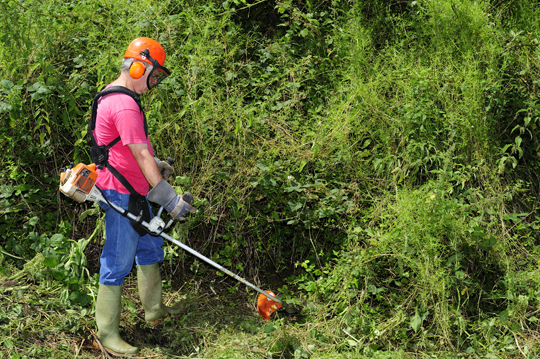
Weeds are the biggest adversaries of a gardener. That is the reason there are so many different ways of controlling weeds like crabgrass that gardeners commonly use. Pre emergent weed control is one of them, and is a highly preferred medium among a large number of gardeners. However, there are a few basic instructions and precautions you must keep in mind when using pre emergent weed control.

Choose the Right Pre Emergent Weed Control

It’s crucial that you kill only the weeds and not your grass and plants. That is why it is extremely important that you pay attention to the herbicide you are choosing. Pick one that targets the common weeds in your region.

Read the Label Instructions Carefully

Every herbicide comes with its own set of safety precautions and instructions, the reading of which is extremely important. Failing to carefully follow each of these instructions during application can potentially kill your grass, too.

Apply the Herbicide at the Right Time

This is vital. In order to properly use pre emergent weed control, you need to be well acquainted with the life cycles of different weeds. Only then will you be able to effectively curb them right in the seed. You could get expert information off the Internet or consult a seasoned gardener, and make sure you apply the herbicide at the time of germination.

Adequately Aerate the Ground Prior to Applying Pre Emergent Herbicide

Proper fertilization and aerating the lawn are important for your grass, but doing so after applying the pre emergent weed control would render the herbicide inefficient. That is why you must aerate the lawn prior to applying the herbicide.

Never Use Pre Emergent Weed Control on New Sod

Because new sod is extremely sensitive, exposure to the herbicide will cause it to wither and die. That is why you must never ever use pre emergent weed control once new sod has sprouted above the ground.

Taking care of these instructions will ensure that you make the most of your pre emergent weed control while your grass grows lush and beautiful.

Get Professional Pre Emergent Weed Control

There’s always a professional solution for problems you do not have the time for. Get in touch with us at TalkLocal and we will make sure your lawn and garden are efficiently taken care of by the most experienced and trained professionals who know very well how to work the weeds and grow the grass.

What is a Coping Saw?

Thursday, August 8th, 2013

What is a Coping Saw? - Handyman

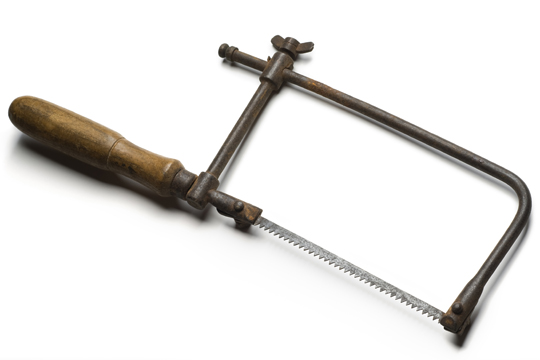
If you have been wondering what is a coping saw, it is essentially a handheld saw with a thin yet really hard metal blade which is stretched across a U-shaped frame. It’s specially designed to efficiently cut simple to intricate patterns inside wood. This makes it a great tool for creating aesthetically pleasing cutout designs in wood or cutting coped joints in crown molding when mitered joints don’t suffice. The U-shaped frame makes it easier to slip the frame into closed surfaces and cut out the smallest of designs.

Getting Started

To begin with, make sure you choose the coping saw ideal for the kind of use you have in mind. There are two primary factors to look out for, while most others stay the same. Make sure to pick a saw with a throat deep enough for your purpose. Secondly, choose the right blade. There are separate blades for cutting tile, wood, plastic, and metal. Multiple blades could be fit into the same frame, so you could get yourself an assortment for varied purposes.

Using the Coping Saw

Follow these tips once you understand just what is a coping saw.

Draw an Outline of the Desired Cutout

Once you’ve determined what is a coping saw suited to your purpose, it’s time to begin using it.

You’ll need to draw an outline of the pattern or design you wish to cut into the wood. You could go freehand, or of course use a stencil. Do, however, ensure that no desired cutout is too far from the exterior edges of the wood, meaning it must be less than the depth of the coping saw’s throat so that it can be maneuvered easily.

Drill a Hole Someplace Inside the Cutout

This will help you pass the blade through, so the drill bit being used must be a little bigger in diameter than the blade of the coping saw. Drill a hole anywhere inside the perimeter of the cutout. Do remember that you must drill a separate hole in each of the cutouts if there are multiple ones.

Pass the Blade Through the Hole

First, you’ll need to get the blade loosened from the saw’s handle by twisting it. Once detached, pass the blade carefully through the hole that you drilled. Once through, attach it to the frame again, and you are ready.

Cut the Desired Shape

All you need to do now is cut the desired shape out with swift, controlled, to-and-fro movements of the coping saw. Once done, you need to detach the blade again to take it out. You can smooth the cut edges with sandpaper, and you are good to go.

Need help with a saw?

Weather you are looking to do a crown molding or any handyman jobs around the house, check in with us at TalkLocal, and we will connect you with the best professionals is your area. Our service is free and can help you narrow down your options, choose the best one, and be connected with them directly.

How to Fix a Cut Deadbolt

Thursday, August 8th, 2013

How to Fix a Cut Deadbolt - Locksmiths

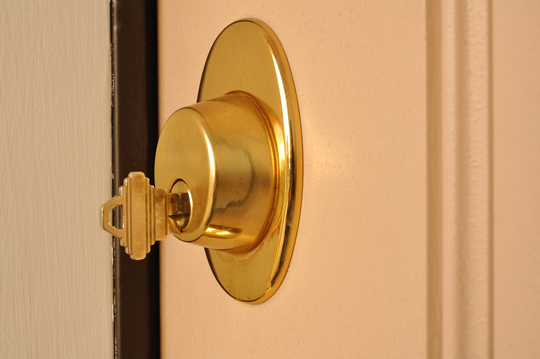
Deadbolts are a good way to ensure extra safety for your home. Because they restrict entry without the appropriate key, they add an extra layer of security from intruders trying to break in. However, if your deadbolt lock has been damaged, broken, or cut during a burglary attempt, it’s extremely important to have it fixed as soon as possible. A cut deadbolt can leave your home vulnerable, and hence, needs an immediate fix. The good thing is, with little instruction you can remove and replace your deadbolt yourself.

Removing a Cut Deadbolt

1. All you need to do is carefully unscrew the lock, as well as the thumb turn assembly, using a Phillips screwdriver counterclockwise. Note that you will find these screws on the inside of the door. Open the door and get the screws out.

2. You can now easily pull out the key assembly and the thumb turn assembly with your fingers. If it appears to resist, you could use the tip of the screwdriver to pry it out. Using your fingertips, pull the cut deadbolt and assembly out, detaching it from the front operating edge of the door. Once again, you could use the help of a screwdriver if necessary.

3. Brush out or blow away any debris from the door in the area from where the deadbolt has been removed. This will clean up space to facilitate replacement of the deadbolt.

Installing a New Deadbolt

1. To install a new deadbolt, first of all, take a good look at the manufacturer’s template that comes along with the lock. You can easily mark reference points on the door using this template. Make sure you do the markings for the deadbolt at least 6 inches above the doorknob.

2. The next step would be to use a hole-saw to cut out a hole for the deadbolt. It’s a good idea to finish the hole from the other side as well, as that prevents any splinters. Also, drill a hole through the edge of the door, where the bolt will go.

3. It’s now time to cut a mortise for the deadbolt. Trace an outline of the faceplate of the deadbolt and use a wooden chisel to mortise the area so that it is flush with the door.

4. You can now secure the deadbolt to the door after ensuring that the faceplate fits well in the mortise. This is the time you will also install the cylinder and the thumb plate in place.

5. Next, drill two overlapping holes to install the deadbolt, and drill pilot holes where you can secure the striker plate using screws. Your new deadbolt is now in place.

Get Professional Locksmiths to Replace Your Deadbolt

If you would like some professional help with repairing, removing, or replacing a cut deadbolt, TalkLocal can help you find the best professionals. We help narrow down a list of highly trained and experienced professionals suited to your job so that all you have to do is choose the one you want to work with, and we will connect you directly.

Cloud Storage Costs

Thursday, August 8th, 2013

Cloud Storage Costs - Computer Repair

Cloud storage happens to be one of the best things that have happened to the IT industry in the recent years. While most providers give you a certain amount of cloud storage for free, companies and businesses can buy a lot more of it for an annual, monthly, or one-time fee. If you wish to store a huge amount of data on a cloud service, it would be ideal that you compare prices of the leading services before coming to a conclusion.

Prices of the Leading Cloud Storage Providers

You may come across significant confusion when trying to select a particular home cloud data storage provider. However, you must understand that price isn’t the only factor that’s important here. You must consider a lot of other features as well, such as reliability, security, file type support, etc. Try to find a balance between price and features when trying to compare cloud storage costs.

Dropbox

Dropbox happens to be, undoubtedly, one of the most popular cloud storage options today that many of us use every single day. It gives you 2 GB of storage free, and a lot more can be added on payment. You can add 100 GB for $9.99 a month or for an annual fee of $99 a year. 200 GB could be had for the price of $19.99 per month or $199 per year, and 500 GB could be had for $49.99 per month or $499 per year. If you don’t need as much as 100 GB but still need more than 2 GB, Dropbox has a great way of letting you do that through referrals, which could get you up to 18 GB of free storage.

Google Drive

Another popular favorite among the masses, Google Drive offers 5 GB of free storage that can be upgraded to 25 GB for just $ 2.49 per month. A number of price bands are available thereafter, giving you 100 GB for $4.99, 200 GB for $9.99, 400 GB for $19.99, 1 TB for $49.99, and the list goes on up to 16 TB for $799.99 a month. The interesting feature here is that the upgraded storage you buy also applies to Picasa and gives you an additional 25 GB in Gmail as well.

SkyDrive

One of the highly preferred services is SkyDrive, which offers you 7 GB of free storage. Most people find this ample for their personal use. However, you could always upgrade it to 27 GB for just $10 per year, 57 GB for $25 per year, or 107 GB for $50 per year.

Apple iCloud

Apple’s iCloud storage is something Apple users live by. While you can store plenty of data for free in the 5 GB you get, you can buy an additional 10 GB for $20 per year, 20 GB for $40 per year, and 50 GB for $100 per year.

Other providers such as Huddle and FolderShare also offer you plenty of storage and let you sync files on different devices at competitive prices. So choose wisely and store as many e-mails, music, books, movies, and apps as you like with effective cloud storage costs.

Get Expert Help

If you’d like a professional to answer your questions or set you up on a cloud storage plan, meet the best professionals with the help of TalkLocal. We find the best professionals and connect you with them, so they can address all of your concerns efficiently.

8 Interns : 2 Months : 1 Office – Meet Lauren

Thursday, August 8th, 2013

8 Interns : 2 Months : 1 Office - Meet Lauren - Seva Team

Written by Jaime Fawcett

What’s Up Seva Callers?

Summer is wrapping up here, and most of the interns are leaving to head back to school. It’s getting pretty quiet here, but we still have a few of our stars in the office to feature in the 8 Interns : 2 Months : 1 Office series.

Just like Lauren, who is our champion graphic designer, and is currently studying visual communications at Stevenson University.

So Lauren, what do you do for Seva Call?

Graphic Design. So I make layouts for the web pages. I’m currently designing a door hanger. Like the ones you see on hotel room doors.

8 Interns : 2 Months : 1 Office - Meet Lauren - Seva Team

What kind of art do you do in your spare time?

Mostly digital art. Sometimes I draw in Paint and I also like to knit! I’m teaching myself to crochet. That’s art right?

Do you have a spirit animal?

I’m not sure. Maybe a cat…..or a fox.

You’re a fan of Chipotle, what’s your order?

Usually I get a burrito. Or the tacos. I like to keep things exciting. Chicken, rice, cheese, tomatoes. I don’t like a lot of spicy stuff.

8 Interns : 2 Months : 1 Office - Meet Lauren - Seva Team

If it was the zombie apocalypse…

1. Definitely Augie, he could take zombies out in his sleep.

2. Probably Michael, he would be a good strategist.

3. Matteo, he would be the bait. He’s so loud. He would be a good distraction.

4. Nabeel, he would be the sniper. Very quiet and mysterious.

What’s your favorite thing about Stevenson?

I like the small class sizes. You get to know everyone, so it’s easy to make friends. A good community.

8 Interns : 2 Months : 1 Office - Meet Lauren - Seva Team

Favorite food?

Ice cream! Cookies’n’Cream is my jam.

What is your ultimate dream job?

I would really like to do interior design. I wouldn’t want to start my own company. That’s too much work. I really like designing 3-D spaces and seeing how everything interacts and comes together as one thing.

Favorite video game?

Right now I’m playing Final Fantasy XIII; I’m totally addicted. (I personally love that series.)

Favorite Holiday?

Halloween. Because it gives you a reason to dress up and you won’t look stupid. My friends and I like to dress up as ninjas and freak people out.

8 Interns : 2 Months : 1 Office - Meet Lauren - Seva Team

Harry Potter house?

I never watched or read it….

(Awkward.)

Any embarrassing stories from your childhood?

I was in elementary school. A boy had a crush on one of my friends, and during naptime he was like creeping around her. So I told her that he kissed her in her sleep, but that never actually happened. I didn’t tell her the truth until high school.

She wasn’t mad, she cracked up.

8 Interns : 2 Months : 1 Office - Meet Lauren - Seva Team

Well, that’s it folks. We are wrapping things up here in the office for the day and for the week. So I’ll see you next week!

3 Ways to Clean Electronic Air Filters Fast and Effectively

Wednesday, August 7th, 2013

3 Ways to Clean Electronic Air Filter Fast and Effectively - Heating and Cooling

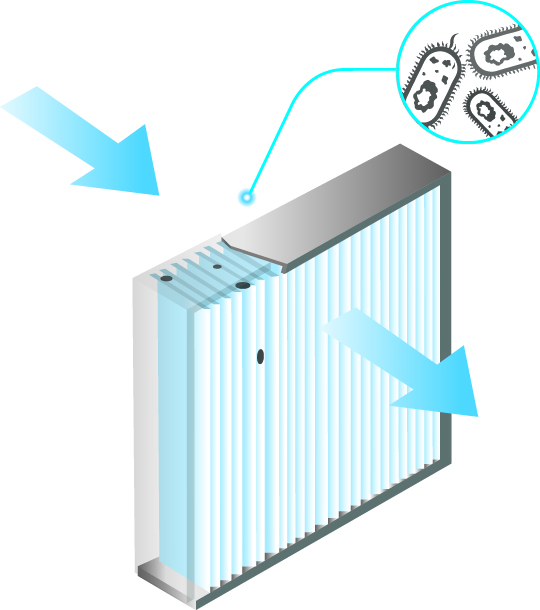
Electronic air cleaners are used by millions of Americans who seek to improve indoor air quality and eliminate some of the most dangerous, microscopic pollutants triggering severe respiratory problems and other health concerns. In other words, electronic air cleaners trap the tiniest contaminants and help homeowners breathe cleaner, healthier air on a daily basis.

These devices are equipped with washable pre-filters and cells, which should be checked and cleaned regularly, at least once a month. Keep reading to discover three simple, effective ways to clean electronic air filters on your own, in the comfort of your own home.

First Method: Place the dirty pore-filters and washable cells in the dishwasher

Most homeowners use their dishwashers to keep their electronic air filters and cells dirt-free and fully functional. After the washing cycle is completed, simply take out the purified components and let them dry naturally. A drying cycle should never be considered a valid option, as it could easily damage cells and pre-filters, minimizing the efficiency of your electronic air cleaner.

Before opting for this fast, hassle-free cleaning method, make sure to read the dishwasher’s instruction manual. Some manufacturing companies might not recommend cleaning pre-filters and electronic cells by washing them in the automatic dishwasher.

Second Method: Clean electronic air filters in your bathtub 

You could also cleanse those filthy electronic cells and pre-filters by placing them in a bathtub filled with hot water. Add three quarters of high-quality dishwasher detergent for each cell; wait 15 or 20 minutes until the detergent manages to dissolve the dirt buildup and then let these components air dry.

Third Method: Wash pre-filters and electronic cells in your backyard, utilizing a garden hose

Last, but definitely not least, you could try to clean electronic air filters in record time using a garden hose. Wash those dirty pre-filters and electronic cells with plenty of water sprayed with moderate pressure to avoid damaging these essential parts of your device. If you are dealing with stubborn particles of dirt, rely on a good household detergent to get the job done fast and effortlessly. In the end, let these components dry naturally and put them back inside your electronic air cleaner when they’re perfectly dry.

Opt for one of these 3 easy ways to wash pre-filters and electronic cells and keep your appliance in perfect condition for a longer period of time.

Find an HVAC Expert

Looking for a real professional to complete this task on time and on a budget? Count on TalkLocal to find the best experts in your area. Whether you want to invest in professional maintenance services or you aim to conduct a DIY project, keep in mind that a monthly cleaning process is mandatory and can increase the lifespan and effectiveness of your device.

Best Wood for Building a Tree House

Wednesday, August 7th, 2013

Best Wood for Building a Tree House - Handyman

A tree house is a joy for children, especially during summertime, which allows them to play outdoors and get closer to nature. It’s a source of constant excitement that keeps children busy, but it can also be a source of delight for grown-ups. Even more so if you’re in charge of designing and building it. Your effort will pay off when you see those smiling faces climbing up and down to their secret playhouse in the sky. But before you get to enjoy the results of your work, you need to make a plan about the kind of tree house you want, starting with the main material, namely wood.

What Is the Best Wood for Building a Tree House?

That’s the first question you need to ask after deciding on the location, which is obviously a tree, but which one, and where should the tree house be positioned? How big do you want it to be? How many children is it supposed to accommodate? After answering these preliminary questions, you need to consider the material you are going to use. When choosing the type of wood you are going to use in your DIY project for building a tree house, you need to consider the following factors.

Wood Resistance

It’s important to choose a durable hardwood, such as cedar, pine, plywood, or redwood, to build a safe and resistant tree house that your children can enjoy for several seasons.

Moisture Content

Some species of wood are softer than others; they contain more moisture, which can lead to faster shrinking. That is why the best wood for building a tree house should be from a hardwood species with reduced moisture content.

Treated Wood

The best wood for building a tree house is treated wood because it is stronger, does not decay easily, and resists insect infestation, which makes it a safer choice for this kind of project.

Want Help with Your Tree House?

If you’d love to give your children a dream tree house but you’d rather entrust this project to someone more experienced, TalkLocal can put you in touch with a reliable handyman who can get the job done quickly. We can fulfill your request in minutes, for free.

The Average Cost of a Stone Patio

Wednesday, August 7th, 2013

The Average Cost of a Stone Patio - Landscapers

Stone Patios for Your Home

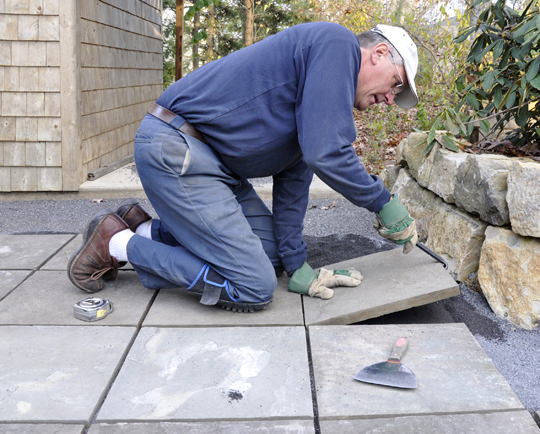
Stone patios are beautiful and affordable landscaping features that add beauty to your home and your garden. They are typically made of bluestone or flagstone. These stones are flat and can be cut to fit the shape of your patio. They are also easily maintained throughout the year, in any weather. Stone patios are a great way to save energy using landscaping. The average cost of a stone patio depends on size, type of stone, and other factors.

Factors for Cost

Along with labor, there are other costs associated with building a stone patio. You have to pay for the delivery and installation of the stones. Aside from these, you also have to pay for the preparation of the site before the stones are installed. A small stone patio will cost you $3,600 or less, while a more elaborate patio will set you back up to $30,000. Bluestone and flagstone cost about $15 to $18 per square foot.

Additionally, if you decide to use irregularly shaped flagstones for you patio, you can expect to pay more. Where you source your stones from will also affect the cost. If you decide to order stones that are located far from where you live, the delivery costs will be quite expensive.

There are different types of patios, and stone patios are just one option. Flagstone patios that have gaps in them, meaning they have open joints, are less expensive than fully jointed patios. There is some variability to the shapes of stones, so experienced contractors will usually order 25% more stones than the estimated area. This is to cover the gaps in the patio.

Where to Get Professional Help

Seva Call can help you find a suitable contractor in your area. We will connect you with up to three, reliable professionals in your area, giving you the option of which one to go with for your project.

Does Physical Therapy Help Vertigo?

Wednesday, August 7th, 2013

Does Physical Therapy Help Vertigo? - Chiropractors

Vertigo and Quality of Life

Vertigo is an ear condition that gives you the illusion that you are falling or that your environment is moving. It’s a debilitating health condition that can severely affect your quality of life. You can feel nauseous or be afraid to fall constantly. Because vertigo is an ear condition, a doctor will check your ears for any malfunctioning. A doctor will also check your eyes for nystagmus, which is the rapid, involuntary movement of the eyes, to help determine which canals of your ears are affected by vertigo.

Does Physical Therapy Help Vertigo?

A trained physical therapist will be able to determine the types of maneuvers that you can do to help you cope with vertigo. Your physical therapist will also instruct you on what you can do if the symptoms of vertigo recur. The therapist may also assess your balance and teach you techniques that will improve it. Physical therapy also helps spinal stenosis, which may worsen your symptoms of vertigo. Physical therapists may also tell you to sleep at a 45-degree angle for a night of treatment.

Physical therapy is useful for vertigo by training the brain to make up for the damage in the ear. It does this by improving your overall balance. Your physician will help you determine if you need chiropractic therapy. Physicians will commonly refer you to a physical therapist if you are suffering from vertigo, because it will help you cope with this condition. Indeed, if you are asking “does physical therapy help vertigo?” then the answer is: yes.

Finding Professional Help

TalkLocal will help you locate a physical therapist near you. We will connect you with the right professionals in your area for free, and in just minutes. You’ll get the help you need, when you need it most.